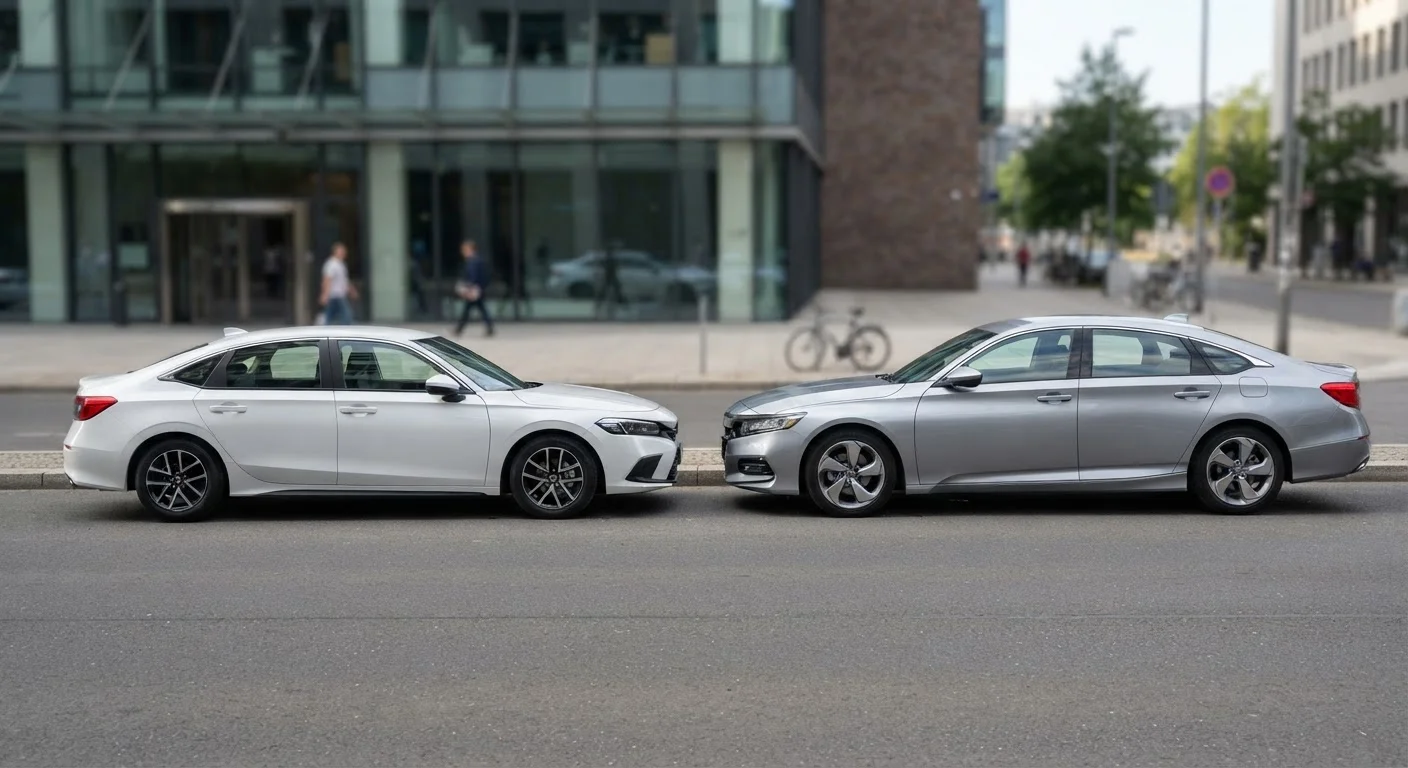
What Separates the Two Segments
The line between compact and mid-size sedans is defined primarily by wheelbase and interior volume. The EPA classifies passenger cars by interior passenger and cargo volume combined, with mid-size cars generally falling in the 110-120 cubic-foot range and compacts below that threshold. In practical terms, that translates to a longer body - typically 6-10 inches more overall length - and more usable cabin space, particularly in the second row.
For a deeper look at how individual measurements translate to real-world comfort, see how to read a sedan's dimensions. And if you're still evaluating whether a sedan body style suits your needs at all, sedan strengths and trade-offs offers a broader starting point.
What You Gain by Moving Up
Rear-seat legroom is the most tangible upgrade. Mid-size sedans commonly offer 38-39 inches of rear legroom versus 35-37 inches in most compacts - a difference that matters immediately to any adult sitting behind a taller driver. Headroom and shoulder room also tend to improve, making longer trips more tolerable for all occupants.
Noise, vibration, and harshness (NVH) refinement is another consistent differentiator. Mid-size models are more likely to carry additional acoustic insulation, laminated glass, and more sophisticated suspension tuning - all of which reduce road and wind noise at highway speeds. This isn't universal, but the segment average is noticeably quieter than compact equivalents.
Feature and powertrain availability also expands. Mid-size sedans are more commonly offered with larger engine options, advanced driver-assistance systems (ADAS), and premium audio or comfort packages that either aren't available or are heavily restricted on compact platforms.
| Compact Sedan | Mid-Size Sedan | |
|---|---|---|
| Typical rear legroom | 35-37 inches | 38-39 inches |
| Typical sticker price premium | Baseline | +$3,000-$6,000 |
| Combined fuel economy (avg.) | 32-38 mpg | 28-34 mpg |
| Cabin NVH refinement | Moderate | Higher on average |
| Urban maneuverability | Easier, shorter turning radius | More demanding in tight spaces |
| Feature/powertrain availability | More limited | Broader options |
| Trunk space (typical) | 13-15 cu ft | 15-17 cu ft |
What You Give Up
Purchase price and total ownership cost rise materially. A mid-size sedan in a comparable trim typically costs $3,000-$6,000 more at purchase than its compact counterpart. Insurance premiums, registration fees in states that base them on vehicle value, and financing costs all scale accordingly.
Fuel economy is less of a penalty than it once was, but a gap still exists. Many modern compacts now achieve 32-38 mpg combined on the highway, while mid-size sedans more commonly land in the 28-34 mpg range. Over 15,000 miles per year, that difference can translate to $150-$300 annually at average US gas prices, depending on the specific models compared.
Maneuverability is the other meaningful concession. A longer wheelbase and wider body make parallel parking and tight urban navigation more demanding. Turning radius increases by a measurable margin, and tighter parking structures become more stressful. For buyers who live in dense metros, this is not a trivial concern. For context on how this dynamic plays out across other segments, compact vs. mid-size SUV practical differences draws a useful parallel.
How to Decide Which Segment Fits Your Situation
Start with your actual passenger load. If you routinely carry adults in the back seat - on school runs, commutes, or road trips - the legroom upgrade in a mid-size is genuinely worth experiencing before committing. Sit in both segments back-to-back if possible; the spec difference becomes visceral quickly.
Next, run a realistic cost comparison. Factor in insurance quotes for specific models you're considering, not just the sticker price. Then consider your primary driving environment: highway miles favor the mid-size's refinement; dense city driving favors the compact's footprint.
If you're also evaluating whether a used example in either segment could stretch your budget further, the new vs. used car trade-offs hub is a useful next step. And if you're curious how compact sedans are defined more precisely, the compact sedan segment explained covers the category in detail.
Neither segment is obsolete, and the gap between them has narrowed as automakers have pushed refinement down-market. The decision ultimately comes down to who's riding in the back seat and how much that comfort is worth in dollars and cents over your ownership period.