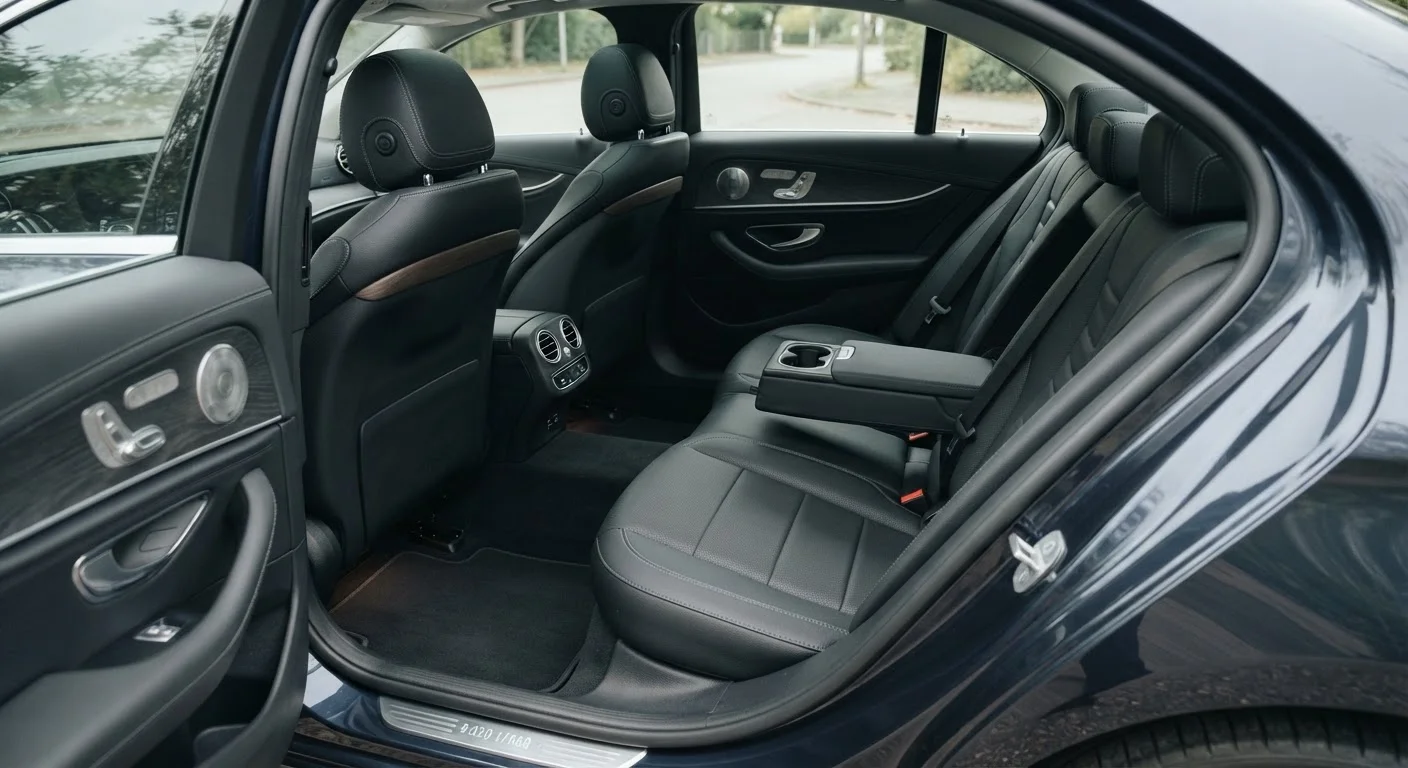
Why Sedan Dimension Specs Require a Second Look
Sedan spec sheets look reassuringly precise - rear legroom listed to the half-inch, boot volume to the tenth of a cubic foot. The problem is that these numbers are produced under controlled, often idealized conditions that may not match how you actually load a car or seat your passengers. As our guide on common spec sheet misreads explains, the same figure can mean different things depending on who measured it and how.
Sedans in particular present three dimensions that buyers consistently misread: boot (trunk) volume, rear legroom, and rear headroom. Each is measured in a specific way that has real implications for everyday usability - especially if you regularly carry adult rear passengers or need to fit bulky cargo.
Bring a Tape Measure to the Dealership
Spec sheets are a useful starting filter, but they are no substitute for a hands-on evaluation. Bring a retractable tape measure and verify rear legroom with the driver's seat at your normal setting, not the factory default position. A five-minute check can save months of regret.
What You Need Before You Start
Before diving into the steps below, gather the following so you can compare figures accurately and efficiently.
What you will need
Step-by-Step: Reading and Interpreting Each Dimension
Follow these steps whenever you are evaluating a sedan's interior and cargo dimensions from a spec sheet or manufacturer website. Apply the same process to each model you are cross-shopping.
Locate the measurement standard used
Before reading any dimension figure, identify which standard the manufacturer applied. US automakers generally use SAE J1100, which measures rear legroom with the front seat moved to a defined mid-track position. Some European and Asian brands publish figures under ISO 3832, which uses a different reference point. Comparing an SAE legroom figure directly against an ISO figure can produce a misleading difference of one to three inches. Look for a footnote on the spec sheet or check the brand's press kit.
Read rear legroom with front seat position in mind
Rear legroom is measured from the back surface of the front seatback to the front surface of the rear seatback, at a defined seat-track position. In practice, a taller driver who slides the seat further back will reduce available rear legroom by several inches. When you see a legroom figure, treat it as a maximum under standardized conditions, not a guarantee of what rear passengers will experience.
- Note whether the figure is for one or both rear positions (outboard vs. center can differ).
- Check if the brand lists legroom with the front seat at full-rear travel - some do, which gives a more conservative and realistic number.
Evaluate rear headroom against roofline style
Rear headroom is measured vertically from the seat cushion surface to the headliner at its highest point above the seating position. This number does not tell you how the headroom is distributed across the seat - a strongly curved roofline may provide adequate headroom in the center but tighten significantly toward the window edges.
Compare the headroom figure against the sedan's profile:
- Traditional three-box sedans tend to preserve headroom further back in the rear seat.
- Fastback or coupe-styled sedans may report similar headroom at the measurement point but feel tighter in practice because the roofline begins sloping earlier.
Interpret boot volume and opening dimensions separately
Boot (trunk) volume is stated in cubic feet and is typically measured using the SAE J1100 water-displacement method, which fills the entire cargo space including irregular corners. This produces a number that often overstates the volume of usable rectangular space where real luggage sits.
Two additional dimensions that spec sheets rarely publish but are highly practical:
- Trunk opening width and height - a narrow aperture can prevent wide or tall items from entering even when the internal space is generous.
- Load floor height - a high sill requires more effort to lift heavy bags and effectively limits what tall items can stand upright inside.
If the manufacturer does not publish these figures, bring a flexible tape measure to the dealership.
Cross-check figures across trim levels
Interior dimensions can vary between trim levels of the same model, not just between different models. Factors that can change measured space include:
- Seat thickness (sport seats with bolsters can reduce rear knee clearance)
- Panoramic roof glass panels (reduce headroom and occasionally add structural intrusion)
- Rear center console or armrest configurations
Always confirm that the spec sheet you are reading corresponds to the exact trim level and option package you are considering, rather than the base or flagship variant.
Putting the Numbers in Real-World Context
Once you have worked through the steps above for two or three models, you will have a normalized set of figures you can meaningfully compare. A mid-size sedan typically offers roughly 38-40 inches of rear legroom, while a compact sedan usually falls in the 33-36 inch range - a gap that matters significantly for taller adults. For context on what moving up a size class actually delivers, see our overview of mid-size sedan trade-offs.
Headroom, meanwhile, is where sportier sedan variants often fall short. A sloping fastback roofline can subtract an inch or more of rear headroom compared with a traditional three-box sedan profile, even within the same model family. Always confirm whether the headroom figure applies to the specific trim level you are considering, since panoramic roof options sometimes reduce headroom slightly due to the thicker header structure.
Boot volume is the dimension most prone to misinterpretation. Manufacturers may measure to the window line or to the roof in pass-through areas, and the shape of the trunk opening can restrict what actually fits even when the stated cubic footage is generous. Our deeper explainer on how automakers measure cargo volume walks through exactly how these figures are generated and where they fall short. If you are weighing a sedan against a hatchback on cargo grounds, the structural differences covered in sedan vs. hatchback body style differences are equally worth reviewing.
Finally, no spec sheet replaces a physical evaluation. Before committing, sit in the rear seat with the front seat adjusted to where your tallest regular driver would set it. Check that your knees clear the seatback, your head clears the headliner with room to spare over bumps, and that the items you routinely carry actually fit through the trunk opening - not just inside the trunk itself.