What the Cubic-Foot Number Actually Represents
When a window sticker lists a vehicle's cargo volume - say, 33.5 cubic feet - it sounds precise. In practice, that number is the result of a measurement process that automakers control almost entirely on their own terms. Unlike fuel economy ratings, which the EPA administers through standardized testing, cargo volume has no federally mandated measurement protocol in the U.S.
Most manufacturers use one of two approaches: the SAE J1100 standard (a Society of Automotive Engineers guideline, not a legal requirement) or a proprietary internal method. SAE J1100 defines cargo volume as the space measured with all seats in their normal positions, filling the area with small balls to account for irregular shapes. But compliance with SAE J1100 is voluntary, and some automakers apply their own variations. The result: two vehicles with the same cubic-foot rating may have been measured by fundamentally different methods.
For a broader look at how spec sheet figures can mislead, see common misreads on car spec sheets, which covers several similar traps buyers encounter across vehicle categories.
The Variables That Skew the Numbers
Several factors can cause a cargo volume figure to look generous on paper while underdelivering in the driveway.
- Seat configuration: Some manufacturers report cargo volume with rear seats folded flat, producing a large "maximum" number. Others report only the behind-seat figure. Three-row SUVs sometimes publish three separate numbers - behind row three, behind row two, and maximum - and marketing materials don't always specify which one they're quoting.
- Irregular geometry: Wheel-well intrusions, sloped cargo floors, and tapered ceilings all get included in the cubic-foot calculation even though they're difficult to fill with boxes, strollers, or luggage.
- Measurement start point: Where the load floor begins - at the rear of the seat cushion, at the base of the seatback, or at the liftgate opening - varies by manufacturer and significantly affects the total.
These variables are particularly relevant for SUV and truck buyers. Truck beds introduce an additional complication: an open bed measured at full depth may rate highly in cubic feet, but usable volume changes with bed liner thickness, cab overhang, and load management accessories. Our guide on truck payload vs. towing capacity covers related measurement pitfalls specific to hauling.
Voluntary
Status of SAE J1100 cargo measurement standard
The SAE J1100 guideline is the most widely referenced cargo measurement protocol in the U.S., but automaker compliance is not legally required.
3 figures
Cargo ratings a 3-row SUV may publish
Many three-row SUVs list separate cargo volume figures for behind row three, behind row two, and maximum (all rows folded), which are rarely all presented in the same place.
Varies widely
Wheel-well width reduction across mid-size SUVs
The width between wheel wells - the true usable floor width - can differ by several inches between vehicles with similar overall cargo volume ratings.
What to Measure Instead - or in Addition
Savvy buyers look past the headline number and examine the dimensions that directly affect what they can carry.
- Floor length (seats up and folded): Tells you whether long items - bicycles, lumber, flat-pack furniture - actually fit.
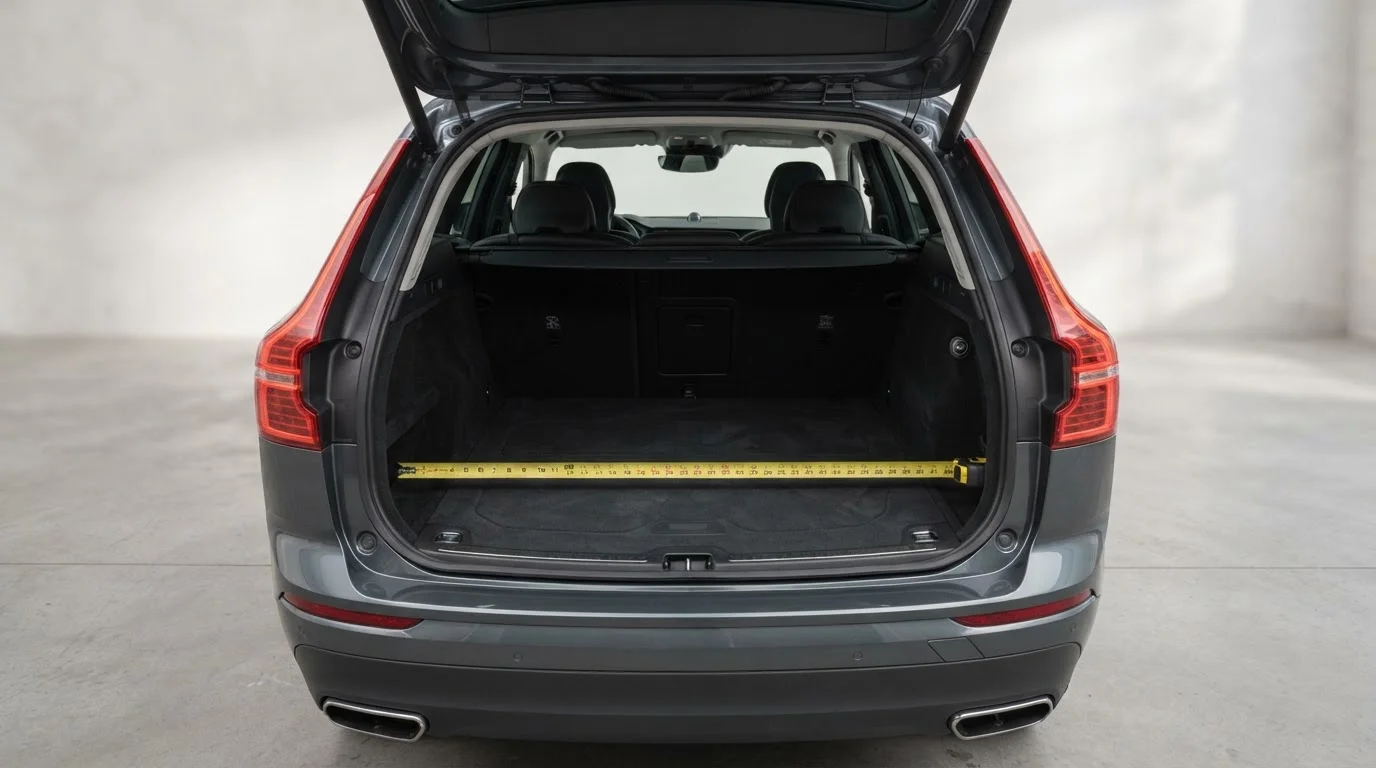
- Width between wheel wells: The narrowest usable width matters more than overall interior width for loading boxes or crates flat.
- Liftover height: The distance from the ground to the cargo floor affects how easily heavy items can be lifted in. A lower liftover generally means easier loading.
- Opening width and height: A wide tailgate or liftgate opening determines what can physically enter the cargo bay, regardless of how spacious it is inside.
For hatchback shoppers, these dimensions interact with folding seat designs in ways the cubic-foot figure rarely captures. How folding rear seats change hatchback cargo versatility explains how load floor height and flat-fold geometry affect practical capacity far more than raw volume ratings suggest.
This pattern of official figures diverging from real-world utility isn't unique to cargo. Fuel economy ratings follow a similar dynamic - see what fuel economy figures leave out for context on how standardized testing can produce numbers that don't survive contact with actual driving conditions.
Bring a Tape Measure to the Dealership
Before finalizing any SUV or truck purchase, measure the load floor width between wheel wells, the floor-to-ceiling height, and the liftover height yourself. Bring the dimensions of items you regularly haul - a cargo bike, a stroller, a large suitcase - and confirm they fit with the seats in positions you'll actually use. This takes five minutes and can prevent a costly mismatch.
Putting the Numbers in Context Before You Buy
The most useful approach is to treat cargo volume as a rough sorting tool rather than a definitive measurement. Use it to eliminate vehicles that are clearly too small, then verify usability in person. Bring the actual items you plan to carry - or their dimensions - to a test drive and physically load the cargo area. Pay attention to whether the floor is flat, whether there's a step up from the liftgate, and how the space changes when passengers are aboard.
Window stickers for trucks and SUVs contain other rated figures - like GVWR - that are worth understanding alongside cargo volume. Our breakdown of reading a truck's window sticker decodes those numbers in plain terms. When you're researching and comparing models, cross-referencing multiple spec dimensions - not just one - leads to a much more accurate picture of how a vehicle will actually serve your needs.