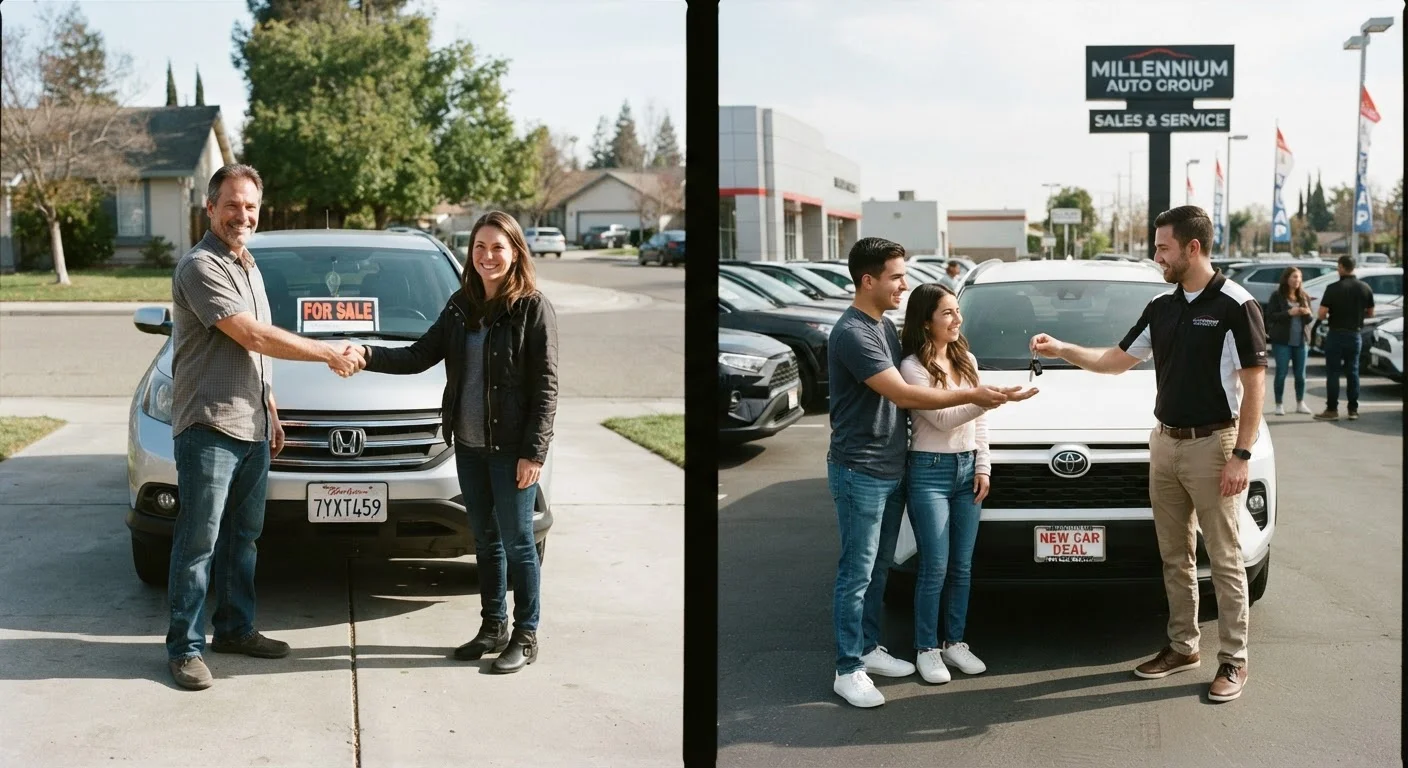
Why the Source of the Car Changes Your Vetting Strategy
When you buy a used car, the vehicle's mechanical condition is just one part of what you're evaluating. The seller's identity — private individual or licensed dealer — determines what legal protections apply, what disclosures are required, and how much independent verification you'll need to do yourself.
Dealers in most U.S. states are regulated entities. They're subject to the FTC Used Car Rule, which requires a Buyers Guide to be posted on every vehicle disclosing warranty terms. Many states layer additional consumer protection requirements on top of that. Private sellers, by contrast, typically sell vehicles "as-is" with no implied warranty and minimal disclosure obligations under law.
That gap doesn't mean you should avoid private sales — it means your checklist for one should look noticeably different from your checklist for the other. See our overview of buying from a private seller vs. a dealership for broader context on what each route involves.
Vetting a Private Sale: What You Must Do Yourself
In a private transaction, the seller has limited legal obligation to disclose problems they're unaware of — and in some cases, ones they are aware of. That puts the full burden of discovery on you.
Title and Lien Check
Request the physical title before meeting and verify the seller's name matches the title exactly. Run the VIN through your state's DMV or a third-party lien check service to confirm there are no outstanding loans attached to the vehicle. A car with an unresolved lien can legally be repossessed even after you've paid for it.
Vehicle History Report
Pull a report using the VIN before you inspect the car. Look for accident disclosures, flood or salvage designations, odometer rollback flags, and the number of previous owners. Discrepancies between the report and what the seller tells you are red flags worth probing directly — our guide to questions worth asking every private seller covers how to press those conversations productively.
Independent Mechanical Inspection
Never skip an inspection by an independent, licensed mechanic of your choosing. Unlike a dealer's in-house assessment, an independent inspection has no conflict of interest. The mechanic should perform a full pre-purchase inspection (PPI) including a test drive, lift inspection of the undercarriage, fluid checks, and diagnostic scan. Budget roughly $100–$200 for this — it routinely surfaces repair costs that reshape a negotiation or justify walking away.
Verify Odometer Reading Against the Title
On older vehicles, the title itself shows the odometer reading at the time of each transfer. Compare that figure against the current reading and the vehicle history report. A significant unexplained gap between recorded mileage figures can indicate odometer tampering, which is a federal crime — but one that still falls on you to detect.
Payment and Bill of Sale
Avoid cash payments without a proper bill of sale. Document the sale price, VIN, odometer reading, and both parties' names and signatures. Some states require a notarized bill of sale for title transfer — check your state's DMV requirements before finalizing.
Vetting a Dealer Purchase: Don't Assume the Work Is Done for You
Dealer purchases come with structural protections, but those protections have limits. A "certified pre-owned" label or dealer inspection report is not a substitute for your own due diligence.
Review the Buyers Guide Carefully
The FTC-mandated Buyers Guide must be posted on the vehicle. It states whether the car is sold as-is or with a warranty, and if a warranty, what's covered and for how long. Read it — don't assume a warranty applies unless the Buyers Guide confirms it in writing.
Request the Dealer's Inspection Record
Most dealers perform a multi-point inspection before listing a vehicle. Ask for a written copy. Note what was inspected, what was repaired, and — critically — what was not checked or marked as passing inspection.
Still Pull an Independent Vehicle History Report
Dealers often provide a vehicle history report as part of their listing. Cross-reference it against a separately pulled report to ensure nothing has been omitted or selectively presented. Pay attention to service records, prior rental or fleet use, and title brands.
Consider an Independent Inspection Anyway
For higher-value purchases or when buying used from smaller independent dealers, an independent mechanic inspection remains valuable. As detailed in our comparison of independent mechanic inspections vs. dealership assessments, the two types of checks have meaningfully different scopes.
Side-by-Side: Key Vetting Differences
The table below summarizes where your effort should be concentrated in each channel.
| Vetting Step | Private Sale | Dealer Purchase | |
|---|---|---|---|
| Title verification | Buyer must verify directly | Dealer handles transfer; verify lien clearance | |
| Lien check | Essential — run independently | Usually cleared; still confirm in writing | |
| Vehicle history report | Pull independently before visit | Cross-check dealer-provided report | |
| Mechanical inspection | Independent mechanic — critical | Useful, especially at independent dealers | |
| Warranty coverage | Sold as-is in most cases | Review Buyers Guide for terms | |
| Legal disclosure requirements | Minimal; state-dependent | FTC Buyers Guide required federally | |
| Bill of sale / paperwork | Buyer must prepare or verify | Dealer generates; review before signing |
Understanding these differences helps you allocate your time and inspection budget appropriately before committing to either route. For a fuller look at how the overall buying experience compares, see how the buying experience differs between private sellers and dealerships.
The One Step That Applies to Both
Regardless of whether you're buying privately or through a dealer, a pre-purchase inspection is the single most effective tool for uncovering problems a listing won't reveal. The difference is how you arrange it and what you do with the findings.
In a private sale, the seller has no obligation to fix anything — the inspection informs your offer or your decision to walk. In a dealer transaction, documented findings may give you negotiating leverage on price or a request for repairs before purchase. Neither scenario removes the value of knowing what you're buying.
Once you've completed your vetting and are ready to move toward purchase, understanding how financing is structured matters too — particularly whether dealer financing or a pre-approved loan better serves your position. See pre-approved loans vs. dealer financing for a clear breakdown of how those two options compare.