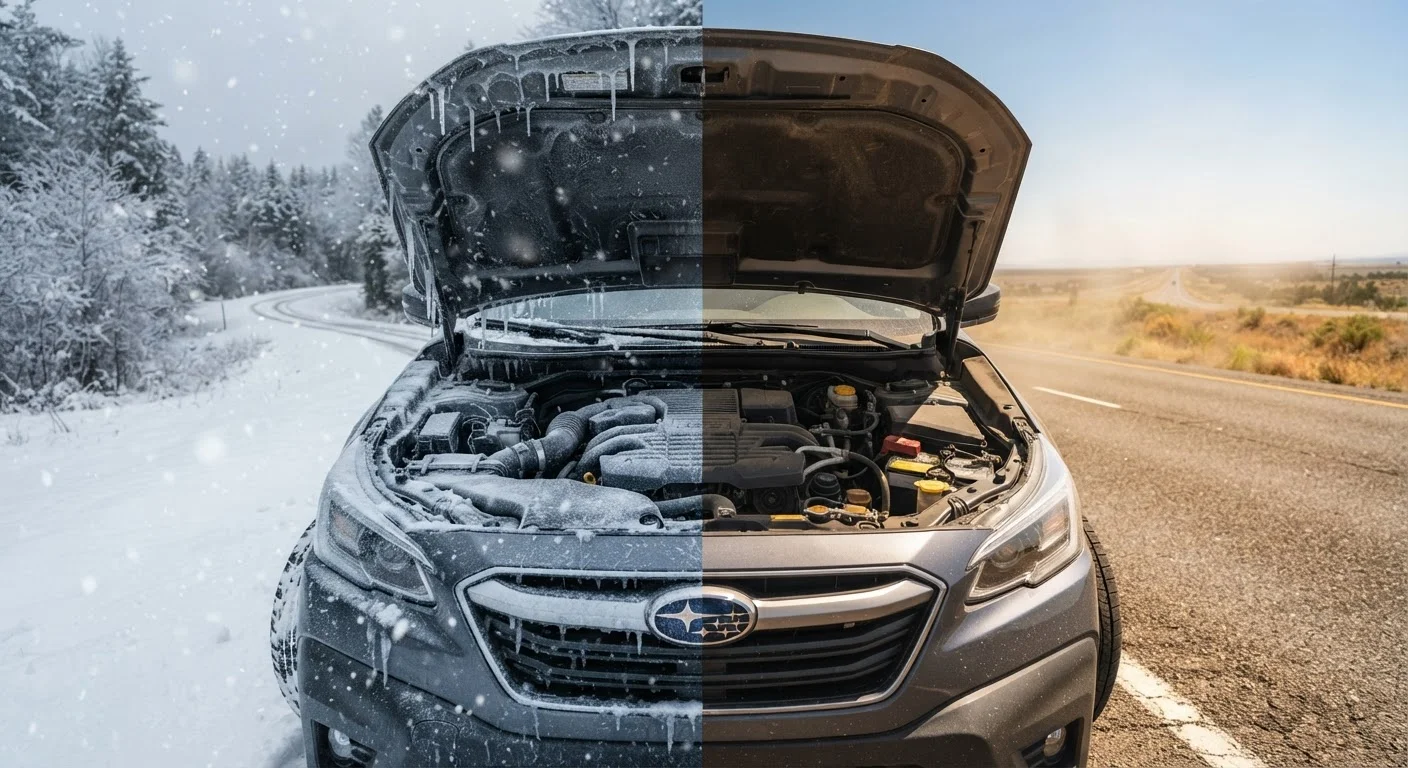
Why Seasonal Preparation Matters
Temperature extremes are among the most reliable predictors of vehicle breakdowns. Heat accelerates fluid degradation and strains cooling systems; cold thickens oil, weakens batteries, and hardens rubber seals. Neither season is forgiving of deferred maintenance.
This checklist is designed to walk you through the systems most affected by seasonal change — so you can identify problems before they strand you. For a broader view of what your manufacturer actually schedules at each mileage interval, see our maintenance schedule guide. And if you're curious about which tasks genuinely shift with the seasons versus which are year-round constants, the seasonal maintenance comparison article covers that in detail.
Battery and Electrical
Cooling System
Tires and Wheels
Fluids
Belts, Hoses, and Seals
Tools You'll Need
Most of these checks require only basic tools you likely already own. A few items are worth keeping in your garage specifically for seasonal inspections.
Tire pressure gauge
Measures tire inflation accurately — digital or dial gauges are more reliable than pencil-style gauges.
Battery load tester
Tests whether your battery can deliver adequate power under realistic starting conditions.
Antifreeze tester (strip or float)
Checks the freeze and boil-over protection level of your existing coolant.
Tread depth gauge
Provides a precise measurement of remaining tire tread depth across multiple points.
Flashlight or work light
Illuminates the engine bay, undercarriage, and tire sidewalls for a thorough visual inspection.
Vehicle owner's manual
Specifies the correct fluid types, capacities, and service intervals for your exact vehicle.
Critical Systems to Watch
Battery
Cold weather is the most common trigger for battery failure, but heat is actually the underlying cause — sustained high temperatures accelerate internal corrosion and water loss inside the battery. A battery weakened by summer heat often fails to start a cold winter engine. Learn how temperature and driving habits shorten battery life and what you can do to slow the process.
Cooling System
Coolant (antifreeze) serves a dual purpose: it raises the boiling point of your engine's water circuit in summer and lowers its freezing point in winter. Degraded coolant loses both capabilities. Understand what coolant degradation looks like and why a flush is more than just topping off the reservoir.
Never Open a Hot Radiator Cap
Coolant in a hot engine is under pressure. Opening the radiator cap or coolant reservoir when the engine is warm can release a burst of scalding steam and fluid. Always wait until the engine has been off for at least 30 minutes and the upper radiator hose feels cool before checking coolant levels.
Don't Ignore a Low Coolant Warning Light
A low coolant warning should prompt you to safely pull over and let the engine cool before investigating. Continuing to drive with insufficient coolant can cause the engine to overheat within minutes, potentially leading to severe and expensive internal damage. If the warning recurs after topping off, have a mechanic check for leaks.
Tires
Tire pressure is directly tied to air temperature. As temperatures drop, tires lose roughly 1 PSI per 10°F — underinflated tires reduce fuel efficiency, handling precision, and tread life. In summer, overinflation from heat expansion can increase blowout risk. Always check pressure when tires are cold, before driving.
If you notice any warning lights related to these systems, the vehicle warning signs hub is a useful next step for interpreting what your car is telling you.