Why Batteries Wear Out Before Their Time
A car battery is a consumable component — it has a finite number of charge-discharge cycles before its capacity degrades enough to cause starting problems. Most lead-acid batteries are designed to last three to five years under normal conditions, but everyday habits frequently cut that window short.
The three biggest culprits are chronic undercharging (common in vehicles used mostly for short trips), parasitic electrical drain (accessories or circuits drawing power when the car is off), and temperature extremes (both heat and cold stress battery chemistry in different ways). Understanding which habits contribute to each problem gives you a practical roadmap for extending service life.
Lead-Acid vs. AGM Batteries
Most conventional vehicles use flooded lead-acid batteries, while many newer models use AGM (Absorbent Glass Mat) batteries, which are more tolerant of deep discharge and vibration. If your vehicle came with an AGM battery, replacing it with a standard lead-acid unit can shorten battery life and affect charging system behavior. Check your owner's manual or the battery label before purchasing a replacement.
Habits That Quietly Deplete Your Battery
The most damaging habits aren't dramatic — they're routine. A battery that's never given enough time to fully recharge enters each cold start slightly weaker than the last. Over weeks and months, this repeated partial discharge causes sulfation, a process where lead sulfate crystals harden on the battery plates and permanently reduce capacity.
Similarly, accessories left drawing current overnight — a dome light, a plugged-in charger, or a faulty relay — can drain a healthy battery in eight to twelve hours. These are called parasitic loads, and they're a leading cause of unexplained dead batteries in otherwise well-maintained vehicles.
Temperature compounds everything. Heat speeds up the chemical reactions inside the battery but also accelerates fluid loss and plate corrosion. Cold doesn't damage the battery directly, but it reduces the battery's ability to deliver current — right when a cold engine needs the most power to start. Seasonal maintenance routines should always include a battery check for this reason.
Best Practices for Protecting Battery Health
The following practices address the root causes of premature battery wear. Each one is grounded in how lead-acid and AGM batteries actually function — not in marketing claims about additives or miracle fixes.
Take longer drives regularly to allow a full recharge cycle.
The alternator — not the battery itself — replenishes charge while the engine runs. Short trips of under five miles rarely give it enough time to restore what the starting sequence consumed, gradually deepening the battery's discharge with each cold start.
Minimize electrical load when the engine is off or idling slowly.
Running the radio, climate control, seat heaters, or phone chargers while the engine is off draws directly from the battery with no replenishment. Even at low idle, the alternator may not generate enough output to offset heavy accessory use.
Inspect and clean battery terminals at least twice a year.
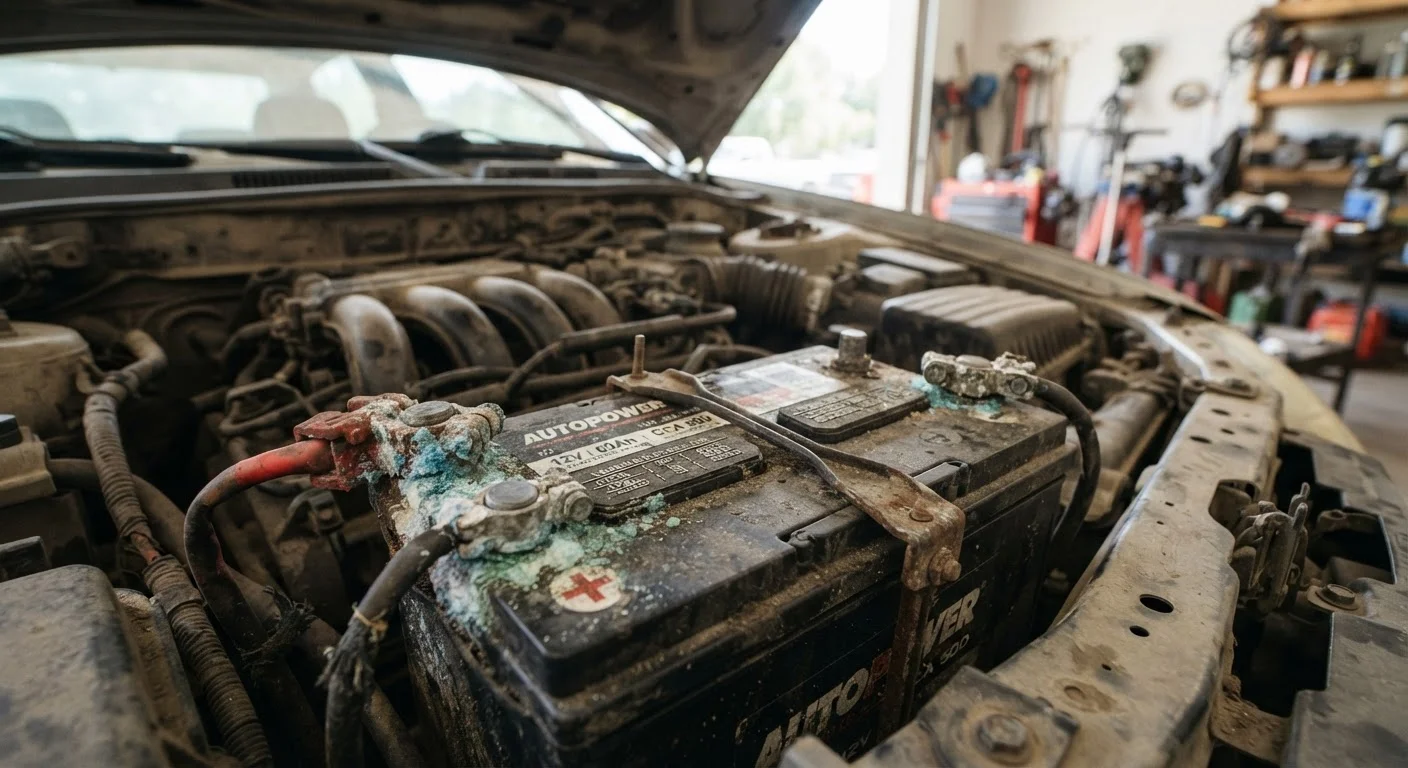
White or bluish-green corrosion on terminals increases electrical resistance, forcing the charging system to work harder and reducing the current available to start the engine. Cleaning terminals is a low-skill task that meaningfully extends battery performance.
Use a battery maintainer during extended vehicle storage.
A battery left sitting without any charging input will self-discharge over several weeks. If it drops below a critical voltage threshold — typically around 11.8 volts for a 12V battery — sulfation (a hardening of the internal plates) can set in and permanently reduce capacity.
Protect the battery from extreme temperature exposure where possible.
Heat accelerates the evaporation of electrolyte fluid inside the battery and degrades internal plates, while cold weather thickens engine oil and raises the power demand on the battery at the very moment its output is reduced. Both extremes shorten service life.
Have the battery and charging system tested annually after the third year of ownership.
Battery capacity degrades gradually and silently. A load test — where a technician applies a controlled electrical load and measures voltage response — can reveal a weakening battery before it fails unexpectedly. The alternator and voltage regulator should be assessed at the same time, since a faulty charging system will destroy an otherwise healthy battery.
Quick Actions You Can Take Today
You don't need special tools or a service appointment to start protecting your battery right now. These immediate steps address the most common sources of unnecessary drain and early wear.
For drivers considering an electric vehicle, note that EV battery degradation follows a different pattern entirely — see how EV battery range changes over time for an evidence-based look at long-term capacity loss.