Why Idle Time Is Hard on a Vehicle
Most car owners understand that driving puts wear on a vehicle. Fewer realize that not driving does too. When a car sits unused for weeks or months, a quiet but progressive deterioration takes hold across multiple systems simultaneously. Fluids settle and lose their protective properties, rubber components dry out, fuel oxidizes, and a battery with no recharge cycle slowly drains toward failure.
Understanding which systems are most vulnerable — and in what order they tend to fail — allows you to prioritize your preparation before storage and your inspection after it. The practices below are grounded in standard automotive guidance and apply to most passenger vehicles stored for one month or longer.
For context on how skipping routine care compounds over time, see our piece on what happens when scheduled services are delayed.
Best Practices for Long-Term Vehicle Storage
Apply these practices before and during any extended idle period to keep your vehicle in reliable, road-ready condition.
Add a fuel stabilizer before storage if the tank will sit for more than 30 days.
Gasoline begins to oxidize and form varnish deposits within three to four weeks. These deposits can clog fuel injectors and carburetors, making starting difficult and potentially requiring costly cleaning. A fuel stabilizer slows this breakdown significantly.
Connect a battery maintainer or trickle charger for the duration of storage.
A vehicle's battery self-discharges at a slow but steady rate. After several weeks without recharging, it may drop below the threshold needed to start the engine. Deep discharge cycles also shorten overall battery lifespan. A maintainer keeps the charge at a safe level without overcharging.
Inflate tires to the manufacturer's recommended pressure before parking the vehicle.
Tires naturally lose air over time, and an underinflated tire sitting under the vehicle's weight for weeks can develop flat spots — localized deformations that cause a noticeable thudding when driving resumes. Proper inflation distributes weight more evenly and reduces this risk.
Change the engine oil before a storage period exceeding two to three months.
Used engine oil contains combustion byproducts and moisture that become acidic over time. Leaving contaminated oil sitting in an engine during storage allows these acids to act on metal surfaces. Fresh oil provides a cleaner, more protective film.
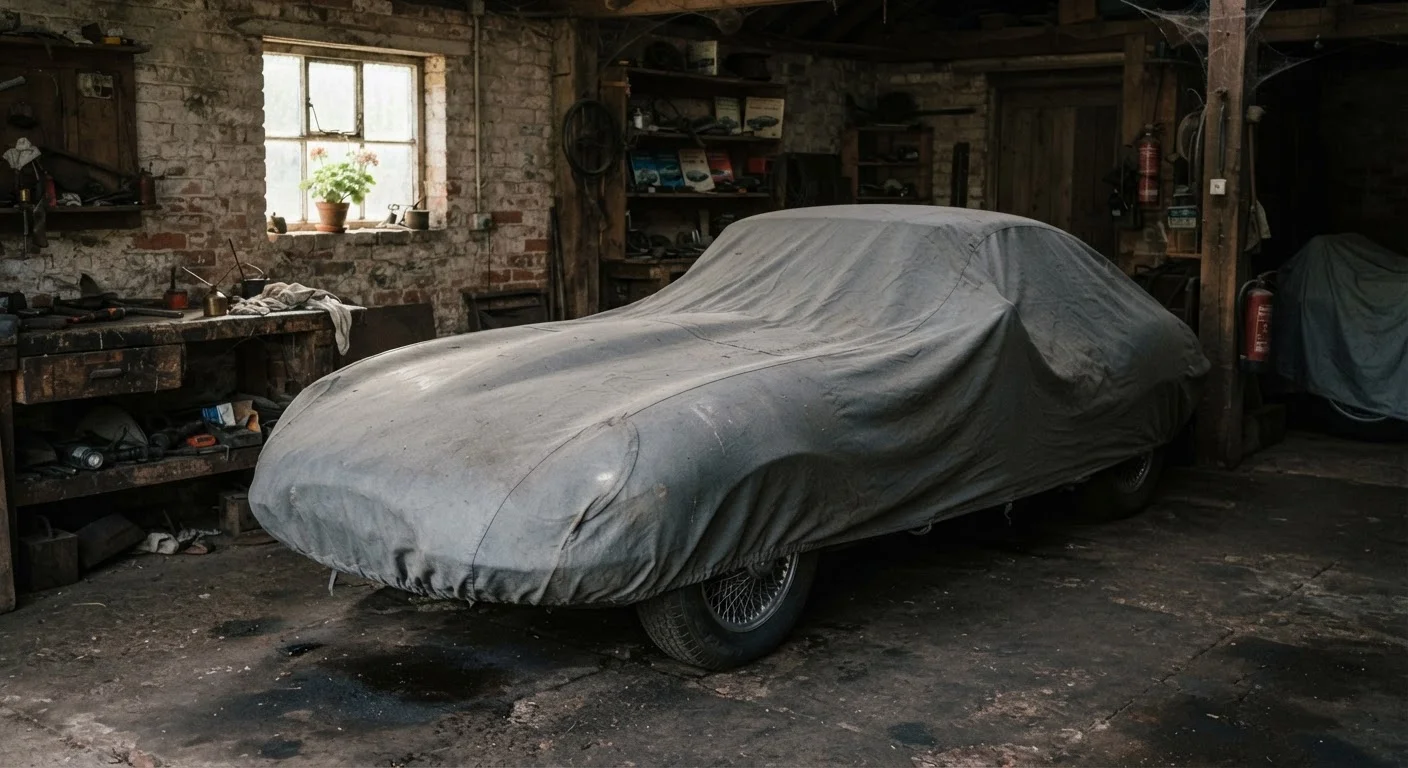
Store the vehicle in a sheltered, dry location and use a breathable cover.
Moisture is one of the primary causes of rust, mold in upholstery, and seal deterioration. Direct sun accelerates paint and rubber degradation. A breathable fabric cover allows trapped moisture to escape while protecting exterior surfaces from dust and debris.
Periodically move the vehicle or release the parking brake to prevent brake rotor surface rust and flat-spotting.
Brake rotors develop surface rust quickly when a vehicle sits — sometimes within days in humid conditions. While light rust wears off during normal driving, heavy accumulation affects braking performance. Leaving the parking brake engaged for extended periods can also cause the rear brake pads or shoes to bond to the rotors.
Quick Actions You Can Take Today
If your vehicle is already sitting idle and you haven't yet prepared it for storage, the following steps can limit ongoing damage without requiring a full mechanical inspection.
Returning a Stored Vehicle to Service
Bringing a long-idle vehicle back into regular use deserves the same care as putting it into storage. Before your first drive, visually inspect the tire sidewalls for cracking and check pressures with a reliable gauge — tires naturally lose around 1–2 PSI per month without any puncture. Check all fluid levels, including engine oil, coolant, brake fluid, and power steering fluid. Look under the vehicle for any signs of pooled fluid that may indicate a seal has failed during storage.
Start the engine and let it idle for several minutes before driving. Listen for anything unusual — a rattling that wasn't there before, a rough idle, or warning lights that persist after startup. If the battery failed to hold a charge despite conditioning, a load test will confirm whether replacement is needed. Our guide on car battery health and when to replace walks through this process in detail.
Finally, record everything you observed and corrected in your vehicle's maintenance log. A documented storage period — including what was done before and after — forms part of a complete service history. Our guide to building a vehicle maintenance log explains how to structure these records effectively.
The information in this article is intended as general guidance for vehicle owners. For complex mechanical concerns or vehicles that have been stored for an unusually long period, consult a qualified mechanic before returning the vehicle to regular use.