Why a Maintenance Log Is Worth the Effort
Most car owners intend to stay on top of servicing but rely on memory alone — and memory is unreliable. A maintenance log converts good intentions into a reliable, timestamped record that removes guesswork entirely.
The practical benefits run in two directions. First, you'll never miss a service interval because you can always see exactly when the last oil change, tyre rotation, or brake inspection occurred. Second, when it comes time to sell, a documented history tells a prospective buyer far more than verbal assurances ever could. As noted in our guide to decoding a used car's service history, buyers treat verified records as a significant trust signal.
If you're new to owning a car and unsure what routine upkeep involves, A Beginner's Map to Car Maintenance is a good starting point before you begin logging anything.
What to Include in Every Log Entry
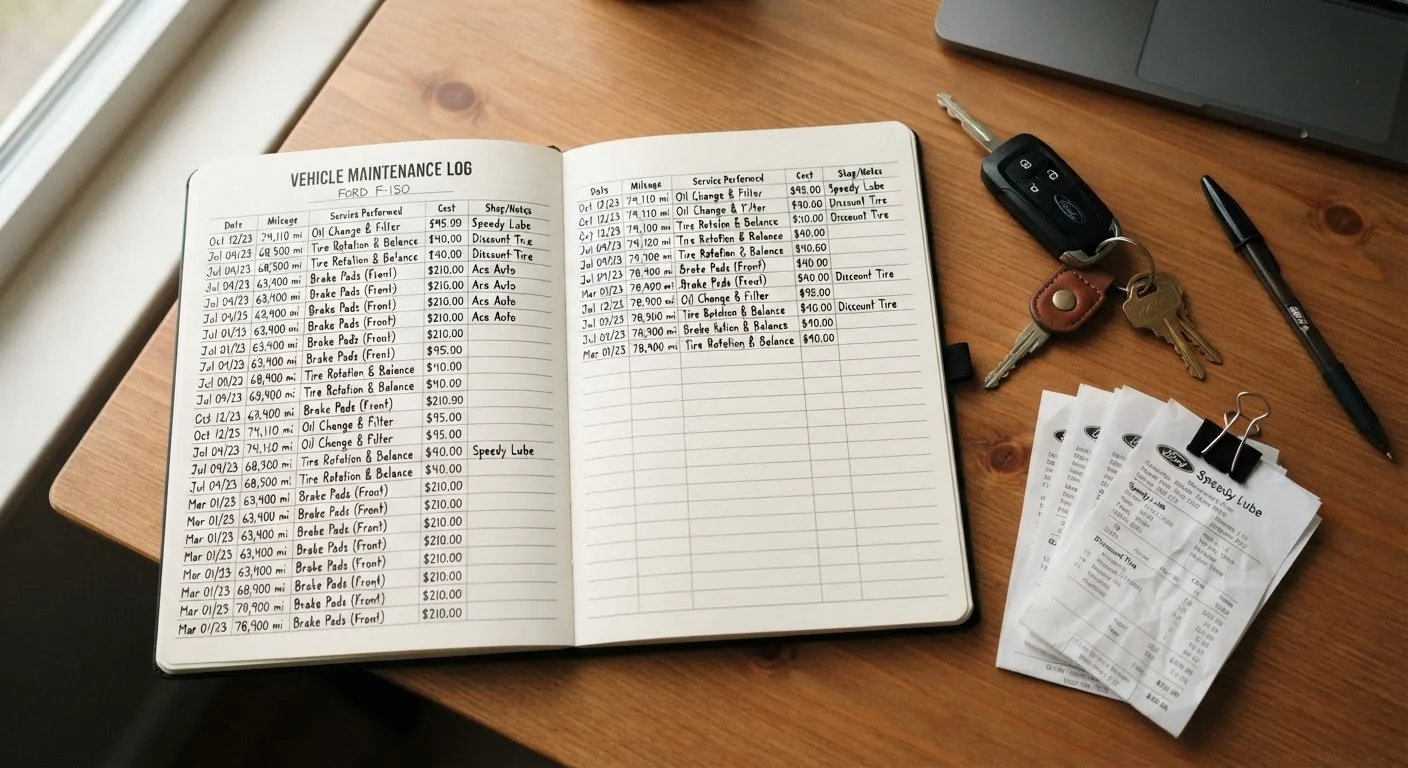
A useful maintenance entry captures enough detail to be actionable later. For each service event, record the following at a minimum:
- Date — the day the work was carried out
- Odometer reading — the mileage at the time of service
- Service type — a clear description (e.g., "oil and filter change," "front brake pads replaced")
- Parts used — part numbers or specifications where relevant
- Workshop or technician — the name of the shop or a note if self-performed
- Cost — total amount paid, useful for budgeting future work
- Next due date or mileage — when this service is next required
That last item is the most overlooked. Logging when something is next due turns your record into an active reminder system rather than just a historical archive.
For a clear picture of which services are due at which intervals, refer to Your Car's Maintenance Schedule, Explained.
Start Now, Even Mid-Ownership
Many owners delay starting a log because they feel their existing history is too incomplete to be worthwhile. Don't let this stop you. A log that begins today — noting the current odometer and what you know — is immediately useful. Partial records still demonstrate care and diligence to future buyers.
Choosing Your Format
There's no single correct format — the best one is the one you'll use consistently. Three common approaches each have real advantages:
- Paper logbook
- Simple and requires no technology. A dedicated notebook stored in the glovebox means it's always with the vehicle. Works well for owners who prefer a physical record and keep their receipts in a folder alongside it.
- Spreadsheet
- A shared spreadsheet (such as one stored in cloud storage) is easy to sort, search, and duplicate for multiple vehicles. You can add columns for warranty expiry dates or recall notices without redesigning the whole system.
- Maintenance tracking app
- Several free and low-cost apps are designed specifically for vehicle logs. Many send automated reminders when a service is approaching based on your recorded intervals. Useful if you tend to forget to check a notebook.
Whatever format you choose, back it up. A paper logbook can be lost; a local spreadsheet can be deleted. Store a digital copy somewhere accessible.
Setting Up and Maintaining Your Log
Follow these steps to get your maintenance log up and running — even if your vehicle already has some history behind it.
Gather existing records
Before creating anything new, collect what you already have: the owner's manual, any stamped logbook from previous owners, receipts from past services, and any dealer invoices. These form the foundation of your log and help you reconstruct history where possible.
Record your vehicle's baseline details
Create a header section in your log with the vehicle's make, model, year, engine type, VIN (Vehicle Identification Number), current odometer reading, and any existing warranty information. This baseline ensures the log is always tied to a specific vehicle unambiguously.
Enter all known past service events
Working from your gathered receipts and logbook stamps, enter each past service event using the fields outlined above — date, odometer, service type, parts, workshop, cost, and next due. Start with the oldest records first and work forward chronologically.
Log your next scheduled services
Consult your owner's manual or manufacturer's service schedule and add forthcoming service milestones as future entries. Include the expected odometer reading or date window for each. This transforms the log into a forward-looking maintenance planner.
Update the log after every service event
Make updating your log a habit immediately after each service — while the receipt is in hand and the details are fresh. File or photograph the receipt and attach it to the corresponding entry if your format allows. Letting entries accumulate leads to gaps and diminishes the log's reliability.
If your vehicle has been sitting unused for a period, consult our article on keeping long-idle vehicles in good condition before logging and resuming normal use — some extra checks may be needed first.
For vehicles that follow a manufacturer schedule, our overview of what a logbook service actually covers will help you understand what each service milestone includes and how to record it accurately.