What Is a Logbook Service?
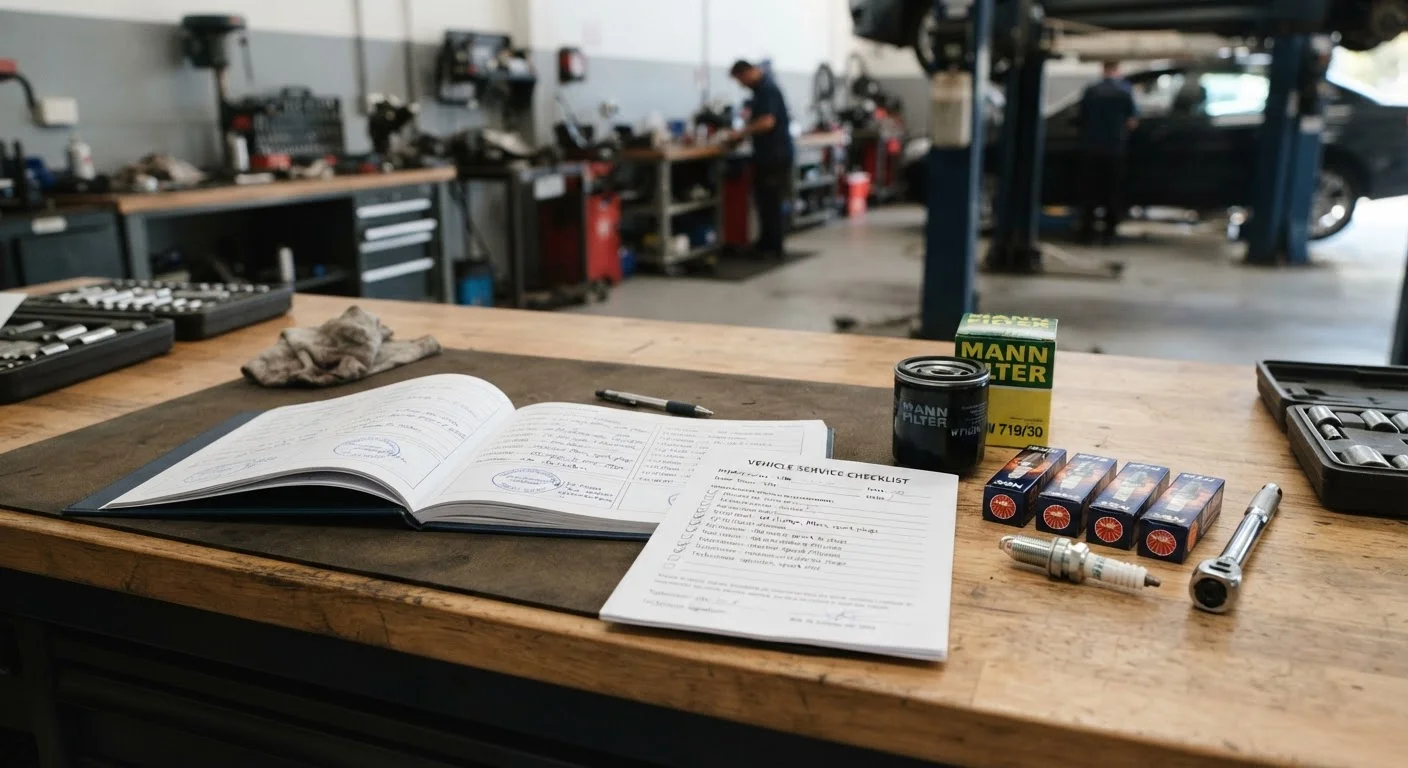
A logbook service is a scheduled vehicle inspection and maintenance procedure performed in line with the intervals and specifications set out by the vehicle's manufacturer. The term "logbook" refers to the owner's service booklet — a physical or digital record that technicians stamp after each service to confirm the work was completed.
Following this schedule matters for several reasons. It keeps your warranty valid (where applicable), maintains the vehicle in safe operating condition, and preserves resale value. A full service history is one of the most reassuring things a used car can have — see what a complete service record signals when buying second-hand.
| Typical minor service interval | Every 10,000–15,000 km or 12 months (General industry standard; varies by manufacturer) |
| Typical major service interval | Every 30,000–60,000 km (Manufacturer-dependent; check owner's manual) |
| Brake fluid flush frequency | Every 2 years (regardless of mileage) (Common manufacturer recommendation) |
| What triggers a service | Kilometres driven or time elapsed — whichever comes first |
| Logbook stamp purpose | Verifies service was completed to manufacturer spec |
| Warranty implication | Logbook servicing is typically required to maintain new car warranty (Varies by manufacturer warranty terms) |
Logbook services are typically divided into minor and major milestones, alternating at set kilometre or time intervals — whichever comes first.
Minor vs. Major Service: What Each Covers
Most manufacturer schedules follow a pattern: a minor service every 10,000–15,000 km (or 12 months), with a major service every 30,000–60,000 km depending on the vehicle. The exact figures are always in your owner's manual.
Minor Service — Typical Inclusions
- Engine oil and oil filter replacement
- Visual inspection of brakes, tyres, and lights
- Top-up of fluid levels (coolant, brake fluid, washer fluid, power steering fluid)
- Tyre pressure check and adjustment
- Multi-point safety inspection and fault-code scan
Major Service — Additional Inclusions
- Air filter replacement
- Cabin (pollen) filter replacement
- Spark plug replacement (petrol engines)
- Fuel filter replacement (where applicable)
- Brake fluid flush (typically every 2 years regardless of mileage)
- Drive belt and serpentine belt inspection or replacement
- Transmission fluid check or change (vehicle-specific)
- Comprehensive suspension and steering component inspection
Not every item above applies to every vehicle. A diesel engine, for example, does not have spark plugs. Always cross-reference with your specific model's schedule — our guide to reading your vehicle's maintenance schedule explains how to interpret manufacturer intervals.
Why Sticking to the Schedule Pays Off
Skipping or delaying a service rarely saves money in the long run. Engine oil degrades over time, losing its ability to lubricate and clean internal components. Worn spark plugs reduce fuel efficiency. A clogged air filter stresses the engine. These are small costs that compound into large repair bills when left unaddressed.
Beyond mechanical reliability, a stamped logbook is documented proof of care. It can meaningfully affect a vehicle's resale price and buyer confidence. Keeping your own maintenance log alongside the official service book adds an extra layer of detail that buyers and mechanics both appreciate.
If you're new to vehicle ownership and want a broader picture of what regular upkeep involves, a beginner's map to car maintenance is a useful starting point before diving into specific service items.
This article provides general maintenance information for educational purposes. Service intervals and inclusions vary by vehicle make, model, and year — always consult your owner's manual or a qualified mechanic for guidance specific to your vehicle.