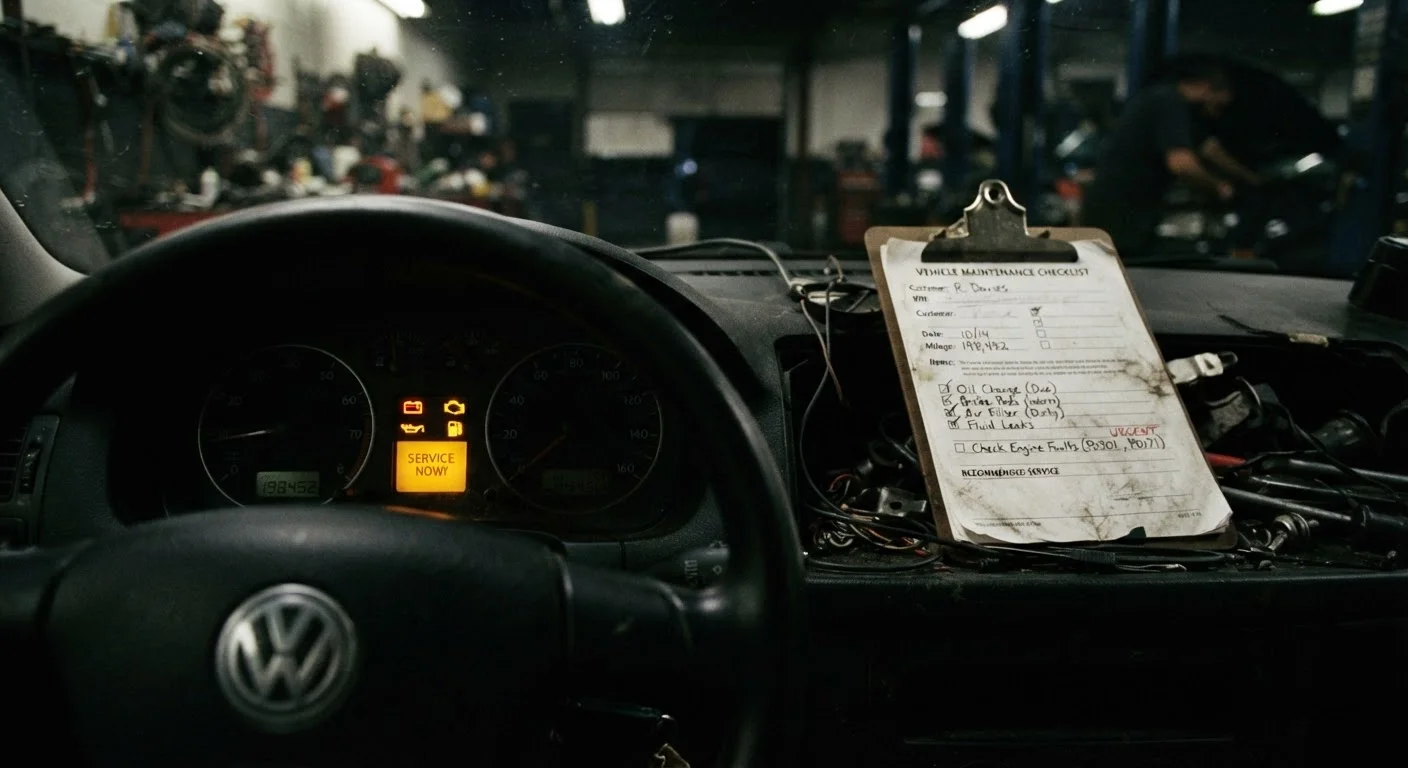
Why Deferred Maintenance Compounds Over Time
Routine service schedules are not arbitrary — they reflect engineering data about how long fluids, filters, and wear components perform safely before they begin to degrade. When one service is skipped, the vehicle typically continues functioning, which creates the false impression that the service wasn't necessary. The real damage accumulates out of sight.
Think of it in layers: old engine oil becomes acidic and abrasive, gradually wearing bearing surfaces. A clogged air filter forces the engine to work harder, stressing fuel injectors and the mass airflow sensor. Neglected coolant corrodes passages that take months or years to manifest as an overheating event or a failed water pump. Each skipped service narrows the margin of protection for everything downstream.
For a full picture of what each interval is designed to protect, see Your Car's Maintenance Schedule, Explained, which walks through why each service exists and what it safeguards.
Neglect Can Void Your Warranty
Most new vehicle limited warranties require proof that scheduled maintenance was performed at the manufacturer's recommended intervals. Skipping services and lacking documentation can give a manufacturer or dealer grounds to deny a warranty claim. Keep all service records — receipts, shop invoices, or a dated DIY log — in a dedicated folder for the life of the vehicle.
The Most Common Skipped Services — and What They Risk
Certain services are skipped more frequently than others, often because their consequences are delayed or invisible. The mistakes below represent the patterns most likely to result in costly repairs when ignored. Each one follows a predictable path from small oversight to significant failure.
Pushing oil changes well past the manufacturer's recommended mileage or time interval.
Why it happens: Modern synthetic oils and longer drain intervals have led many drivers to assume oil lasts indefinitely, or that the reminder light is overly conservative.
Ignoring air filter replacement until airflow is visibly restricted.
Why it happens: Air filters degrade gradually and the effect on performance is subtle at first, so many drivers don't notice until fuel economy drops noticeably.
Skipping coolant flushes because the level appears adequate on the reservoir.
Why it happens: Coolant level and coolant condition are two different things. Drivers often check the reservoir and assume "full means fine," not knowing the fluid's protective additives break down over time.
Deferring brake fluid changes because the brakes still feel functional.
Why it happens: Brake fluid absorbs moisture from the air over time — a process called hygroscopic absorption — which lowers its boiling point. Because braking still works, the risk feels invisible.
Delaying transmission service because no symptoms are present.
Why it happens: Transmission problems often develop silently, and service is less frequent than oil changes, making it easy to overlook in a busy schedule.
Understanding the repair costs that follow neglected services puts the stakes in clearer terms. The Real Cost of Skipping Routine Maintenance breaks down how deferred services translate into larger bills — with real examples of what each failure typically involves.
How to Get Back on Track After Falling Behind
If you've missed multiple services, don't assume you need to address everything at once. Start by pulling out your owner's manual and identifying which services are overdue based on your current mileage and the date of your last documented service. Prioritize engine oil, brake fluid, and coolant — fluids that directly affect safety and engine longevity — over lower-urgency items like cabin air filters or spark plugs.
A licensed mechanic can perform a multi-point inspection to assess your vehicle's current condition and flag anything that requires immediate attention versus items that can wait a service interval. This is especially useful if you've bought a used vehicle with incomplete service records. Getting the Most Out of a Mechanic Visit Without Overcommitting to Repairs offers practical guidance on how to approach that conversation and evaluate recommendations confidently.
Going forward, the simplest system is the one you'll actually follow: set a calendar reminder tied to mileage milestones, keep a maintenance log in your glove box, and treat the car maintenance hub as a reference point whenever you're unsure what's due. Catching up on overdue services today is almost always less expensive than the repairs that follow from continuing to wait.