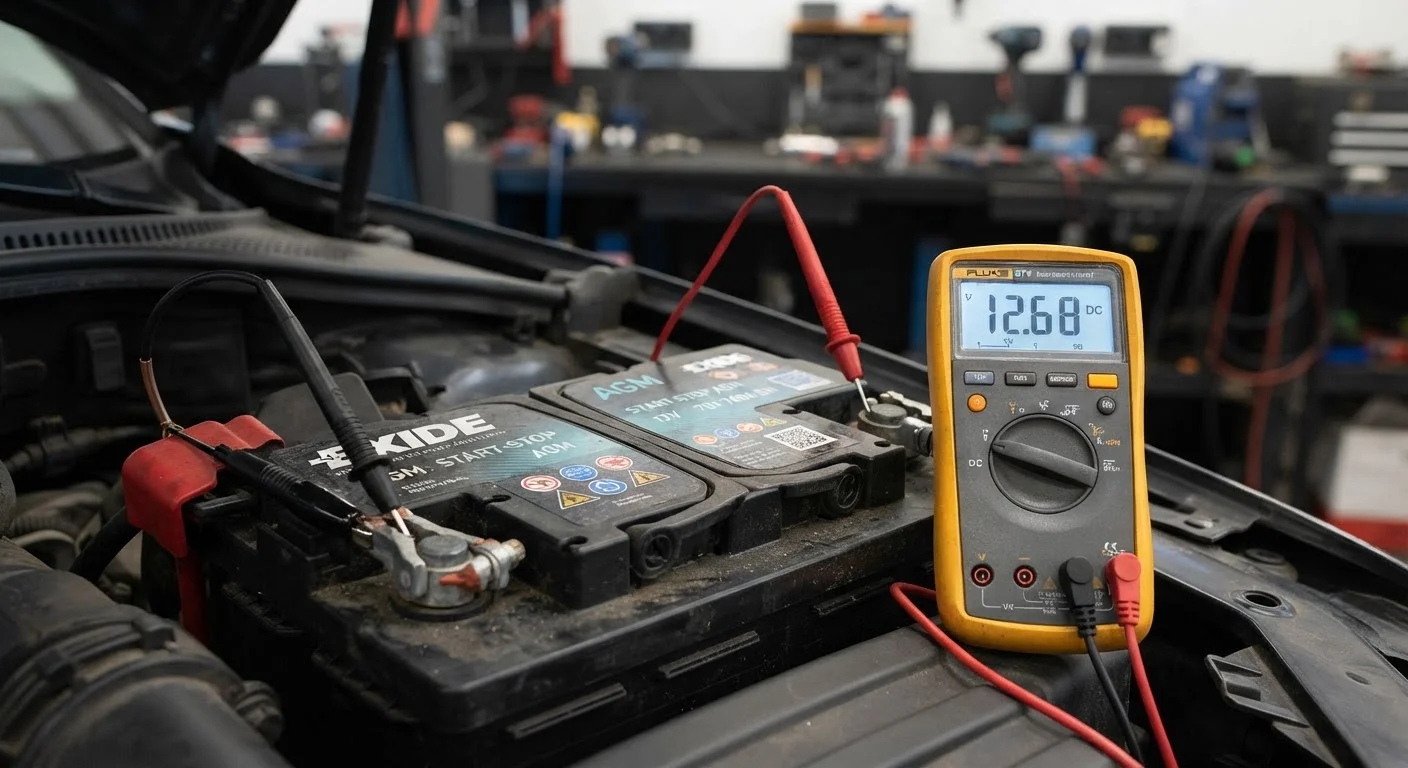
How a Car Battery Works
The 12-volt lead-acid battery in most conventional vehicles serves two primary roles: it delivers a large burst of current to start the engine, and it stabilises voltage across the electrical system while the vehicle is running. Once the engine is on, the alternator takes over and recharges the battery. This charge-discharge cycle repeats thousands of times over the battery's life.
Inside the battery, lead plates are submerged in a sulfuric acid electrolyte solution. Each charge-discharge cycle causes microscopic changes to those plates — a process called sulfation — that gradually reduces capacity. Understanding this helps explain why age, usage patterns, and temperature all affect how long a battery lasts. For a broader look at how powertrain components interact during normal driving, see what to assess on a test drive.
What Drains a Car Battery
Battery drain falls into two categories: normal depletion over time and accelerated depletion from avoidable factors.
Short Trips
When you drive less than 15–20 minutes at a stretch, the alternator may not fully recharge what the starter motor used. Repeated short trips leave the battery in a chronically partial state of charge, which accelerates plate sulfation and shortens service life significantly.
Extreme Temperatures
Heat is a battery's primary enemy. High ambient temperatures speed up the internal chemical reactions that cause corrosion and electrolyte loss. Cold weather, meanwhile, thickens engine oil and increases the cranking load — a battery already weakened by summer heat may fail its first cold winter morning. A battery operating at 0°F (–18°C) can lose up to 60% of its rated cranking power compared to its 80°F (27°C) performance.
Parasitic Drain
All modern vehicles draw a small amount of current even when switched off — clocks, alarm systems, and memory modules need continuous power. A normal parasitic draw is typically under 50 milliamps. A faulty relay, a malfunctioning module, or an aftermarket accessory left on can push that figure much higher, draining a battery overnight. This is a common cause of unexplained dead batteries in vehicles that appear otherwise healthy. For a deeper look at the habits that accelerate battery wear, the battery health habits guide covers the topic in detail.
If your vehicle sits unused for more than two weeks at a time, connect a battery maintainer rather than waiting for a dead battery. Even a modest parasitic draw will deplete a healthy battery within 30 days.
Battery maintainers (also called trickle chargers) deliver a low, regulated charge that keeps the battery at full capacity without overcharging — extending both service life and reliability.
Before attributing a dead battery to age, always rule out parasitic drain first. Have a technician measure key-off current draw — it can save you the cost of replacing a battery that's actually fine.
A faulty relay, aftermarket alarm, or failing module can drain a new battery in days, leading owners to cycle through batteries unnecessarily without addressing the root cause.
How to Test Battery Health
Two tests are commonly used, and it matters which one you rely on.
Voltage Test
A resting voltage check with a multimeter is a quick starting point. A fully charged 12-volt battery should read approximately 12.6 volts or higher with the engine off. A reading below 12.4 volts suggests the battery is only partially charged; below 12.0 volts indicates significant discharge. However, a battery can show acceptable resting voltage yet fail under load — this is where many owners are misled.
Load Test
A load test applies a controlled current draw — typically half the battery's cold cranking amp (CCA) rating — for 15 seconds while monitoring voltage. A healthy battery should hold above 9.6 volts under load. If voltage drops below that threshold, the battery lacks sufficient reserve capacity for reliable starting. Load testers are available at most auto parts stores and many workshops. If you're visiting a mechanic for this check, the mechanic visit guide explains how to ask the right questions and interpret what you're told.
Conductance Testing
Modern electronic battery analysers use conductance testing — measuring how well the battery conducts an electrical signal — to assess internal plate condition without a full discharge. These are fast, accurate, and increasingly common at service centres.
Signs Your Battery Needs Replacing
A battery rarely fails without warning. Watch for these indicators:
- Slow or laboured cranking: The engine turns over noticeably more slowly than usual, especially on cold mornings.
- Dimming headlights or interior lights: Visible light output changes when other electrical loads are applied, suggesting the battery cannot sustain stable voltage.
- Frequent need for jump-starts: Any battery that requires jump-starting more than once in a short period should be tested immediately.
- Battery warning light: This light indicates a fault in the charging system — which may involve the battery, alternator, or both.
- Swollen or bloated case: Heat damage can cause the battery casing to bulge. A visibly deformed battery should be replaced without delay.
- Corrosion at terminals: White or blue-green powder around the terminals can impede current flow and is often a sign of an ageing or overcharging battery.
If you've recently purchased a used vehicle, battery age may be unknown. Weighing a used car purchase always includes accounting for the cost of near-term maintenance items like this.
A Swollen Battery Case Is an Emergency
A battery with a visibly bulging or bloated case has suffered internal damage — typically from excessive heat or overcharging. Do not attempt to jump-start, charge, or test a swollen battery. Have the vehicle inspected by a qualified technician and the battery replaced as soon as possible. Damaged lead-acid batteries can leak sulfuric acid or, in rare cases, vent flammable hydrogen gas.
When and How to Replace
Most manufacturers and automotive engineers recommend replacing a lead-acid battery every three to five years, regardless of apparent condition — particularly in climates with temperature extremes. If a load test confirms reduced capacity, replacement is warranted immediately rather than waiting for a full failure.
When selecting a replacement, match or exceed the original battery's CCA rating and physical group size as specified in your owner's manual. Installing an undersized battery stresses the alternator and may void electrical system warranties.
Battery replacement is a task many mechanically comfortable owners perform themselves: it typically requires basic hand tools and careful attention to terminal polarity. That said, vehicles with complex electrical systems — particularly those with power windows, sunroofs, advanced driver-assistance systems, or electronic throttle controls — may require a memory saver device to preserve module settings during the swap. When in doubt, have the replacement performed by a qualified technician.
For vehicles in extended storage, a trickle charger or battery maintainer can prevent discharge-related damage. Keeping long-idle vehicles in good condition covers this and other storage considerations in full.
It's also worth noting that 12-volt lead-acid batteries behave quite differently from the high-voltage lithium-ion packs in electric vehicles. If you're curious about how EV batteries degrade over time, EV battery degradation data provides an evidence-based overview.
This article is intended for general informational purposes. Always consult your vehicle's owner's manual and, where appropriate, a qualified automotive technician before performing any maintenance or repairs.