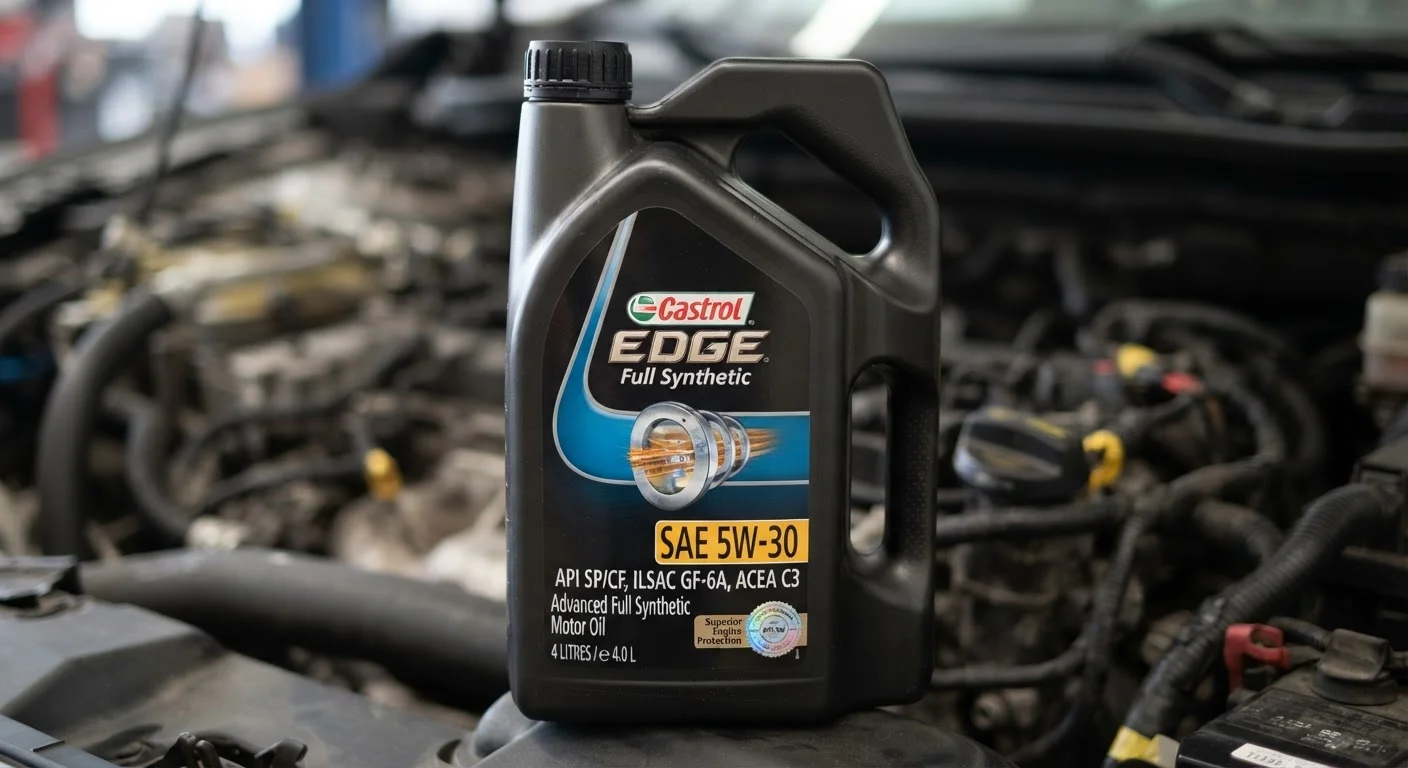
What the Numbers on an Oil Label Actually Mean
Pick up any bottle of engine oil and you'll see a code like 5W-30 or 10W-40. These numbers describe the oil's viscosity — its resistance to flow — under two different temperature conditions, following a grading system established by the Society of Automotive Engineers (SAE).
| SAE Viscosity Standard | Society of Automotive Engineers (SAE) J300 |
| "W" in oil grades stands for | Winter (cold-temperature performance rating) |
| Most common modern passenger car grades | 0W-20, 5W-20, 5W-30 |
| Typical synthetic oil change interval | 10,000–15,000 miles (per manufacturer spec) |
| Primary source for correct oil grade | Your vehicle's owner's manual |
| Oil life monitors measure | Engine cycles, temperature, RPM, and cold starts |
The number before the "W" (which stands for Winter, not weight) indicates how the oil behaves at cold startup temperatures. A lower number means the oil flows more freely when your engine is cold — critical because most engine wear occurs in those first seconds after a start. The number after the hyphen describes viscosity at normal operating temperature, typically around 212°F (100°C). A higher number means a thicker oil film at heat.
So 5W-30 flows almost as freely as a 5-weight oil when cold, and maintains the protective thickness of a 30-weight oil once the engine is warm. Multi-grade oils like this replaced older single-grade oils because they protect across a wider temperature range — especially important in climates with cold winters or hot summers.
For a deeper look at how oil types compare, see how synthetic and conventional oils differ in composition.
How to Find the Right Grade for Your Engine
Your vehicle's owner's manual is the definitive source for the correct viscosity grade. Manufacturers test their engines extensively and specify a grade — or sometimes a range of acceptable grades — based on engine tolerances, oil pump design, and intended operating conditions. Using the wrong grade can affect oil pressure, fuel economy, and long-term engine health.
Common grades for modern passenger cars include 0W-20, 5W-20, and 5W-30. Older engines and those under heavy loads (towing, high mileage) may call for thicker grades like 10W-40. If your manual lists multiple approved grades, the choice between them is typically driven by climate: a lower cold-temperature rating (the "W" number) is preferable for colder regions.
Do not rely on general advice or what was used in a previous vehicle. Engine tolerances have tightened significantly over the past decade — many modern engines with variable valve timing or turbochargers depend on precise oil flow characteristics that only the specified grade can deliver.
To understand how oil fits into your vehicle's broader service plan, see the complete maintenance schedule guide.
Oil Change Intervals: How Long Is Too Long?
The old rule of thumb — change oil every 3,000 miles — is outdated for most modern vehicles. Today's refined base oils and additive packages, combined with tighter manufacturing tolerances, allow many manufacturers to specify intervals of 5,000 to 10,000 miles for conventional oil and up to 10,000 to 15,000 miles for full synthetic oil.
What actually degrades oil over time? Heat, oxidation, combustion byproducts (soot, acids, moisture), and mechanical shear all break down the oil's protective additive package. Once those additives are depleted, the base oil alone cannot adequately protect metal surfaces.
Many late-model vehicles include an oil life monitoring system (OLM) that calculates remaining oil life using algorithms based on engine temperature cycles, RPM, cold starts, and mileage — not just a simple odometer countdown. When the system alerts you, that is a reliable signal to change the oil.
If your vehicle lacks an OLM, follow the interval in your owner's manual. Shorter intervals may be appropriate for severe service conditions: frequent short trips under five miles, extreme heat or cold, heavy towing, or prolonged idling. For a full breakdown of interval logic, see what oil change intervals are actually based on.
Checking your oil level regularly between changes is equally important. Learn how in our guide to checking your car's essential fluids.