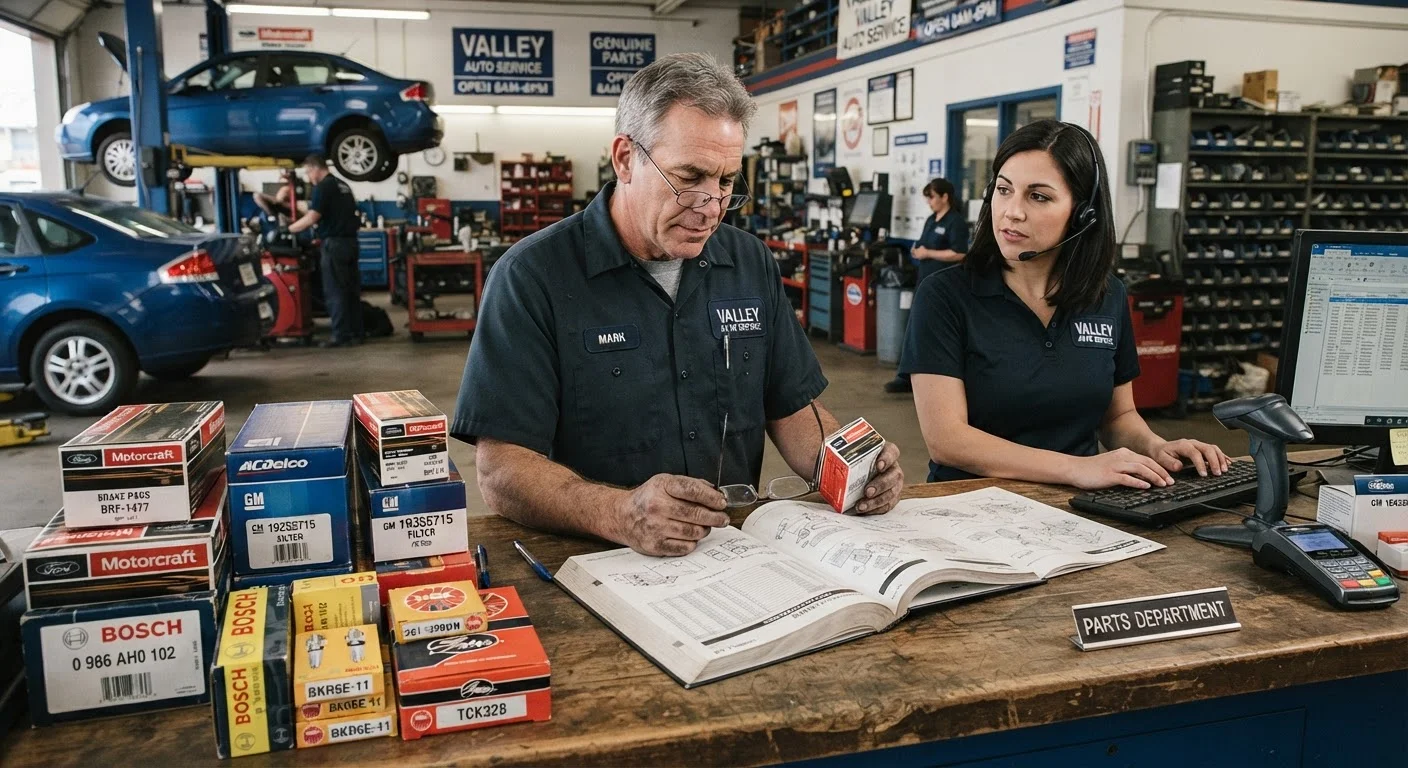
Why Your Parts Source Matters
When your car needs a replacement part — whether it's brake pads, an oxygen sensor, or a water pump — you have three broad options for where that part comes from: the dealership, an independent repair shop, or sourcing it yourself. Each route carries different implications for cost, part quality, warranty protection, and how much responsibility you take on.
Understanding those differences helps you make a confident, informed choice rather than defaulting to whichever option seems most convenient. It also connects directly to a broader question about part types — specifically, whether a part is OEM (original equipment manufacturer), aftermarket, or remanufactured. If those terms are unfamiliar, see our plain-language breakdown of OEM vs. aftermarket parts before diving in.
Dealership Parts and Service: Guaranteed Fit, Higher Cost
Dealerships source parts directly from the vehicle manufacturer or an authorized supplier. These are generally OEM parts — meaning they match the specifications of the component originally installed at the factory. For owners whose vehicles are still under a manufacturer warranty, using OEM parts through an authorized dealer is often required to keep that warranty intact.
The trade-off is cost. Dealership parts and labor rates are typically the most expensive of the three routes. You're paying for manufacturer-backed quality assurance, certified technicians trained on your specific make, and the infrastructure that supports all of that.
Dealerships are the clearest choice when: your vehicle is under warranty; the repair involves complex, model-specific systems (like advanced driver-assistance modules); or the part is difficult to source reliably elsewhere. For older, out-of-warranty vehicles and routine maintenance, the premium may not be justified.
| Dealership | Independent Shop | Self-Supply | |
|---|---|---|---|
| Typical part type | OEM / manufacturer-spec | Aftermarket or OEM on request | Your choice — varies widely |
| Relative cost | Highest | Moderate | Lowest potential, variable |
| Warranty protection | Manufacturer warranty maintained | Shop warranty on parts and labor | Parts warranty only; labor often excluded |
| Fitment assurance | High — VIN-matched parts | Generally good with reputable suppliers | Owner's responsibility to verify |
| Convenience | One-stop, managed process | One-stop for most repairs | Requires additional research and sourcing time |
| Best vehicle age/status | Under warranty or late-model | Most vehicles | Older, out-of-warranty vehicles |
Independent Shops: Flexibility and Value for Most Repairs
Independent repair shops — including chains and locally owned garages — have more flexibility in where they source parts. Many use reputable aftermarket brands that meet or exceed OEM specifications, and some will order OEM parts on request. This flexibility often translates to lower overall costs for the customer, both on parts and labor rates.
Quality control is the key variable. A well-run independent shop will work with established parts suppliers and stand behind the parts they install, usually offering their own limited warranty on parts and labor. Less reputable shops may cut corners with low-grade parts, so it's worth asking what brand of part is being used and whether any warranty is included.
For most everyday repairs — brake jobs, suspension work, engine sensors, belts, and filters — a trusted independent shop represents a practical middle ground. The comparison between independent and dealership assessments offers additional context on evaluating shop quality in general.
Self-Supply: Maximum Control, Maximum Responsibility
Sourcing your own parts — then having a shop install them or doing the work yourself — puts the most control in your hands, along with the most responsibility. You can shop across multiple suppliers, compare part grades, and potentially reduce costs. However, if a part turns out to be wrong, defective, or of poor quality, that's on you.
Most shops will install customer-supplied parts, but many will not warranty the labor if the part itself fails. That's a meaningful risk to weigh. Self-supply works best for experienced DIY owners doing straightforward, well-documented maintenance tasks — oil filters, air filters, wiper blades, spark plugs — on older vehicles where cost savings are worth the extra effort.
Before going this route, it helps to understand the full terminology landscape. Labels like "remanufactured," "rebuilt," and "used" mean different things, and choosing the wrong category for a given repair can be costly. Our article on remanufactured, rebuilt, and used parts breaks this down clearly.
Note: For any repair involving safety systems — brakes, steering, airbags, or emissions components — consult a qualified mechanic regardless of where parts are sourced. Incorrect installation of safety-critical parts can cause serious injury or vehicle damage.