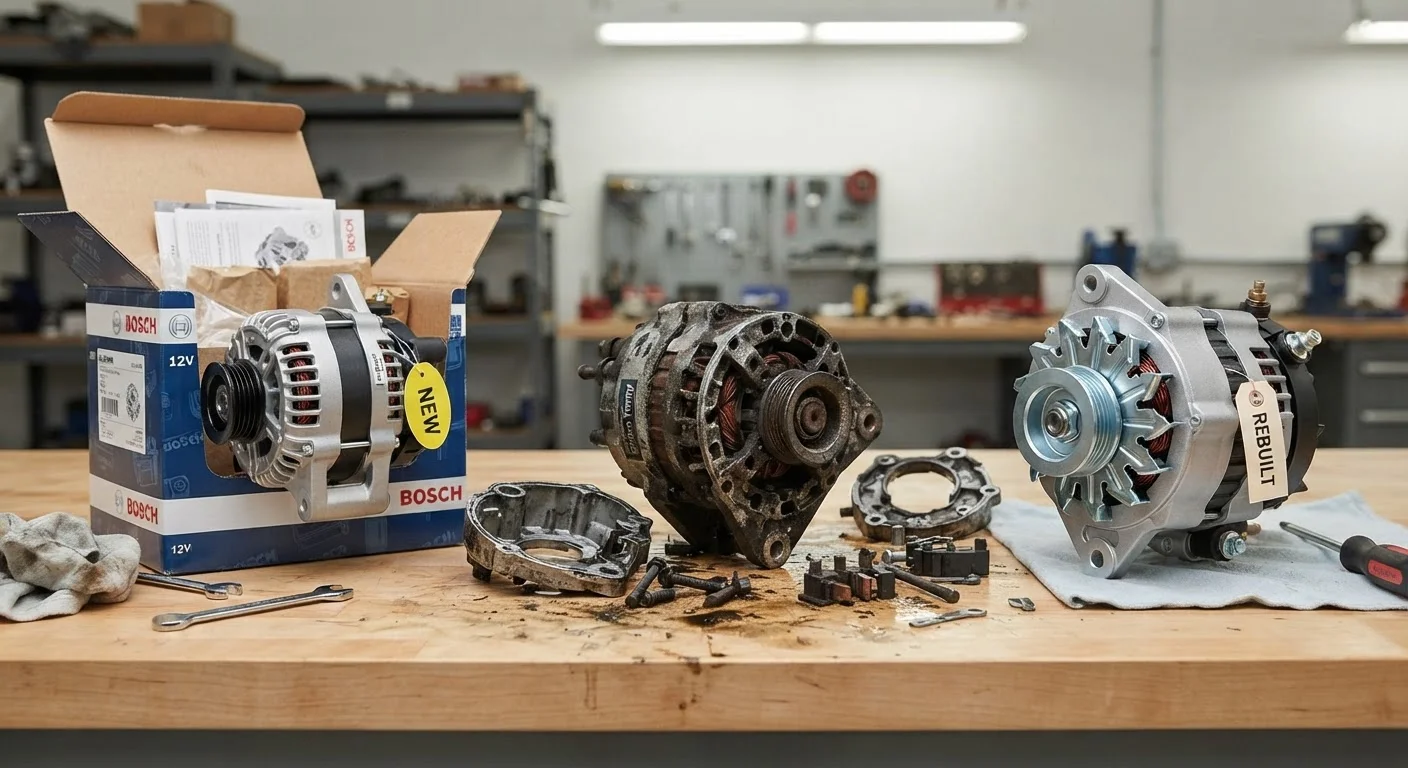
Why These Labels Get Confused
Walk into a parts store or scroll through an online catalog, and you'll quickly notice that the terms used, rebuilt, and remanufactured often appear side by side — sometimes applied to the same part. Sellers don't always draw a clear line between them, and because there's no single federal standard governing how these words are used, the same label can mean different things depending on where you're shopping.
For everyday drivers, this matters. Choosing the wrong category of part for a given repair can affect reliability, cost, and even safety. Understanding what each term actually describes is the first step toward making a confident decision — and toward having a more productive conversation with your mechanic or shop.
See our guide to OEM vs. aftermarket parts for a related distinction that also affects what you're buying.
Used Parts: Pulled and Sold As-Is
A used part — also called a salvage part or pull-out part — is removed from a donor vehicle and sold in essentially the same condition it was in when removed. There's little to no restoration work involved. The part is typically cleaned, visually inspected, and sometimes tested, but it hasn't been disassembled or refurbished.
Used parts are most often sourced from salvage yards, sometimes called auto recyclers. They're usually the least expensive option, which makes them attractive for older vehicles or cosmetic repairs where exact condition is less critical.
Check Condition Before Buying a Used Part
If you're considering a used part, ask the salvage yard whether it's been tested and whether any warranty — even a short one — is offered. Some reputable auto recyclers test electrical and mechanical components before sale and will stand behind them for 30 to 90 days. That small assurance meaningfully reduces your risk compared to an untested pull.
The key limitation is unknown wear history. A used alternator may have 30,000 miles of life left — or 3,000. Without detailed records of the donor vehicle, there's no reliable way to know. This makes used parts a higher-risk choice for components that are expensive to install or critical to vehicle safety.
Common candidates for used parts include body panels, mirrors, interior trim, and other non-mechanical components where condition is easier to assess visually.
Rebuilt Parts: Repaired to Working Order
A rebuilt part has been taken apart, inspected, and repaired enough to function again. Worn or broken components are replaced, and the part is reassembled and tested. The goal is a working part — but the depth of that work can vary considerably from one shop to the next.
Because there's no universal industry standard for what "rebuilt" requires, two rebuilt starters from two different suppliers might represent very different levels of refurbishment. One shop might replace every wear item; another might only fix what was visibly broken. This inconsistency is the main reason mechanics sometimes prefer to specify "remanufactured" when ordering parts for more demanding repairs.
$40B+
U.S. auto parts remanufacturing industry size
The Automotive Parts Remanufacturers Association (APRA) has cited the remanufacturing sector as a multi-billion dollar segment of the U.S. automotive aftermarket.
85%
Core material reused in remanufacturing
Industry estimates suggest remanufacturing reuses a significant majority of the original part's material by weight, reducing raw material demand compared to producing new parts.
That said, a well-rebuilt part from a reputable supplier can be a solid middle-ground option — better than used, less expensive than remanufactured, and appropriate for many common repairs on vehicles where cost is a significant factor.
Remanufactured Parts: Restored to Factory Specifications
A remanufactured part goes through the most thorough restoration process of the three. The part is fully disassembled, every component is cleaned and inspected, worn or out-of-spec parts are replaced (not just the ones that are visibly broken), and the unit is reassembled and tested to meet the original manufacturer's specifications.
This process is sometimes called "reman" in the industry and is common for complex mechanical and electronic components: alternators, starters, brake calipers, fuel injectors, power steering racks, and more. The result is a part that is designed to perform like new, often backed by a warranty comparable to what you'd see on a new part.
Remanufacturing is also a more resource-efficient process than manufacturing entirely new parts — a factor some owners weigh alongside cost and performance.
For a broader look at how part sourcing affects cost and coverage, see our article on sourcing car parts from different suppliers.
How to Apply This When Talking to Your Mechanic
When a mechanic recommends a replacement part, it's worth asking which category they're planning to use and why. For safety-critical systems — brakes, steering components, fuel delivery — a remanufactured part is often the most defensible choice outside of buying new. For older or high-mileage vehicles where you're managing costs carefully, a quality rebuilt part may be entirely appropriate.
Ask these questions before the repair is approved:
- Is this part used, rebuilt, or remanufactured?
- Does it carry a warranty, and what does it cover?
- What's the supplier's reputation for this specific part type?
Also keep in mind that these categories exist alongside the separate OEM vs. aftermarket question. A remanufactured part can be built to OEM spec or to an aftermarket spec — the category describes the restoration process, not who made the original part. Understanding both dimensions gives you a clearer picture of what you're actually getting.
For a reference on the broader terminology you'll encounter when researching parts and vehicles, the used car terminology glossary is a useful companion resource.
This article is intended for general informational purposes. For repairs involving safety-critical components, consult a qualified mechanic before making part selection decisions.