What New Car Warranties Actually Cover
When you purchase a new vehicle, the manufacturer's warranty functions as a promise: if certain components fail under normal use within a defined period, the manufacturer will repair or replace them at no cost to you. Standard new-car coverage typically falls into two layers.
The first is a bumper-to-bumper warranty (also called a comprehensive or basic warranty), which covers most vehicle systems - electrical, air conditioning, infotainment, and more - usually for three years or 36,000 miles, whichever comes first. The second is a powertrain warranty, covering the engine, transmission, and related components for a longer period, commonly five years or 60,000 miles, though some manufacturers offer longer terms.
Additional coverage types - such as corrosion or rust-through protection and emissions system warranties (which federal regulations mandate for a minimum period) - round out the new-car package. Taken together, new-car warranty coverage significantly reduces the financial risk of ownership during the early years.
For a deeper look at how to read and compare specific warranty terms, see our guide on comparing warranty coverage.
The Coverage Reality for Used Vehicles
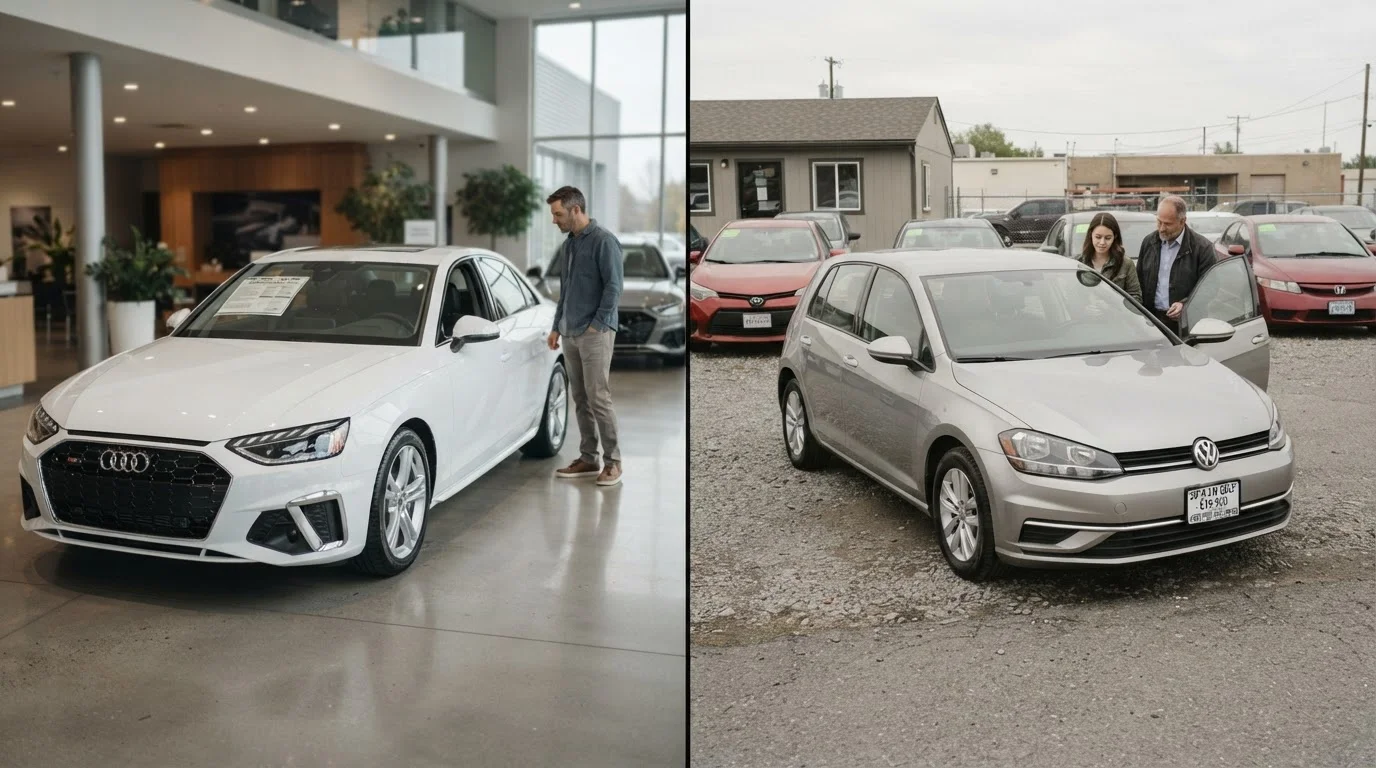
Used vehicles occupy a much wider warranty spectrum. A three-year-old car with low mileage may still carry a meaningful portion of its original bumper-to-bumper and powertrain coverage. A seven-year-old vehicle with high mileage is almost certainly out of factory warranty entirely - leaving the buyer responsible for all repair costs from day one.
This is the core of the warranty gap: the older and higher-mileage a used vehicle is, the more repair risk the buyer absorbs. Mechanical failures that would be no-cost repairs on a new car can become significant expenses on an out-of-warranty used one.
3 yrs / 36K mi
Typical new-car bumper-to-bumper warranty
Most major manufacturers offer at least 3-year/36,000-mile comprehensive coverage as standard on new vehicles sold in the U.S.
5 yrs / 60K mi
Common powertrain warranty duration
Powertrain coverage - the most financially significant protection - typically extends to 5 years or 60,000 miles, with some brands offering longer terms.
~80%
Used cars sold without remaining factory coverage
Industry estimates suggest the large majority of used vehicles on the market have fully expired factory warranties, leaving buyers with no manufacturer-backed protection.
There are scenarios that partially close this gap. Certified pre-owned (CPO) programs, offered by manufacturers through franchised dealerships, apply an inspection process and attach additional warranty coverage to qualifying used vehicles. The scope varies considerably - some CPO programs are essentially extensions of the original factory warranty, while others are more limited. Our article on certified pre-owned vs. standard used walks through how to evaluate those differences.
Even outside CPO programs, a used car that is still within its original factory warranty period represents a meaningful advantage worth factoring into price comparisons. Buyers shopping the used car market should always verify remaining coverage using the vehicle's VIN before finalizing any deal.
How to Factor the Warranty Gap Into Your Buying Decision
Warranty coverage is not just an abstract benefit - it has a real dollar value. If a used vehicle has two years of powertrain coverage remaining, that represents potential repair costs you will not face during that window. Conversely, buying an out-of-warranty used car without a financial cushion for repairs is a genuine risk that the lower purchase price may or may not offset.
A structured way to think about this: estimate the remaining coverage value, factor in the vehicle's reliability history, and weigh both against the price difference between new and used options. Our new vs. used decision framework provides a broader structure for that comparison, and our piece on understanding the real cost difference quantifies how those variables interact financially.
If you are considering an extended service contract to fill the gap on a used purchase, approach it carefully. These contracts are not manufacturer warranties - they are agreements with a third-party or dealer administrator, and the quality of coverage and claims experience varies widely. Review exclusions thoroughly, and understand that many contracts exclude pre-existing conditions or high-wear components.
This article is for general informational purposes only and does not constitute financial or legal advice. Consult a qualified professional for guidance specific to your situation.