What a Third Row Actually Adds
The most obvious appeal of a three-row SUV is straightforward: it carries more people. A typical three-row layout seats seven to eight passengers, compared to five in a standard two-row SUV. For families with multiple children, regular carpooling duties, or aging parents who travel along on road trips, that extra row resolves a real logistical problem.
Beyond raw seat count, three-row SUVs tend to occupy a larger platform - longer wheelbases and wider bodies that often improve second-row legroom relative to compact two-row alternatives. If you're comparing against a compact SUV, stepping up to a three-row mid-size or full-size model frequently means meaningfully more space across the entire cabin, not just in row three. See our comparison of compact vs. mid-size SUVs for more on how platform size shapes daily practicality.
Modern three-row SUVs also tend to include convenience features - power-folding third rows, sliding or reclining second-row captain's chairs, and dedicated climate zones - that improve the experience for all passengers, not just those in the back seat.
Carries up to seven or eight passengers
Three-row SUVs solve real capacity problems for larger families, carpoolers, or households that regularly travel in groups larger than five.
Larger platform improves second-row space too
The extended wheelbase required to fit a third row often results in noticeably better legroom for row-two passengers compared to compact two-row SUVs.
Flexible cargo configurations when seats fold
Folding the third row - and in some models the second row - creates a large, flat load floor suited to hauling furniture, sports equipment, or oversized luggage.
Dedicated climate and entertainment zones available
Many three-row models offer tri-zone climate control and rear entertainment screens, improving long-trip comfort for all passengers.
Can reduce need for a second vehicle
For families that would otherwise need two cars for school runs, sports, and family travel, a three-row SUV can consolidate those needs into one vehicle.
The Real-World Limits of Row Three
Third-row seating sounds generous on paper, but legroom figures tell a more honest story. Many three-row SUVs offer roughly 28 to 33 inches of third-row legroom - comfortable for children, but tight for most adults on anything beyond a short trip. Full-size SUVs on body-on-frame platforms, such as those built on truck architectures, generally offer more third-row space than unibody crossovers of similar overall length.
Access is another practical friction point. Getting into row three typically requires folding or tumbling second-row seats, which is manageable for kids but inconvenient for adults doing it repeatedly. Models with captain's chairs in row two ease this, though they reduce second-row capacity from three to two.
Third-row legroom is tight for adults
Most unibody three-row crossovers provide roughly 28-33 inches of third-row legroom, which is adequate for children but uncomfortable for adults on trips longer than 30 to 45 minutes.
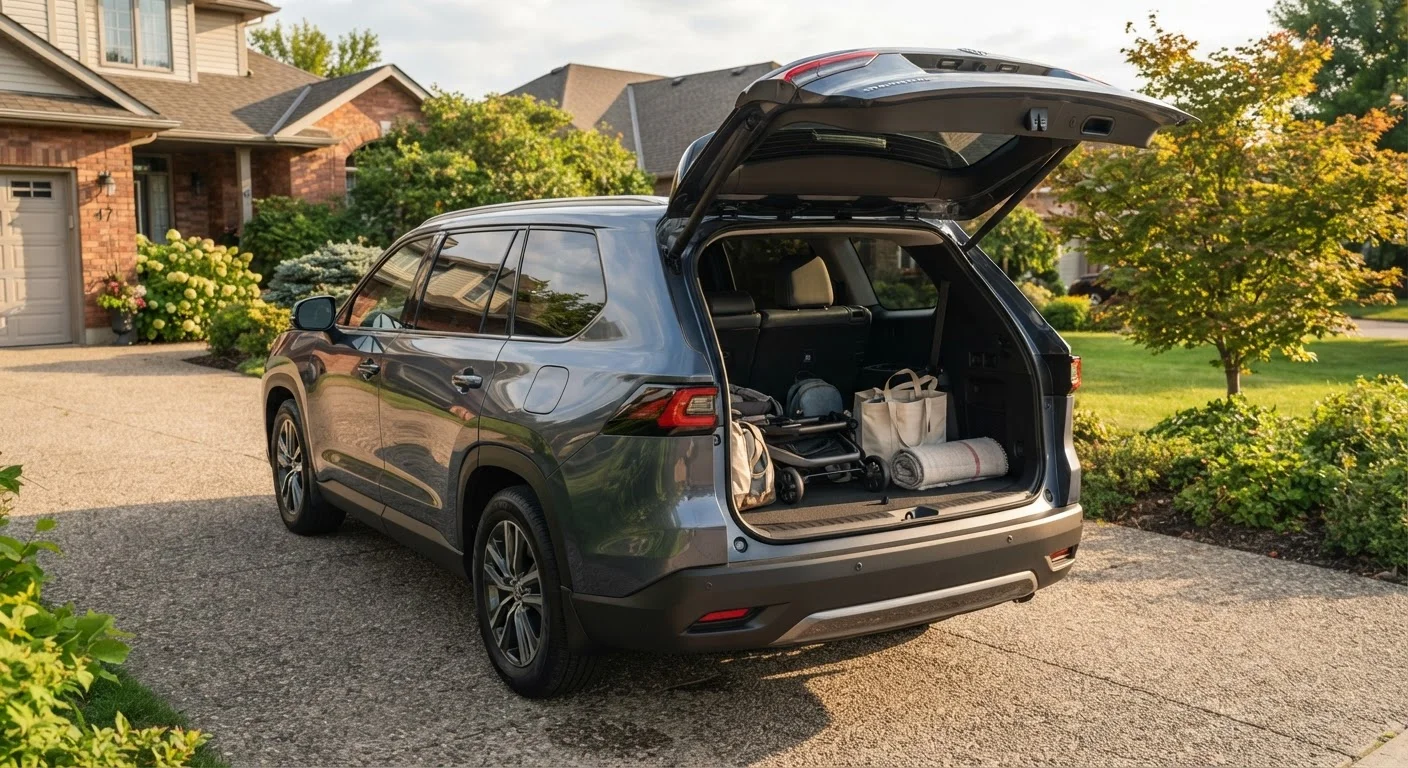
Cargo space behind row three is limited
Many midsize three-row SUVs offer as little as 16 to 21 cubic feet of cargo volume behind the third row - less than some compact two-row SUVs provide behind their rear seats.
Access to row three is often awkward
Passengers must fold or tumble second-row seats to reach the third row, which creates recurring inconvenience, particularly for adults boarding frequently.
Higher purchase price than two-row alternatives
Three-row configurations command a meaningful price premium, both at the entry trim level and because larger platforms tend to concentrate option packages in higher trims.
Lower fuel economy from added weight and size
Heavier three-row SUVs typically consume more fuel than equivalent two-row models, a gap that compounds over tens of thousands of annual miles.
Larger footprint creates urban driving challenges
Full-size three-row SUVs can be difficult to park in standard urban parking structures and may not fit comfortably in older residential garages.
Cargo space is where buyers are most frequently surprised. The area behind the third row in many midsize three-row SUVs measures between 16 and 21 cubic feet - workable for a weekend bag or two, but not adequate for a family's grocery run alongside full passenger loads. Contrast this with the cargo flexibility described in our hatchback cargo guide, where folding seats dramatically transform usable volume.
Ownership Costs and Practical Trade-Offs
Three-row SUVs carry a measurable cost premium over comparable two-row models. The larger platform, additional seating hardware, and often-larger powertrains push starting prices higher - and those costs extend into ownership. Heavier vehicles typically consume more fuel, and many three-row models rely on V6 engines or turbocharged four-cylinders working harder to manage the added weight.
16-21 cu ft
Typical cargo space behind third row
Manufacturer specifications for popular midsize three-row crossover SUVs show cargo volumes behind the third row commonly fall in the 16-21 cubic foot range.
~28-33 in
Common third-row legroom range
Third-row legroom measurements across widely available midsize three-row crossover SUVs typically fall between 28 and 33 inches - adequate for children, tight for most adults.
2-4 MPG
Typical fuel economy gap vs. two-row
EPA combined fuel economy ratings generally show three-row SUVs consuming 2 to 4 more miles-per-gallon equivalent than comparably sized two-row SUVs in the same segment.
Insurance, tire costs, and parking constraints also scale with vehicle size. Full-size three-row SUVs on truck platforms can be genuinely challenging to maneuver in tight urban parking structures or narrow residential streets. For buyers whose driving is primarily urban or suburban, these dimensions create daily friction that spec sheets don't capture.
That said, for households that genuinely need the capacity - families with three children, those caring for elderly relatives, or frequent road-trip groups - the three-row SUV often eliminates the need for two vehicles or costly rental arrangements, which can offset its higher running costs. Understanding how body style matches your specific life is worth working through carefully; our body style matching guide walks through the full comparison framework.
When a Minivan May Be Worth Considering
Buyers who prioritize maximum interior space, easy third-row access, and low step-in height may find that a minivan outperforms three-row SUVs on every practical metric - at a lower price point. Minivans typically offer more third-row legroom, lower floors, and sliding doors that make loading children significantly easier. The trade-off is towing capacity and the styling preferences that lead many buyers toward SUVs in the first place.