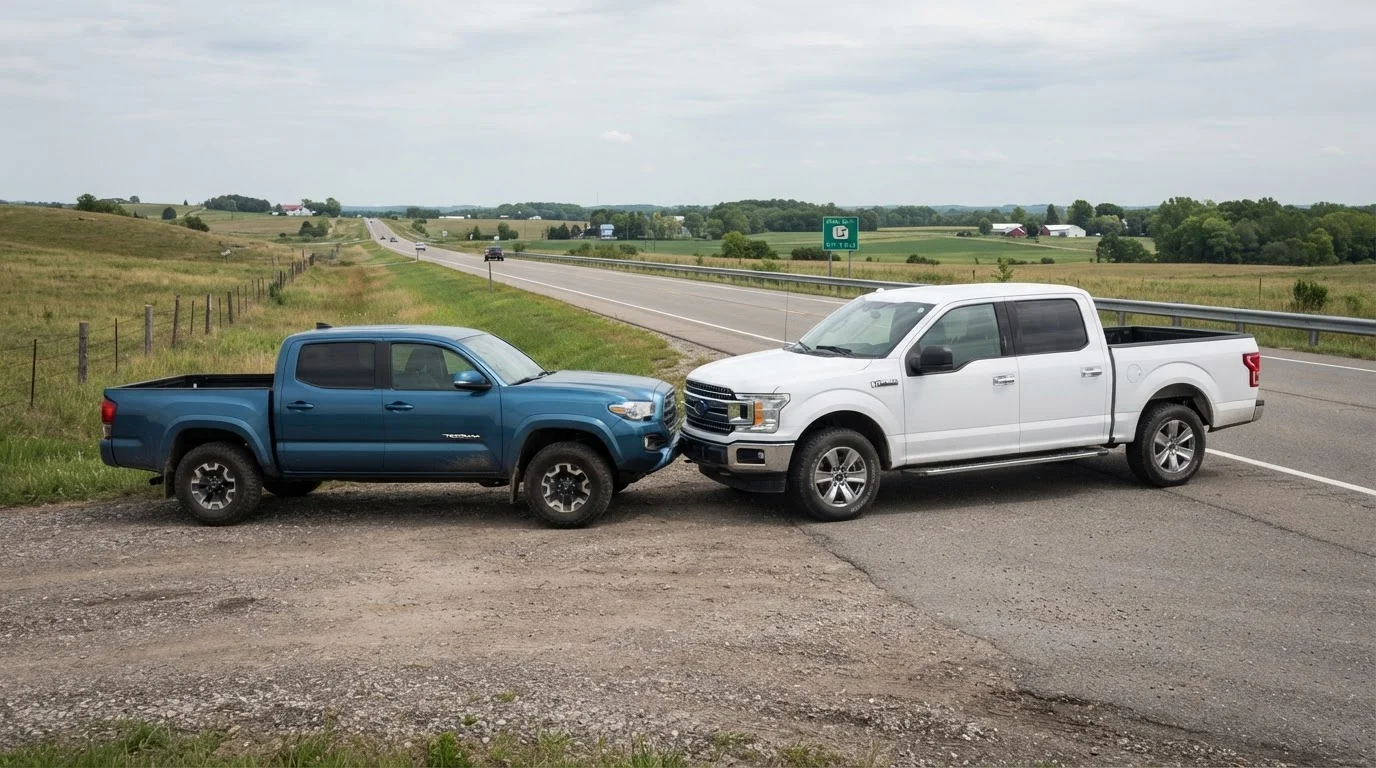
Understanding the Two Classes
Mid-size and full-size pickups are often discussed as if they occupy adjacent rungs on a single ladder. In practice, they represent different engineering priorities. Mid-size trucks - broadly defined by a shorter wheelbase, narrower track, and lighter curb weight - were designed with versatility and accessibility in mind. Full-size trucks, sometimes called half-tons (though that label now understates their actual capability), prioritize hauling and towing capacity above all else.
The distinction matters before you even look at specs. A mid-size pickup typically measures 210-220 inches bumper to bumper; a crew-cab full-size commonly runs 230-250 inches. That 20-to-30-inch difference doesn't sound dramatic until you're navigating a tight urban parking structure or threading through a lumber yard. For buyers who use their truck as a primary vehicle rather than a dedicated work tool, physical dimensions carry real daily weight.
For a deeper look at how powertrain choices shape capability in full-size trucks, see our engine breakdown for half-ton trucks.
Capability: Towing, Payload, and Real-World Limits
On paper, the capability gap between these two classes is wide. Current mid-size trucks generally tow between 5,000 and 7,700 pounds depending on configuration and engine choice. Full-size half-tons commonly rate between 9,000 and 13,000 pounds - a difference that matters enormously if you're pulling a loaded horse trailer, a large travel trailer, or heavy equipment.
Payload capacity follows a similar pattern. Mid-size beds typically support 1,400-1,700 lbs of cargo; full-size trucks can carry 1,700-2,300 lbs or more in their highest-rated configurations. These numbers sound abstract until you compare them to real-world loads: a cubic yard of wet concrete weighs roughly 3,500 lbs - beyond what any pickup truck should carry - while a loaded ATV with gear and fuel sits around 1,000-1,200 lbs, which either class can typically manage.
One nuance buyers often overlook: truck tow and payload ratings represent maximums under optimal conditions. As explained in our article on why real-world truck performance diverges from EPA estimates, factors like payload distribution, terrain grade, and ambient temperature meaningfully affect what a truck can do safely and efficiently.
| Mid-Size Pickup | Full-Size Pickup | |
|---|---|---|
| Typical Tow Rating | 5,000-7,700 lbs | 9,000-13,000 lbs |
| Typical Payload Capacity | 1,400-1,700 lbs | 1,700-2,300 lbs |
| EPA Combined Fuel Economy | 20-24 mpg | 18-22 mpg |
| Typical Overall Length (crew cab) | 210-220 inches | 230-250 inches |
| Base Price Range | Lower (starts mid-$20s-$30s) | Higher (starts mid-$30s-$40s) |
| Urban Maneuverability | Easier; fits most standard spaces | More challenging; long wheelbase |
| Engine Options | 4-cyl, V6, diesel (limited) | V6, V8, turbocharged, diesel |
| Best Suited For | Light hauling, daily driving | Heavy towing, work-duty loads |
Fuel Economy and Running Costs
Fuel economy is one of the clearest differentiators between classes. EPA combined ratings for mid-size trucks with four-cylinder or V6 engines generally land in the 20-24 mpg range. Full-size trucks with comparable V6 or turbocharged engines typically return 18-22 mpg combined, with V8 options dropping further. Over 15,000 annual miles, that 3-4 mpg difference can translate to $300-$600 in additional fuel costs per year depending on local prices.
Purchase price spreads compound this. Mid-size trucks typically start several thousand dollars below comparable full-size configurations. Over a five-year ownership period, lower insurance premiums (tied partly to vehicle value), reduced tire costs from smaller footprints, and better fuel economy can accumulate into meaningful savings - without necessarily sacrificing the utility that most buyers actually use day to day.
Maneuverability, Parking, and Urban Practicality
Buyers who live in dense suburban or urban areas frequently underestimate how much truck size affects day-to-day practicality. A mid-size crew cab fits within a standard 8.5-foot parking stall with room to spare; a full-size crew cab with a long bed may exceed 22 feet in length, making standard parking spaces uncomfortable and some multi-level garages off-limits due to height or turning-radius constraints.
Visibility, too, differs. Full-size trucks carry taller hood lines and wider A-pillars that can reduce driver sightlines in low-speed environments. Mid-size models, while not compact by any measure, are generally more manageable for drivers transitioning from sedans or crossovers. If the truck doubles as a school-run and grocery vehicle, these qualities affect the owner nearly every day - far more frequently than a towing event that might occur monthly.
Buyers weighing the SUV alternative should also consider how size trade-offs play out across vehicle categories - our analysis of compact versus mid-size SUVs explores similar dynamics.
Which Truck Scale Fits Your Actual Usage?
The most reliable way to determine appropriate truck scale is to audit your actual hauling and towing activity - not your aspirational use cases. Research consistently suggests that a substantial share of truck buyers rarely approach the towing or payload limits of even a mid-size platform. If your heaviest regular load is a few bags of mulch and an occasional boat in the 4,000-lb range, a mid-size truck handles that without compromise.
Where full-size trucks earn their higher price and fuel costs is in sustained, frequent heavy use: contractors carrying tool loads daily, buyers towing fifth-wheel RVs over 10,000 lbs, or those who need the expanded engine options - including diesel variants - that the full-size segment offers. For those buyers, stepping down to a mid-size means hitting real capability ceilings that affect safety margins, not just convenience.
If you're also considering whether to buy new or used, it's worth noting that both truck classes have strong used-market availability, though full-size models retain higher absolute values over time.
This article is for informational and educational purposes only. Vehicle specifications, fuel economy ratings, and pricing vary by model year, configuration, and market conditions. Consult manufacturer documentation and qualified automotive professionals before making purchasing decisions.