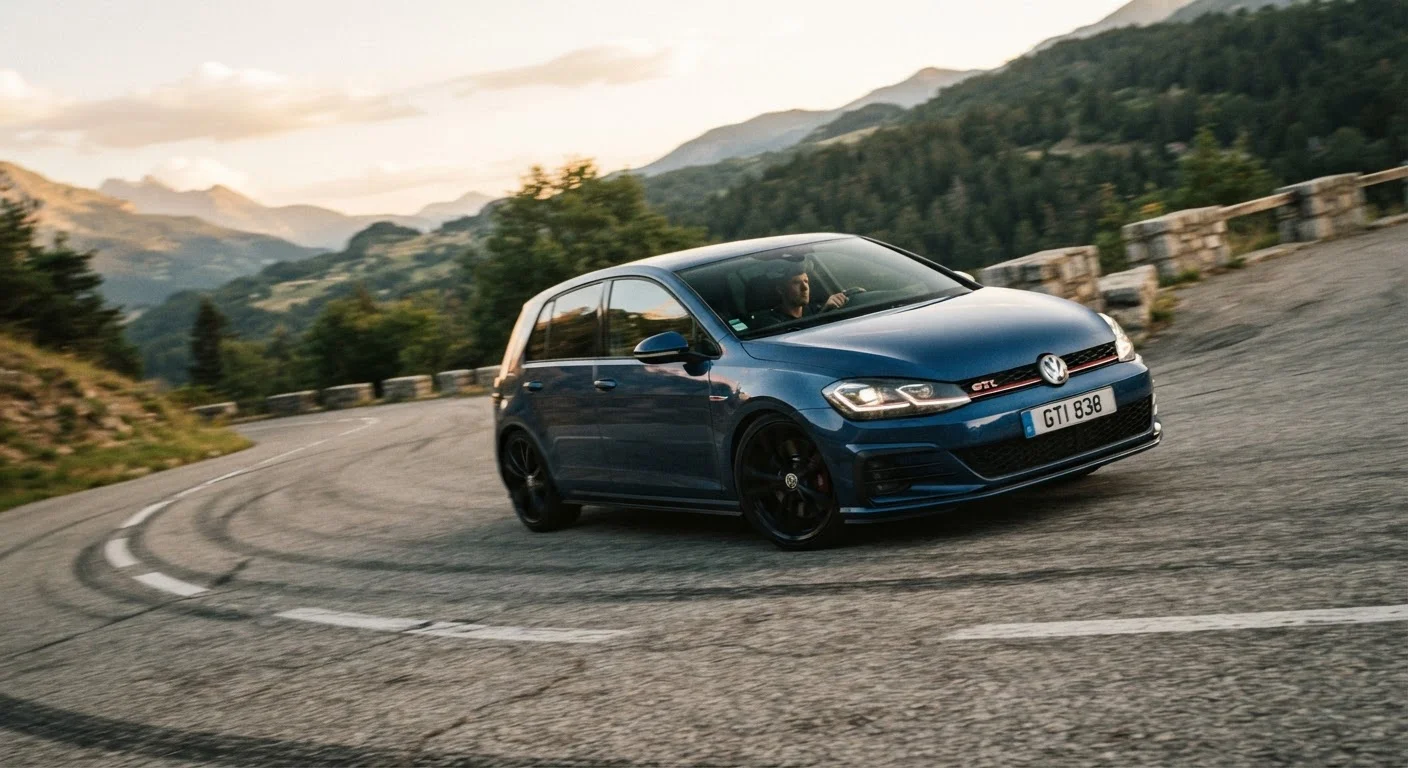
Why Body Style Shapes Driving Dynamics
When most buyers think about hatchbacks, cargo flexibility comes to mind first. But the same architectural choices that create a practical load bay also produce a car with genuinely engaging driving characteristics. Understanding why starts with geometry.
A hatchback's roofline drops sharply toward the rear, which lowers the car's overall center of gravity compared to an SUV or crossover of similar footprint. Physics does the rest: a lower center of gravity reduces body roll in corners and helps the tires maintain more consistent contact with the road surface. The result is a more planted, confidence-inspiring feel when changing direction quickly.
Wheelbase - the distance between the front and rear axles - also plays a role. Compact hatchbacks typically run shorter wheelbases than mid-size sedans, which tightens steering response and reduces the effort required to change direction. This is part of why hatchbacks feel nimble in urban traffic and on winding secondary roads in a way that larger vehicles often do not. See our full breakdown of sedan versus hatchback structures for how these differences extend to the chassis level.
“The hatchback's compact footprint isn't a compromise - in many respects, it's an engineering advantage. Less mass and a lower roofline give chassis engineers more freedom to tune for response and feedback without fighting the car's own weight.”
— Auto Reviews Editorial Team, Vehicle Dynamics Analysis, Auto Reviews
Suspension Tuning: Where the Real Differences Live
The hatchback body style provides a favorable starting point for dynamic driving, but suspension calibration ultimately determines what a specific model feels like behind the wheel. Most mainstream hatchbacks are tuned for ride comfort and noise suppression - priorities that make sense for everyday commuting. Within the same model family, however, a sport or performance trim often receives meaningfully different hardware.
Common changes in performance-oriented variants include stiffer spring rates and rebound damping, larger anti-roll bars to further limit body lean, and wider, lower-profile tires that reduce sidewall flex during cornering. Steering systems may also be recalibrated for faster ratios. These changes can transform the character of a car that shares its basic structure with a comfort-focused sibling.
Buyers who prioritize driving feel should treat trim levels as distinct products rather than cosmetic variations. A base hatchback with soft suspension and high-profile tires will feel very different from a sport-trimmed version of the same model. This distinction matters most when comparing spec sheets - suspension tuning rarely appears in headline figures but defines the ownership experience.
~300 lbs
Typical weight advantage over comparable crossovers
Industry comparisons across compact segments consistently show hatchbacks running lighter than crossover siblings on shared platforms, with differences typically ranging from 200 to 500 pounds depending on the specific models.
1-2 inches
Lower center of gravity vs. equivalent crossovers
Automotive engineering analyses generally find that hatchbacks sit meaningfully lower than crossovers in the same price bracket, a difference that directly affects body roll and lateral grip in cornering.
70%+
New compact cars in Europe sold as hatchbacks
According to European Automobile Manufacturers' Association registration data, hatchback body styles consistently account for the majority of compact car sales in Western European markets, reflecting the segment's driving-dynamic and urban-utility appeal.
Weight, Power, and Real-World Performance
Curb weight is one of the most underappreciated factors in how a car drives day-to-day. A lighter vehicle accelerates more efficiently from a given power output, stops in a shorter distance, and changes direction with less effort from the suspension. Compact hatchbacks generally weigh less than crossovers built on the same platform - a difference that can range from a few hundred to over five hundred pounds depending on the models compared.
This weight advantage works alongside powertrain choice. Many hatchbacks in the compact and subcompact segments are now offered with small-displacement turbocharged engines that deliver strong low-end torque. That torque character - the pulling sensation available before the engine reaches peak power - is particularly useful in real-world driving where brief bursts of acceleration matter more than sustained high-speed output.
For buyers considering electrified options, hybrid powertrains in the hatchback segment introduce additional considerations around weight distribution, regenerative braking feel, and torque delivery patterns that differ from conventional engines.
Trade-offs Worth Acknowledging
The characteristics that make hatchbacks engaging to drive involve genuine trade-offs. A shorter wheelbase improves agility but can make the ride feel busier over uneven surfaces, particularly at highway speeds. Sport-tuned suspension variants amplify this tendency - firmness that feels rewarding on a canyon road may become fatiguing on a daily commute with rougher pavement.
Lighter curb weight is generally an advantage, but it can also mean more sensitivity to crosswinds at highway speeds, particularly in vehicles with taller rear glass areas. Buyers who regularly drive in exposed or high-wind conditions should assess this characteristic on the test drive rather than assuming it from published specifications.
There is also a segment-specific trade-off between driving engagement and interior space. Hatchbacks that prioritize a low roofline and sport suspension geometry typically sacrifice some rear headroom and trunk volume compared to taller, more softly sprung alternatives. This is not a flaw - it is an intentional design choice - but it is worth evaluating honestly against how the vehicle will be used most of the time. Our guide on matching body style to your lifestyle walks through these trade-offs across the broader segment landscape.
Evaluate Suspension Feel Before Committing
Suspension tuning varies significantly between trim levels and is rarely captured in published specifications. Before choosing a trim, drive both the base and sport variants of a hatchback back-to-back on roads that reflect your typical commute. A route with urban surface imperfections will reveal ride quality differences that a smooth test-track loop will not.