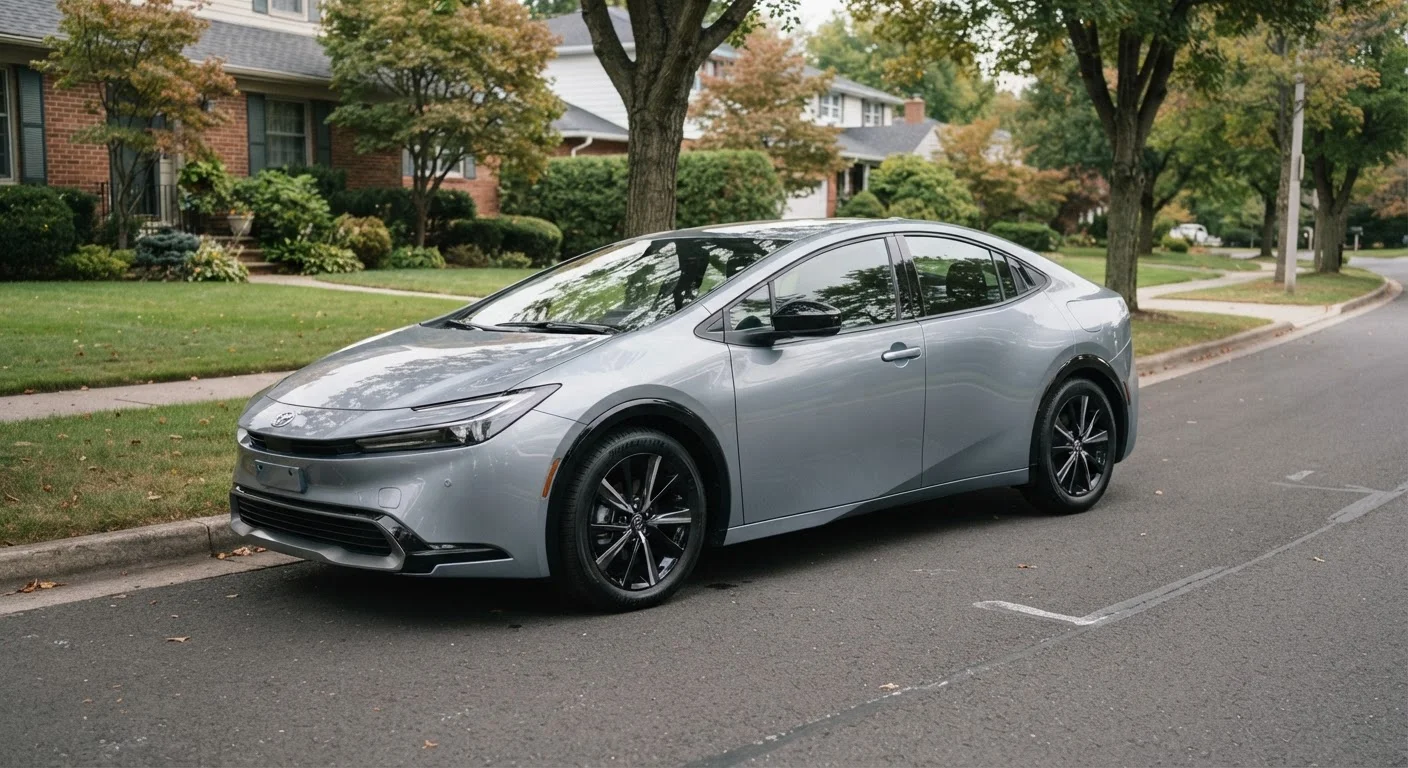
Why Hybrid Matters in the Sedan and Hatchback Segment
Sedans and hatchbacks are often bought on practicality - affordable ownership costs, manageable size, and fuel economy. Hybrid powertrains align naturally with those priorities, which is why this segment has become one of the most electrified in the mainstream market.
For buyers new to the technology, the challenge isn't finding a hybrid - it's understanding that the word hybrid covers three meaningfully different systems. Each one is engineered differently, suits a different driver profile, and comes with a different cost-benefit calculation. See our plain-English breakdown of electrified powertrain types for a broader view that also covers battery-electric vehicles.
If you're also weighing body style alongside powertrain, our guide on matching body style to your lifestyle is a useful companion read.
The Three Hybrid Types: How Each One Works
Understanding the mechanical basics helps you cut through marketing language and evaluate what each vehicle actually delivers.
Mild Hybrid (MHEV)
A hybrid system that uses a small electric motor to assist - but not replace - the combustion engine. The car cannot drive on electricity alone.
Full Hybrid (HEV)
A self-contained hybrid that can drive short distances on electricity alone, charges its own battery automatically, and requires no external plug.
Plug-In Hybrid (PHEV)
A hybrid with a larger battery that must be charged from an external power source, enabling meaningful all-electric driving before the combustion engine takes over.
Regenerative Braking
A system that captures energy normally lost as heat during braking and converts it back into electricity to recharge the hybrid battery.
48-Volt System
The electrical architecture used in most mild hybrids - more powerful than a standard 12-volt car battery but far smaller than a full hybrid or PHEV battery pack.
Electric Range
The distance a PHEV can travel using only battery power before the combustion engine activates. Rated by the EPA in the US under standardized test conditions.
Mild Hybrid (MHEV)
A mild hybrid uses a small electric motor - typically powered by a 48-volt battery - to assist the combustion engine during acceleration and to recover energy under braking. The electric motor cannot propel the car on its own; it only reduces the load on the engine at peak demand moments. The result is a modest efficiency improvement, usually in the range of 5-15%, with very little change to the driving experience.
Full Hybrid (HEV)
A full hybrid adds a larger electric motor and battery that can, in certain conditions, drive the car on electricity alone - typically at low speeds in city traffic. The system manages itself automatically, blending combustion and electric power seamlessly. No external charging is required. This self-contained design makes full hybrids particularly well-suited to urban and suburban driving patterns where frequent low-speed operation lets the electric motor do meaningful work.
Plug-In Hybrid (PHEV)
A plug-in hybrid carries a substantially larger battery - charged both by the engine/regenerative braking and from an external power source - allowing meaningful all-electric driving before the combustion engine takes over. For drivers who can charge at home or work and have a daily commute within the electric range, a PHEV can deliver near-electric running costs for everyday trips while retaining full conventional range for longer journeys. For a deeper comparison of these two systems, see our article on plug-in hybrid vs. full hybrid.
Matching the Powertrain to Your Driving Pattern
Powertrain choice becomes clearer once you map it against how you actually use a car - not how you imagine you might.
- Mostly city or suburban driving, no charging access: A full hybrid typically offers the strongest efficiency gains without any infrastructure requirement. The electric motor contributes most in stop-and-go conditions.
- Short daily commute, reliable home charging: A PHEV can make the most economic sense. If most trips fall within the electric range, fuel costs drop substantially.
- Predominantly highway miles: Mild hybrids or conventional full hybrids are generally more practical. PHEVs offer less advantage on sustained highway runs where the electric battery contributes minimally.
- Mixed driving, value-focused buyer: A mild hybrid may offer the simplest, lowest-premium entry point into hybrid ownership, though the efficiency gains are the most modest.
Transmission type also interacts with how a hybrid system performs. Our guide to transmission types explains how CVTs - common in full hybrids - contribute to efficiency in real-world driving.
Ownership Costs and Practical Trade-Offs
Calculate Break-Even Before You Buy
Divide the hybrid price premium by your estimated annual fuel savings to find the break-even point in years. Use realistic local fuel prices and your actual annual mileage - not best-case scenarios. This simple exercise often reveals whether a higher-efficiency powertrain genuinely makes financial sense for your situation.
Hybrid powertrains generally carry a higher purchase price than their non-hybrid equivalents. Whether that premium pays back depends on fuel prices, annual mileage, how you drive, and how long you keep the vehicle. General patterns to be aware of:
- Fuel savings accumulate over time. Higher annual mileage and city-heavy driving accelerate payback for full hybrids and PHEVs.
- Battery longevity is a legitimate consideration. Most manufacturers warrant hybrid batteries for 8 years or 100,000 miles in the US. Replacement costs vary and should be factored into used-vehicle assessments.
- PHEVs have more complex powertrains. Two energy systems mean more components that can require service. Maintenance costs can differ from conventional or full hybrid models.
- Cargo space may be affected. PHEV battery packs are physically larger and can reduce trunk or underfloor storage - worth checking spec sheets directly for any model under consideration.
For a broader side-by-side comparison of powertrain running costs, our article on petrol vs. hybrid vs. electric covers the full picture including long-term value considerations.
Key Questions to Ask Before You Decide
Before settling on a hybrid type, work through these practical questions. The answers will point toward the system that fits your situation rather than simply the one with the most marketing emphasis.
- Do I have reliable access to home or workplace charging? If no, a PHEV's electric range advantage is severely limited.
- What is my realistic annual mileage? Higher mileage strengthens the efficiency payback case for full hybrids and PHEVs.
- What proportion of my driving is urban vs. highway? Electric motors contribute most in stop-and-go conditions.
- How long do I plan to keep the vehicle? Longer ownership periods generally favour higher-efficiency powertrains.
- What is the price difference between hybrid and non-hybrid variants of the same model? Calculate the break-even point using realistic local fuel prices.
The Performance & Drivetrain hub is a useful resource for understanding how powertrain choices interact with transmission, drive modes, and overall vehicle dynamics - all factors that shape the real-world driving experience of any hybrid sedan or hatchback.
This article provides general educational information about hybrid powertrain types and is not a substitute for personalised financial or purchasing advice. Vehicle specifications, fuel economy figures, and costs vary by model and market conditions. Consult manufacturer specifications and speak with a qualified adviser before making purchase decisions.