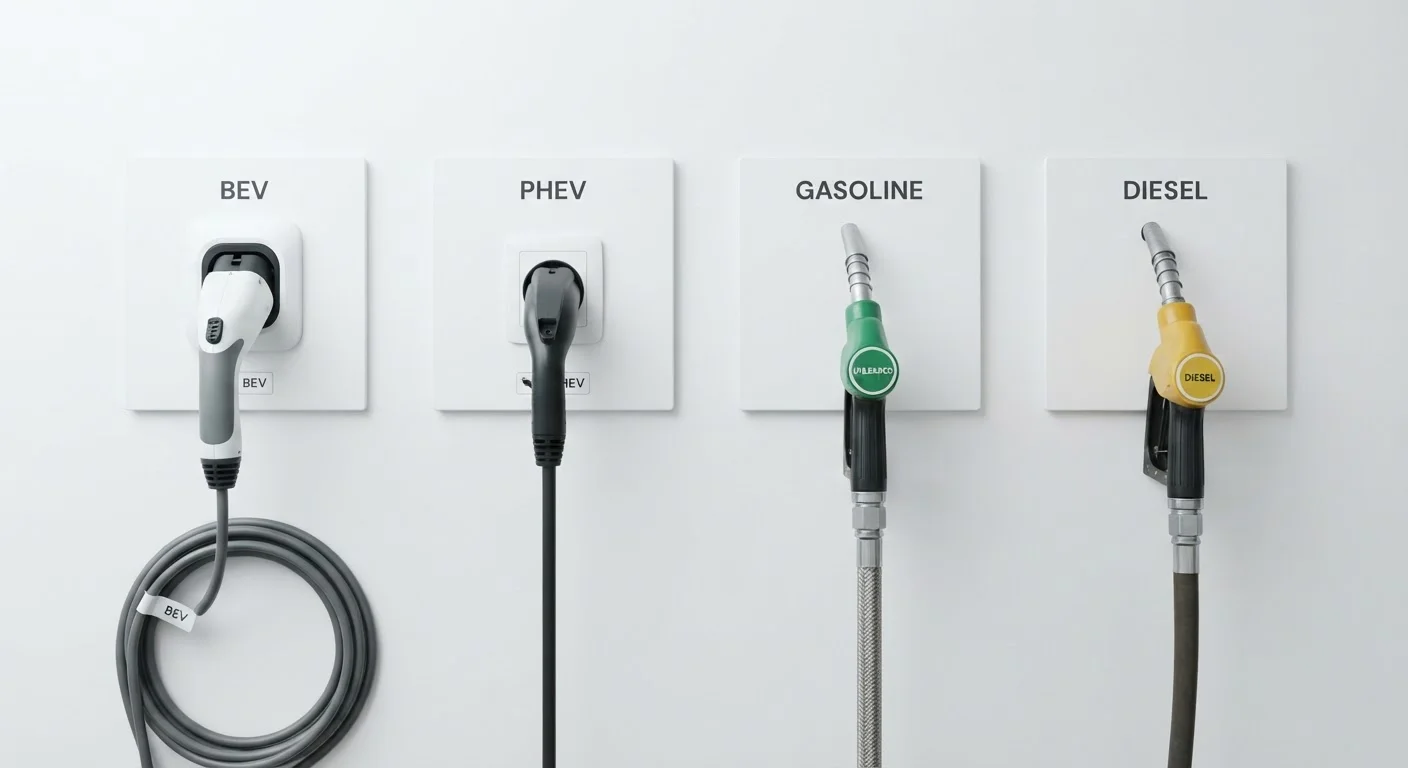
Why the Labels Matter Before You Shop
Walk into any dealership or browse any listing site and you'll encounter a wall of electrification acronyms: MHEV, HEV, PHEV, BEV. Each label describes a fundamentally different engineering approach - and choosing the wrong one for your driving habits can mean unexpected fuel bills, charging headaches, or simply leaving money on the table. Understanding what each powertrain actually does is one of the most practical steps you can take before signing anything.
For context on how powertrain choice connects to broader drivetrain decisions, see the Performance & Drivetrain hub for plain-language breakdowns of how power gets to the wheels.
| Mild Hybrid (MHEV) electric-only driving | None - assist only |
| Full Hybrid (HEV) typical EV range | Under 2 miles (city assist) |
| PHEV typical electric-only range | 20-50 miles (EPA range estimates vary by model) |
| BEV typical full-charge range | 150-350+ miles (EPA range estimates vary by model) |
| External charging required | PHEV and BEV only |
| Gasoline engine present | MHEV, HEV, PHEV - yes; BEV - no |
The Four Powertrain Types Explained
Mild Hybrid (MHEV)
A mild hybrid uses a small electric motor - typically 48-volt - to assist the gasoline engine during acceleration and recapture energy under braking. Crucially, it cannot drive the vehicle on electricity alone. Think of it as a fuel-economy helper that reduces strain on the engine at low speeds. Real-world fuel savings are modest, generally in the 5-15% range compared with a conventional equivalent, and no external charging is required.
Full Hybrid (HEV)
A full hybrid pairs a larger electric motor and battery pack with a gasoline engine, enabling brief periods of pure electric driving - typically at low speeds or in stop-and-go traffic. The battery charges itself through regenerative braking and engine surplus power; you never plug in. This makes full hybrids particularly efficient in city driving cycles, where the electric motor carries a meaningful share of the load.
Plug-In Hybrid (PHEV)
A plug-in hybrid has a significantly larger battery that you charge from an external source - a home outlet, Level 2 charger, or public charging station. Electric-only range typically falls between 20 and 50 miles on a full charge, which covers the average American's daily commute without burning any gasoline. Beyond that range, the vehicle operates like a conventional full hybrid. PHEVs offer flexibility: run on electricity for daily use, gasoline for longer trips. For a deeper comparison of how full, mild, and plug-in hybrids differ in practice, see Hybrid Powertrains Unpacked.
Battery Electric Vehicle (BEV)
A BEV runs entirely on electricity stored in a large battery pack - no internal combustion engine at all. Range on a full charge varies widely by model and battery size, from roughly 150 to over 350 miles. All energy comes from charging; there is no gasoline fallback. Operating costs are generally lower than combustion vehicles when charged at home, though long-distance travel requires planning around charging infrastructure.
Regenerative Braking
A system that converts kinetic energy lost during braking into electrical energy, which is stored in the battery. It is used by all hybrid and electric vehicles to improve efficiency.
48-Volt System
The electrical architecture commonly used in mild hybrids. It operates at a higher voltage than a standard 12-volt system, enabling a small electric motor to assist the engine without supporting full electric-only driving.
State of Charge (SOC)
The current charge level of a battery, expressed as a percentage of its total capacity. PHEVs and BEVs display SOC to help drivers manage range.
Level 2 Charging
A 240-volt home or public charging method that significantly reduces charging time compared with a standard 120-volt household outlet. It is the most common home setup for PHEV and BEV owners.
Electric-Only Range
The distance a PHEV or BEV can travel using battery power alone before the gasoline engine activates (PHEV) or the battery is depleted (BEV).
Choosing Based on Range, Cost, and Daily Use
No single powertrain suits every driver. The right choice depends on three practical factors:
- Daily mileage: Drivers with short, predictable commutes (under 40 miles) and home charging access extract the most value from a PHEV or BEV. Those with variable or high daily mileage may find a full hybrid more pragmatic.
- Charging access: BEVs and PHEVs reward owners with home charging. Without it, a full hybrid or MHEV removes the charging variable entirely.
- Upfront versus running costs: MHEVs typically carry the smallest price premium over their conventional counterparts. BEVs often carry the largest, though lower fuel and maintenance costs can offset this over time - actual figures vary by model, utility rates, and driving patterns.
For a related look at how drivetrain layout affects handling and traction - a separate but connected decision - see AWD, 4WD, FWD, RWD explained. You can also explore the full Car Features Explained hub for plain-language guides to other vehicle technologies.
This article is for general informational purposes only. Vehicle range, fuel economy, and cost figures vary by model, trim, driving conditions, and individual usage. Consult manufacturer specifications and a qualified financial adviser before making purchase decisions.