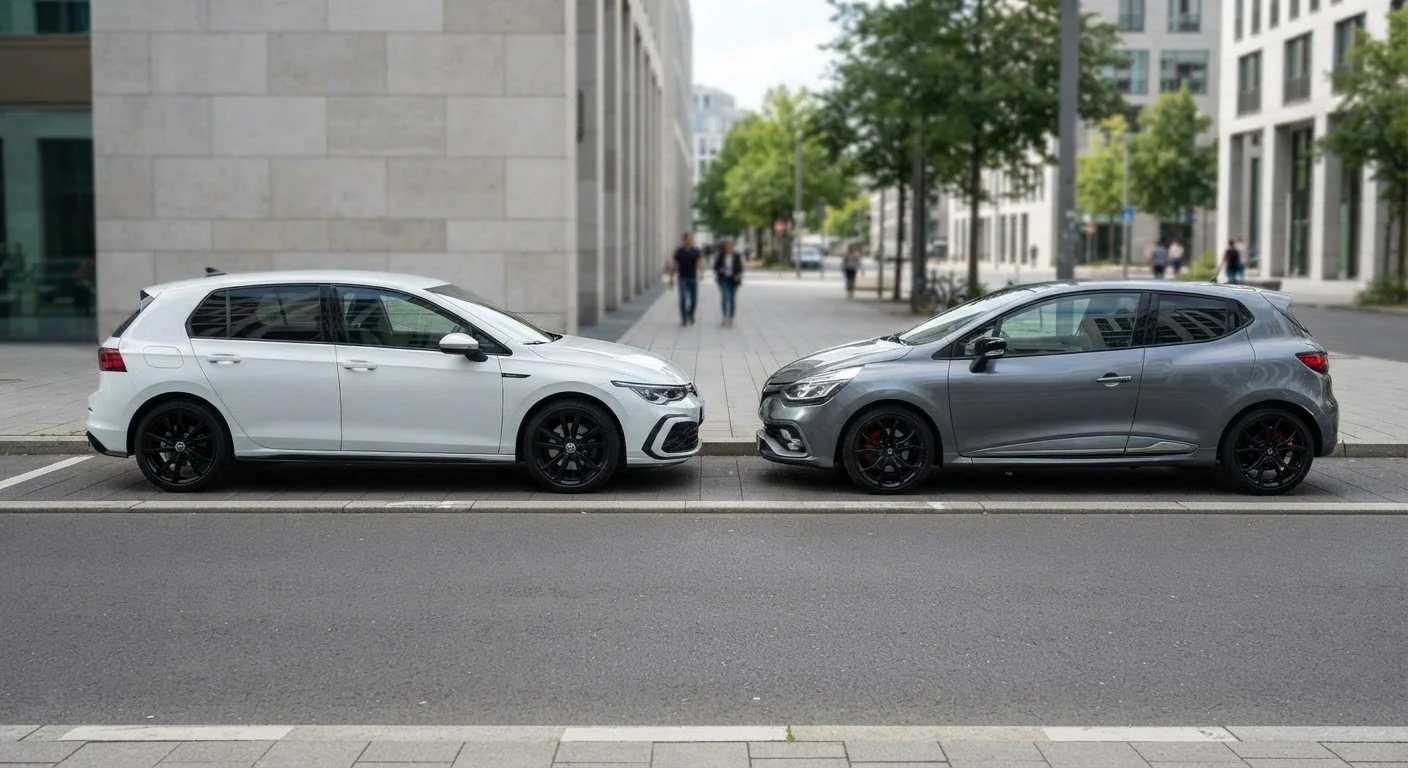
The Real Difference Behind the Door Count
When a buyer decides between a five-door and three-door hatchback, the choice often looks purely cosmetic. It isn't. While both layouts share an identical platform, the structural and experiential differences accumulate in ways that matter across years of ownership.
A three-door hatchback eliminates the rear door openings, which allows for a longer rear door, a cleaner side profile, and - in some cases - marginally stiffer body structure due to fewer cut-outs in the body shell. The trade-off is rear access: getting into the back seat requires folding the front seat forward or leaning past it, a maneuver that ranges from inconvenient to genuinely awkward depending on the model.
The five-door layout adds a dedicated rear door on each side. This sounds minor until you're buckling a child into a car seat, helping an elderly passenger, or simply unloading rear-seat gear in a crowded parking lot. For buyers who use the rear seat regularly, this distinction shapes daily life more than any spec sheet entry.
To understand where hatchbacks fit relative to other body styles, see our guide to matching body style to your lifestyle.
| Criterion | Five-Door Hatchback | Three-Door Hatchback |
|---|---|---|
| Rear passenger access | Dedicated rear doors, easy entry | Front seat must fold forward |
| Exterior styling | Balanced, conventional look | Sportier, cleaner roofline |
| Cargo space | Identical to three-door equivalent | Identical to five-door equivalent |
| Body rigidity | Standard for platform | Marginally stiffer in some models |
| US market availability | Widely available | Limited; often performance trims only |
| Resale demand | Broader buyer pool | Narrower, niche appeal |
| Child/family usability | High - easy car seat access | Lower - awkward rear entry |
| Pricing (base trims) | Slight premium in some models | At or below five-door on base |
Practicality, Cargo, and Everyday Usability
Despite the door difference, five-door and three-door hatchbacks from the same model line share nearly identical cargo specs. Boot volume, fold-flat rear seat ratios, and load floor height are determined by the platform, not the door configuration. The five-door doesn't carry more - it simply makes the interior easier to access from more angles.
Where the five-door pulls ahead is ergonomic efficiency. Installing or removing child car seats, loading items onto the rear seat from outside, and accommodating taller rear passengers all become simpler. Research into urban car use consistently notes that rear door access frequency is underestimated by buyers at the point of purchase - particularly those without children yet, who may acquire them during the car's ownership period.
For buyers focused on maximizing cargo versatility, the door layout matters less than rear seat fold design. Our article on hatchback cargo versatility and folding rear seats covers what actually determines carrying capability.
~90%
US hatchback sales that are five-door
Industry sales data consistently shows five-door configurations account for the large majority of hatchback registrations in the United States.
2-4%
Typical body rigidity gain in three-door shells
Automotive engineering literature notes that eliminating rear door apertures can modestly improve torsional stiffness, though the effect varies significantly by model.
~0
Cargo volume difference between layouts
Manufacturer specifications for five-door and three-door variants of the same model typically show identical boot and passenger volume figures.
Styling, Driving Dynamics, and the Case for Three Doors
The three-door's strongest argument is visual. The longer, unbroken door line and fastback-style roofline give three-door hatchbacks a more purposeful, athletic appearance. On performance-oriented trims - hot hatches especially - the three-door configuration has historically been the default because the proportions suit aggressive styling cues and the marginally stiffer shell can benefit suspension tuning.
For the everyday mainstream buyer, however, real-world dynamics differences between a five-door and three-door version of the same model are minimal. Manufacturers design both to identical handling targets, and most drivers won't detect the structural stiffness difference on public roads. The perceived sportiness of the three-door is largely visual rather than mechanical.
If driving engagement is what draws you to hatchbacks as a category, our editorial on hatchbacks as driver's cars examines what genuinely shapes dynamic character in this class.
Market Availability, Pricing, and the US Context
In the US market, three-door hatchbacks occupy a narrower slice of availability than in Europe. Most mainstream automakers selling hatchbacks in the US offer only the five-door variant, or position the three-door as a limited or performance-focused trim. This matters for resale: a body style with lower sales volume typically has a smaller pool of interested used-car buyers, which can affect residual values over time - though this varies by model and market conditions.
Pricing, where three-door variants exist, tends to be equal to or slightly below the equivalent five-door on base trims, with the gap narrowing or reversing on higher-specification versions. Buyers should verify current trim availability with specific models, as manufacturers periodically discontinue three-door variants as consumer preference has shifted toward five-door and crossover layouts.
For broader context on why the hatchback segment performs differently across markets, see our analysis of why hatchbacks dominate in some markets but lag in others.