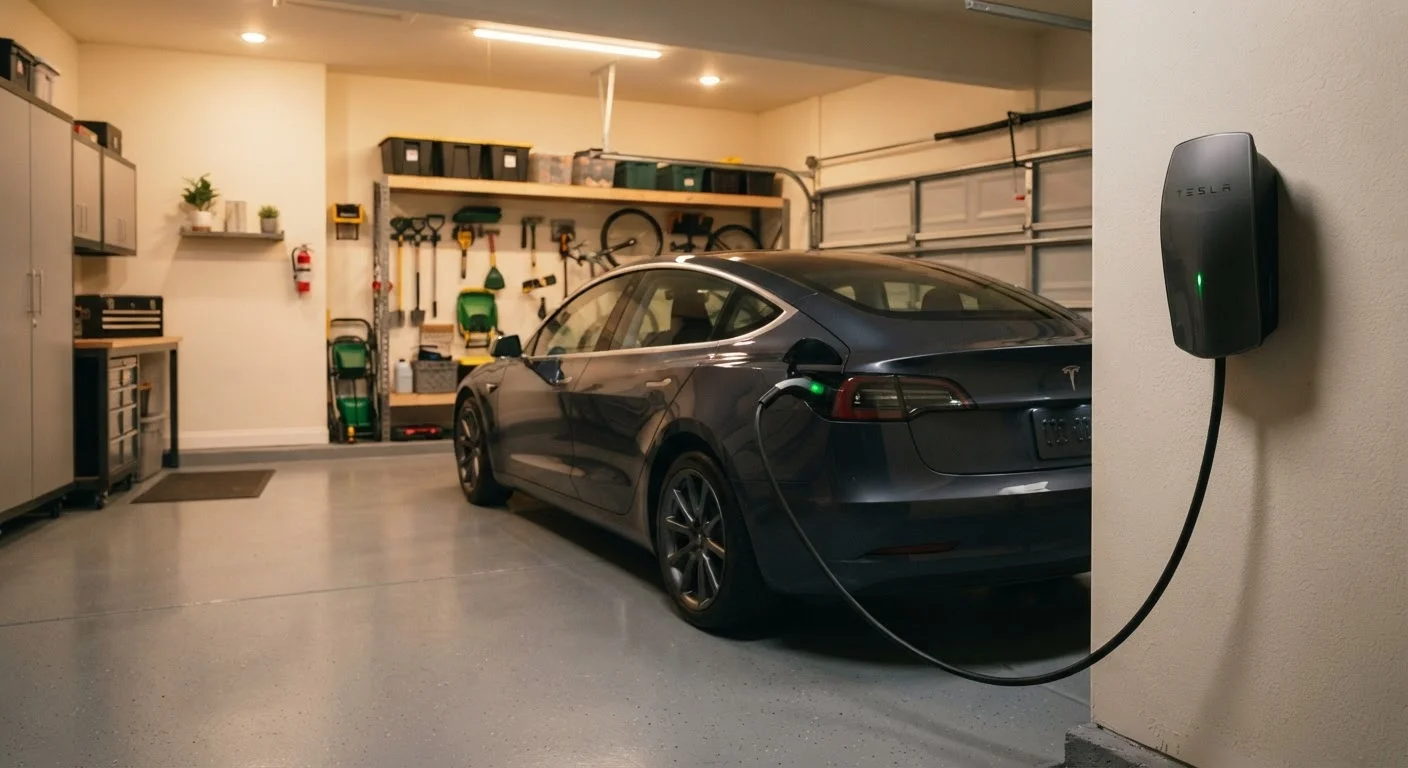
How Home EV Charging Works
Charging an electric vehicle at home is conceptually straightforward: you connect the car to a power source, electricity replenishes the battery, and you wake up with a full charge. In practice, however, the details - voltage levels, circuit capacity, and equipment choices - determine whether your setup is convenient or frustrating.
The hardware that manages power delivery between your home's electrical system and the car is called EVSE (Electric Vehicle Supply Equipment). It communicates with the vehicle to regulate the charging rate safely. The car's onboard charger ultimately controls how fast energy enters the battery. Understanding this distinction matters because the speed you can achieve depends on both the EVSE and the vehicle's own onboard charger capacity.
For a broader look at how home charging fits into overall EV ownership, see our complete walkthrough for first-time EV buyers.
EVSE
Electric Vehicle Supply Equipment - the hardware (wall box or cord) that safely manages the flow of electricity from your home to the car's battery.
Level 1 Charging
Charging via a standard 120V household outlet. Slow but requires no additional equipment beyond the cord provided with most EVs.
Level 2 Charging
Charging via a 240V circuit using a dedicated wall box. Significantly faster than Level 1 and the standard choice for home installation.
Onboard Charger
A component inside the EV that converts AC power from your home into DC power the battery can store. Its capacity (measured in kW) sets the maximum charge rate the car can accept.
Time-of-Use (TOU) Rate
A utility pricing structure where electricity costs vary by time of day - lower overnight, higher during peak demand hours. Scheduling charging during off-peak windows can reduce costs.
Load Management
A utility program that automatically adjusts your charger's power draw during periods of high grid demand, potentially reducing the need for costly panel upgrades.
Level 1 vs. Level 2 Charging: Which Do You Need?
Level 1 charging uses a standard 120V household outlet - no special equipment required beyond the cord that ships with your vehicle. The trade-off is speed: you typically gain 3-5 miles of range per hour. For drivers covering fewer than 30 miles a day, or for plug-in hybrid owners with smaller batteries, this may be sufficient.
Level 2 charging operates on a 240V circuit - the same voltage used by electric dryers and ranges - and delivers 10-30 miles of range per hour depending on the EVSE's amperage rating and the vehicle's onboard charger. A depleted 75 kWh battery can typically reach full charge in 8-10 hours on Level 2, making overnight charging practical for nearly any EV on the market.
For most battery electric vehicle (BEV) owners, a Level 2 wall box is the practical choice. The upfront cost is offset quickly by the flexibility and reduced reliance on public charging infrastructure. If you're evaluating whether an EV suits your lifestyle at all, our article on where buyers go wrong with EV expectations is worth reading first.
Electrical Requirements and Installation
Before purchasing any charging equipment, have a licensed electrician evaluate your home's electrical panel. Key questions include whether your panel has spare capacity for a dedicated 240V, 40-50 amp circuit (the typical requirement for a Level 2 EVSE), and whether your wiring and panel age are compatible.
If your panel is already near capacity, a panel upgrade may be necessary - adding $1,000-$3,000 or more to the project. Some utilities offer load management programs that can reduce upgrade requirements by automatically limiting charging during peak grid demand periods.
The EVSE unit itself should carry a UL or ETL certification, confirming it has been independently tested for electrical safety. Wall-mounted units are more durable than portable plug-in units for permanent home installation. Installation must comply with the National Electrical Code (NEC) and local building codes; most jurisdictions require a permit and inspection for this work.
Always Use a Licensed Electrician
Installing a 240V circuit is not a DIY project for most homeowners. Improper wiring can create fire hazards, void your homeowner's insurance, and fail local code inspections. Always hire a licensed electrician, obtain the required permits, and ensure the work is inspected before regular use.
What Home Charging Costs
Home charging costs break into two categories: the one-time installation investment and the ongoing electricity cost.
Equipment and installation: A Level 2 EVSE unit typically costs $300-$800. Professional installation - including labor, conduit, wiring, and any required panel work - commonly adds $200-$1,000, though complex installations can run higher. The federal Residential Clean Energy Credit and various state and utility incentive programs may offset a portion of these costs; eligibility and amounts vary, so consult a tax professional or your state energy office for guidance applicable to your situation.
Ongoing electricity costs: Electricity rates in the U.S. average roughly $0.13-$0.17 per kilowatt-hour (kWh), though rates vary significantly by state and utility. Charging a 75 kWh battery from near-empty to full costs approximately $10-$13 at average rates - far less than an equivalent fill-up for a gasoline vehicle. For a detailed five-year cost comparison, see our article on the real cost of owning an electric car.
Building Smart Overnight Charging Habits
The simplest home charging routine is also the most effective: plug in when you arrive home and let the car charge overnight. Most EVs and wall box units allow you to schedule charging start times through an app or the vehicle's infotainment system.
Two habits make a measurable difference. First, charge during off-peak hours - typically late night to early morning - when electricity rates are lower under time-of-use (TOU) utility plans. Second, keep your daily charge limit at 80-90% rather than 100%. Most manufacturers recommend this to reduce long-term battery degradation; reserve full charges for days when you need maximum range.
Home charging covers the vast majority of everyday driving needs, but public charging remains important for longer trips. Understanding how the two systems complement each other is essential - our guide on public charging networks for first-time EV drivers explains connector types, payment methods, and what to expect away from home.