Is Your Daily Driving Pattern EV-Compatible?
The first and most practical question for any EV prospect is whether the vehicle fits the way you actually drive - not the way you imagine you drive. According to the US Department of Transportation's National Household Travel Survey, the average American drives roughly 37 miles per day. That figure puts the vast majority of daily commuters well within the usable range of virtually every battery-electric vehicle (BEV) currently sold in the US market, most of which offer EPA-rated ranges between 200 and 350 miles.
Where EVs require more planning is on occasional long trips. If you regularly drive 300-plus miles in a single day - for work, family travel, or regional routes with sparse charging infrastructure - you need to honestly assess how that scenario fits into your routine. For drivers who do this rarely, public fast-charging networks increasingly make long trips manageable, if not quite as effortless as filling a tank. For those who take long hauls weekly, a plug-in hybrid electric vehicle (PHEV) - which pairs a battery with a conventional engine - may bridge the gap more comfortably.
Consider also whether you have reliable overnight parking at home. Renters in apartment buildings without dedicated parking face a legitimate access challenge that homeowners or those with private garages generally do not.
Understanding EV Range in Real-World Conditions
EPA range ratings are a useful benchmark, but real-world range can diverge from those numbers in predictable ways. Temperature is the biggest variable: lithium-ion batteries lose efficiency in cold weather, with some studies from AAA and fleet operators suggesting range reductions of 20-40% at temperatures below 20°F. Highway driving at sustained speeds above 70 mph also draws the battery down faster than city driving, which is the reverse of what most gasoline-car owners expect.
Running cabin heat or air conditioning places additional load on the battery - a factor rarely relevant with gasoline vehicles where engine waste heat is free. Regenerative braking, a feature that recovers kinetic energy when you decelerate, helps recoup some energy in stop-and-go traffic and is one reason EVs often outperform their EPA ratings in urban conditions.
When test-driving an EV in winter, ask the dealer to precondition the battery - most modern EVs let you warm the pack via the companion app while still plugged in, which preserves range once you're on the road.
Cold-soak tests without preconditioning systematically underestimate real-world winter range for drivers who can plug in at home or work each day.
Set your daily home charging limit to 80% of battery capacity rather than 100%; reserve a full charge for long travel days.
Most EV manufacturers and battery engineers note that regularly charging to 100% and letting the battery sit at full capacity can accelerate long-term capacity loss - keeping it in the 20-80% band is a widely recommended practice.
When evaluating a specific model's range, cross-reference the EPA estimate with independent tests from sources such as Consumer Reports or Car and Driver, which run standardized real-world cycles. Plan conservatively - sizing your choice around 70-80% of the rated range gives you a practical safety buffer for cold days and highway legs.
Charging Options: Home, Workplace, and Public Networks
Charging infrastructure breaks into three tiers, each with distinct speed and use-case characteristics:
- Level 1 (120V standard outlet): Adds roughly 3-5 miles of range per hour. Practical only for vehicles with small batteries or drivers with very low daily mileage. No special equipment required.
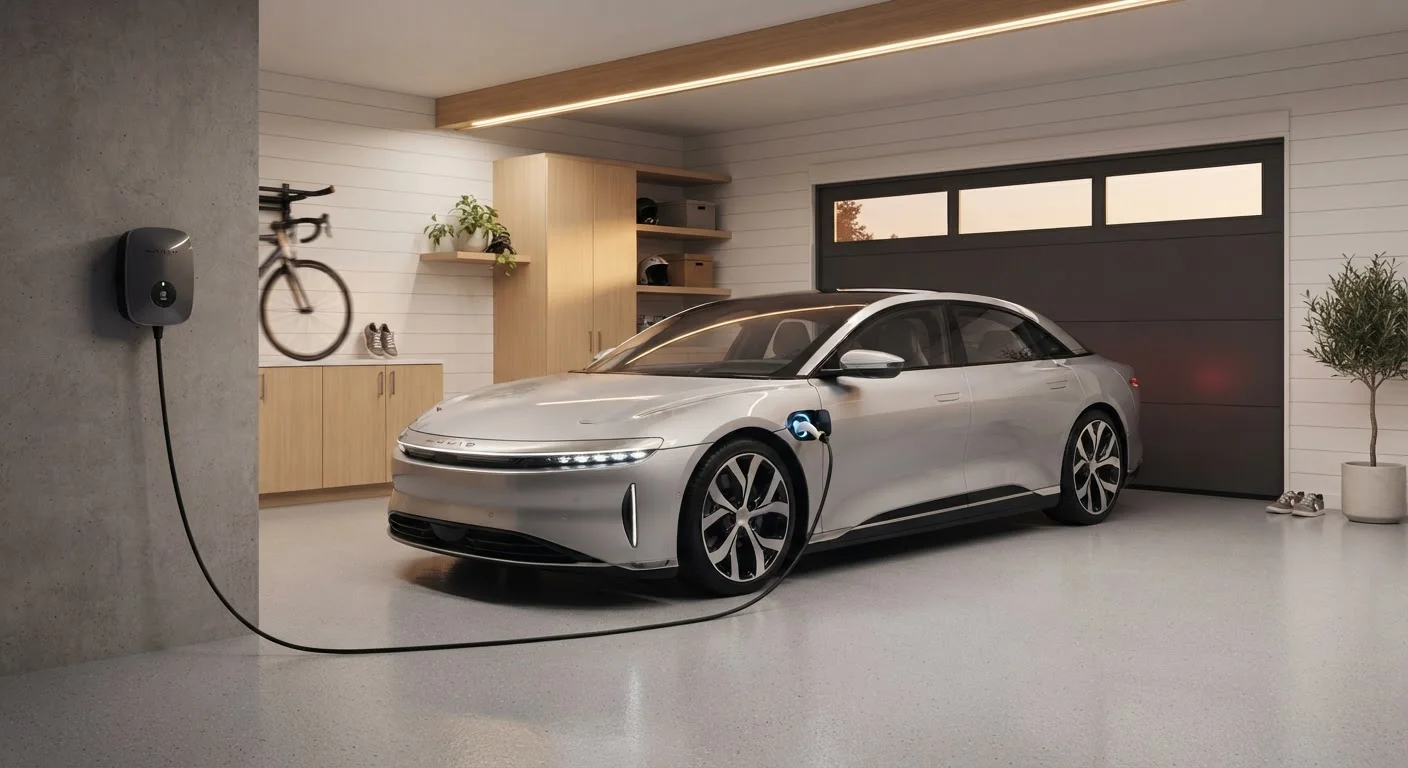
- Level 2 (240V dedicated circuit): Adds 15-30 miles of range per hour depending on the vehicle's onboard charger capacity. This is the standard home-charging setup, typically installed by a licensed electrician for $500-$1,500 including hardware and labor, though costs vary by region and home wiring.
- DC Fast Charging (Level 3): Adds 100-200+ miles in 20-40 minutes on compatible vehicles. Found at highway corridors, retail locations, and dedicated charging stations. Not all EVs accept the same connector standard - verify compatibility before purchase.
The public charging network in the US has expanded significantly, with the federal government's National Electric Vehicle Infrastructure (NEVI) program funding additional highway corridor stations. However, coverage remains uneven in rural areas. Apps such as PlugShare and ABRP (A Better Route Planner) provide real-time station availability mapping and are invaluable planning tools for road trips.
For a detailed look at how ownership costs - including charging costs - compare over a multi-year period, see The Real Cost of Owning an Electric Car Over Five Years.
The True Cost of Going Electric
Sticker price comparisons between EVs and equivalent gasoline vehicles can be misleading without accounting for total cost of ownership. EVs carry higher average purchase prices, largely due to battery costs, but tend to have meaningfully lower operating expenses across several categories:
- Fuel: The US Energy Information Administration data consistently shows that electricity costs per mile are roughly one-third to one-half the cost of gasoline per equivalent mile, though this ratio shifts with local electricity rates and gasoline prices.
- Maintenance: EVs have no oil changes, no timing belts, and fewer brake replacements due to regenerative braking. Industry analyses, including data from Consumer Reports, indicate EV owners spend significantly less on unscheduled repairs than gasoline-vehicle owners over comparable periods.
- Incentives: The federal Inflation Reduction Act provides a clean vehicle tax credit of up to $7,500 for eligible new EVs and up to $4,000 for certain used EVs, subject to income caps, vehicle price limits, and assembly requirements. Many states layer additional rebates or registration fee reductions on top. Verify current eligibility through the IRS or your state's energy office, as program details change.
When budgeting, also factor in home charger installation, potential electricity rate tier changes, and any condominium or HOA fees that may apply to charging access. For financing strategy, payment strategies for auto loans can help you structure a purchase that fits your monthly budget.
New vs. Used EVs: What First-Time Buyers Should Weigh
The used EV market has matured considerably, offering entry-level price points that make electrification accessible to a broader range of buyers. However, EVs carry unique considerations when purchased used that differ from conventional used-car buying:
Battery health: Ask for a battery state-of-health (SoH) report, which some manufacturers provide through dealer diagnostics. A battery at 80% SoH on a vehicle rated at 250 miles of range effectively delivers around 200 miles - a meaningful reduction. Some brands offer battery health warranties that transfer to subsequent owners; confirm coverage details in writing.
Charging equipment history: Vehicles that have been charged predominantly via DC fast charging may experience modestly faster battery degradation compared to those primarily charged at Level 2. This is a data point to ask about, not a disqualifier.
Software updates: Many EVs receive over-the-air software updates that improve performance and add features. Verify that a used vehicle is still receiving manufacturer updates, particularly if it's approaching end-of-support windows.
The new vs. used car tradeoffs guide covers the broader financial and practical considerations that apply across vehicle types, including depreciation curves that are particularly relevant for early EV model years.
Making the Final Decision
Switching to an EV is not a binary leap - it is a decision shaped by your specific driving habits, home setup, local infrastructure, and financial picture. The buyers who report the smoothest transitions are generally those who spend time with an EV before committing: extended test drives, rental experiences, or borrowing from a friend or family member all expose the daily rhythm of charging and range management in a way that no spec sheet can replicate.
Build a short checklist before purchase: your average daily mileage, access to home or workplace charging, the longest single-day trip you take more than twice per year, and your all-in budget including incentives. If those variables align with the capabilities of a specific vehicle, the practical barriers are likely smaller than they appear.
EV technology is also not static - battery energy density continues to improve, charging speeds are increasing, and public network coverage is expanding. A vehicle bought today will benefit from software updates and an infrastructure that will be materially better in three to five years than it is now.
This article is for general informational and educational purposes only. It does not constitute financial, tax, or purchasing advice. Incentive eligibility, vehicle specifications, and charging infrastructure details are subject to change. Consult a qualified financial adviser and verify current program details with relevant government agencies before making purchase decisions.