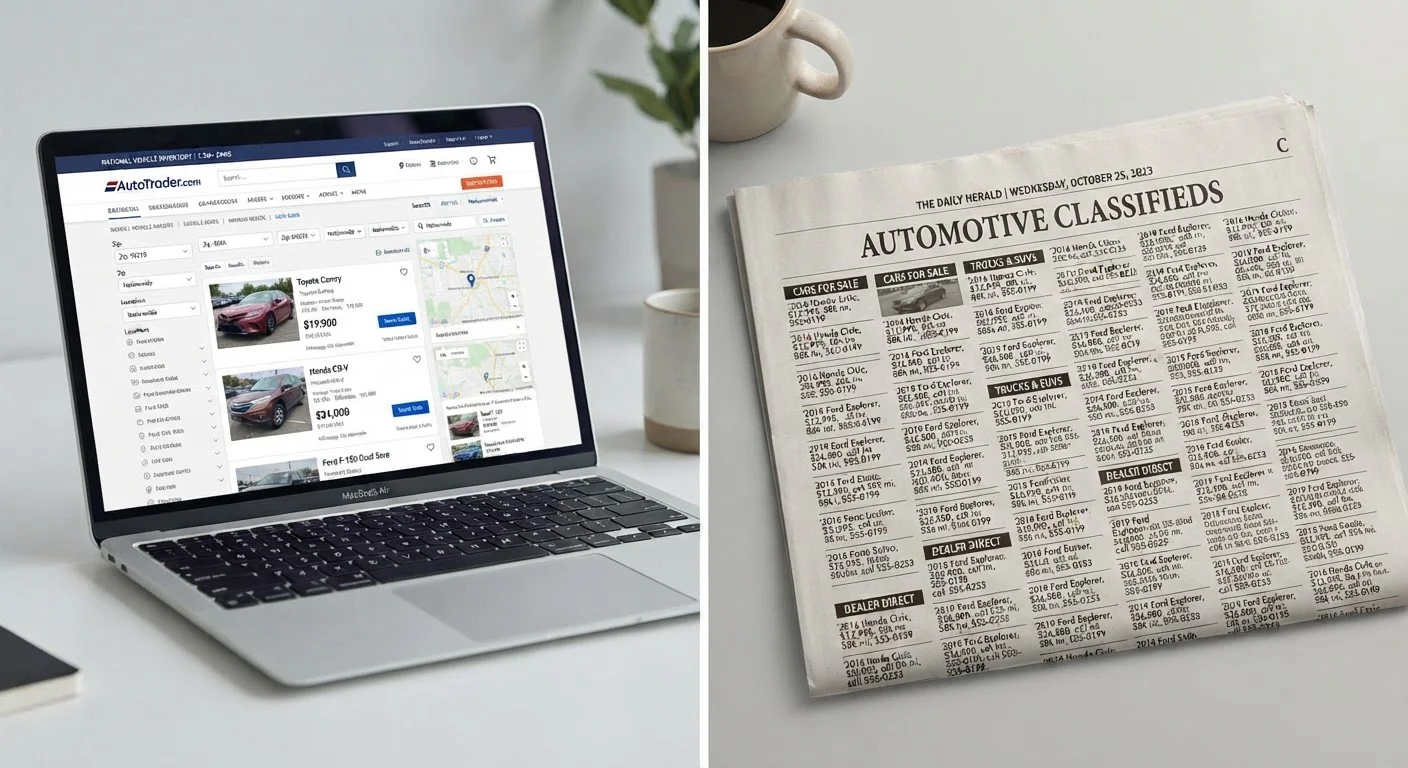
What Each Channel Actually Gives You
National online car marketplaces aggregate listings from dealers and private sellers across the country into a single searchable database. You can filter by year, mileage, price range, transmission type, and dozens of other variables. Most platforms also pull in pricing data from multiple sources, letting you see how a specific listing compares to similar vehicles in that region. For a fuller picture of how to use these tools effectively, see our guide to online car research tools.
Local classifieds — whether through community apps, regional newspapers, or neighborhood-level platforms — operate differently. Listings are typically posted by private individuals selling one vehicle. The information provided is inconsistent, photos are fewer, and there's rarely a pricing benchmark built into the interface. What you gain is directness: you're typically talking to the owner, not a dealership, which can simplify negotiation and cut out middleman fees.
Understanding these structural differences is the starting point for deciding where to invest your search time. For broader context on the used car landscape, the used car market explained covers how these channels fit into the full picture.
Comparing the Key Trade-Offs
The practical differences between the two channels come down to five core dimensions: inventory breadth, pricing transparency, seller accountability, logistics, and negotiation dynamics.
| Online Marketplaces | Local Classifieds | |
|---|---|---|
| Inventory breadth | National reach, thousands of listings | Limited to regional supply |
| Pricing transparency | Built-in market value estimates | No benchmark; research required |
| Seller accountability | Platform reviews, dealer regulations | Primarily direct trust verification |
| Inspection logistics | May require travel or shipping | Always local, easier to arrange |
| Negotiation dynamic | Often structured, dealer-mediated | Direct with owner, more flexible |
| Listing quality | Standardized photos and details | Variable; often minimal information |
| Transaction speed | Slower if remote logistics involved | Faster when inventory matches need |
Inventory breadth is where online platforms clearly lead. A buyer in a mid-sized metro area might find 12 matching vehicles locally but 200 nationally. That range matters if you're after a specific configuration or a model that moves quickly in your area.
Pricing transparency is also stronger on national platforms. Most display market value estimates alongside asking prices, which gives buyers a quick read on whether a listing is priced fairly. Local classifieds typically offer no such benchmark — you need to bring your own research.
Seller accountability differs too. Dealers listed on major platforms are often subject to platform review systems and must comply with applicable consumer protection regulations. Private sellers on local classifieds generally face fewer external accountability mechanisms, though this doesn't mean they're less honest — just that you're relying more on direct verification.
Logistics and Inspection Realities
One factor buyers underestimate with online marketplaces is logistics. A listing 600 miles away may look ideal on paper, but transporting a vehicle you haven't physically inspected creates real risk. Shipping a car adds cost, and if the vehicle arrives with undisclosed issues, your recourse options may be limited depending on how the sale was structured.
Always Budget for a Pre-Purchase Inspection
Whether you find a vehicle through a national platform or a neighborhood app, plan to have a qualified mechanic inspect it before finalizing any agreement. A pre-purchase inspection typically costs $100–$200 and can surface issues that photos and seller disclosures miss. For out-of-area vehicles, many independent shops offer inspections on behalf of remote buyers — confirm this service before traveling.
Local classifieds sidestep this issue entirely. Every vehicle is, by definition, within driving distance. You can schedule a viewing without coordinating logistics, and you can bring a trusted mechanic along without additional friction.
That said, in-person inspection is non-negotiable regardless of channel. A well-photographed online listing is not a substitute for a physical walkaround, a test drive, and a pre-purchase inspection by a qualified mechanic. The same applies to a vehicle found two streets away — proximity doesn't replace due diligence. See also: what buyers overlook when comparing used car deals.
How to Use Both Channels Together
The most effective used car search rarely relies on a single channel. A practical workflow looks like this: use a national marketplace to define your target — identify the trim levels, mileage ranges, and price bands that reflect realistic market value for the vehicle type you want. Then run a parallel search on local classifieds to see whether comparable vehicles appear locally at the same or lower price points.
If the local supply is thin, the national inventory becomes your primary pool. If local listings are plentiful, you may be able to transact faster and with less logistical complexity. Either way, you're entering negotiations with market data behind you rather than guessing.
For buyers weighing whether to approach a dealer versus a private seller — regardless of which channel surfaces the listing — private seller vs. dealership covers the protections and risks each route carries. And if you're open to alternative sourcing methods beyond both channels, car auctions as a used vehicle source outlines another option worth understanding before you commit to a search strategy.