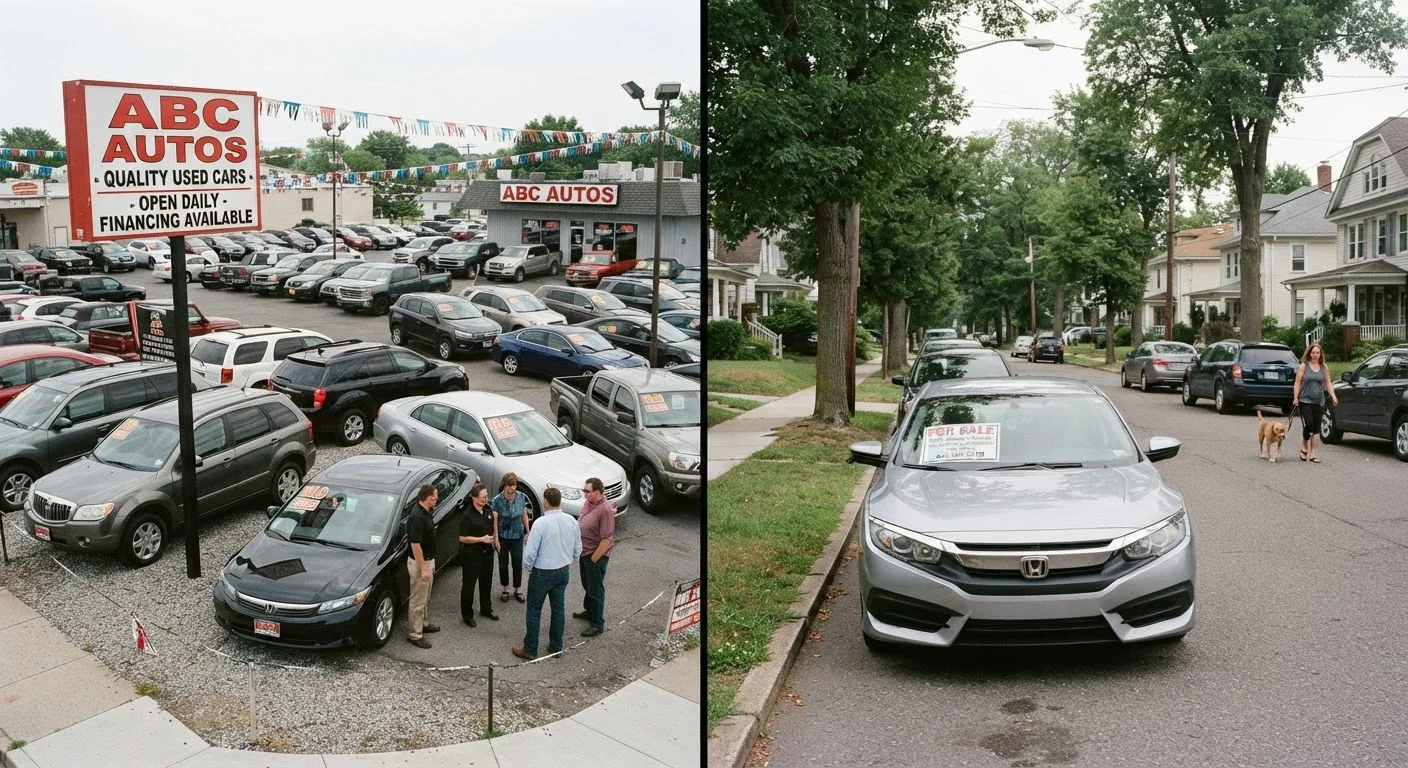
How the Used Car Market Is Structured
The used car market is not a single place — it's a collection of overlapping channels, each serving different buyer needs. Understanding the structure before you start shopping helps you match the right channel to your priorities around price, risk, and convenience.
At a high level, buyers can source used vehicles from four main channels:
- Private sellers — individuals listing their own vehicles
- Independent dealers — non-franchised lots selling a variety of makes and models
- Franchised dealerships — new-car dealers that also sell used inventory, often including certified pre-owned vehicles
- Online platforms — digital marketplaces that aggregate listings from all of the above
Each channel operates under different pricing norms, legal obligations, and levels of buyer protection. Knowing which type of seller you're dealing with — even when browsing a single website — shapes how you should approach the transaction. For a deeper comparison of the two most common routes, see how the buying experience differs between private sellers and dealerships.
Private Sellers: Lower Price, Higher Risk
Private sellers — individuals selling their own vehicle — typically list at prices below dealer retail. Because there's no business overhead, no reconditioning cost, and no sales commission built into the price, the sticker figure is usually more negotiable.
The trade-off is a thinner safety net. Private sales in most U.S. states are completed on an as-is basis, meaning once you drive away, the seller generally has no further legal obligation. Implied warranty protections that apply to licensed dealers do not typically extend to private transactions.
Always Get a Pre-Purchase Inspection
Regardless of the channel, have any used vehicle inspected by an independent, qualified mechanic before you commit to buying. A pre-purchase inspection typically costs $100–$200 and can surface mechanical issues that aren't visible during a test drive. This step is especially critical in private sales, where the as-is nature of the transaction leaves you with limited recourse after signing.
Practical implications for buyers include:
- No financing offered — you'll need pre-arranged funding from a bank or credit union
- Limited ability to verify the seller's claims about the vehicle's history
- Greater need for independent inspection by a qualified mechanic before purchase
Private listings are found on classified platforms and social marketplace tools. When using these, confirm you're dealing with a true private party — not an unlicensed dealer masquerading as one, which is illegal in most states.
Dealers: More Protection, Higher Cost
Licensed dealers — both independent and franchised — are regulated at the state level and must comply with consumer protection laws that don't apply to private sellers. This includes FTC Used Car Rule requirements, such as displaying a Buyers Guide on every vehicle disclosing warranty terms.
Independent dealers typically stock a wide mix of makes, models, and price points. They often acquire inventory at auction and may sell vehicles that don't meet franchised dealer standards. Quality varies considerably, so vehicle history reports and pre-purchase inspections remain essential.
Franchised dealerships — authorized by a specific automaker — carry used inventory alongside their new-car sales. Their certified pre-owned (CPO) programs put vehicles through manufacturer-defined inspections and back them with extended warranties. CPO vehicles carry a price premium, but the documentation and coverage can reduce post-purchase surprises. To understand the pricing language you'll encounter on any lot, the used car pricing glossary covers the key terms before you visit.
~40M
Used vehicles sold annually in the U.S.
According to data cited by the National Automobile Dealers Association (NADA), the U.S. used car market consistently moves roughly 40 million units per year across all channels.
~54%
Used vehicles sold by franchised and independent dealers
Industry estimates suggest dealers account for a majority of used vehicle transactions, with private-party sales comprising the remainder of the market.
3–5%
Typical CPO price premium over non-certified used
Consumer Reports and industry analysts have noted that certified pre-owned vehicles commonly carry a 3–5% premium over comparable non-certified used inventory, reflecting inspection and warranty costs.
Online Platforms and What They Actually Are
Digital marketplaces have made it easier to browse thousands of listings in one place, but they don't represent a new category of seller — they're aggregators. Behind every listing is either a private individual or a licensed dealer. The platform itself is rarely the seller.
Some platforms have introduced direct-to-consumer used car sales with home delivery and short return windows. These are still dealer transactions, subject to dealer regulations, even if the process feels more like an e-commerce purchase.
Key steps when using online platforms:
- Identify whether the listing is from a private party or a dealer — this determines your legal protections
- Cross-reference the VIN using a vehicle history report service
- Confirm the physical location of the vehicle and arrange an independent inspection before committing
- Understand the platform's return or dispute policy, and don't assume it substitutes for due diligence
For a structured look at navigating the full transaction from search to paperwork, see understanding used car deals from start to finish.
Matching the Channel to Your Situation
No single channel is objectively better for every buyer. The right fit depends on your budget flexibility, risk tolerance, financing situation, and how much time you can invest in due diligence.
A structured way to think about it:
| Channel | Typical Price | Buyer Protections | Financing Available |
|---|---|---|---|
| Private Seller | Lower | Minimal (as-is) | No |
| Independent Dealer | Moderate | State-regulated | Often yes |
| Franchised Dealer | Higher | Strong, CPO option | Yes |
| Online Platform | Varies | Depends on seller type | Sometimes |
Whichever channel you choose, the due diligence fundamentals remain constant: verify the vehicle's history, arrange a pre-purchase inspection, and understand what recourse — if any — you have after the sale. For a direct side-by-side breakdown of the two most common routes, private seller vs. dealership covers each in detail.