What Each System Actually Does
The names sound almost identical, but the behaviour is fundamentally different. Lane Departure Warning (LDW) is a passive system: it watches the lane markings via a forward-facing camera, and when the vehicle begins to cross a solid or dashed line without a turn signal active, it alerts the driver — usually through a steering wheel vibration, an audible chime, or a dashboard icon. That is where its job ends. The driver must steer back.
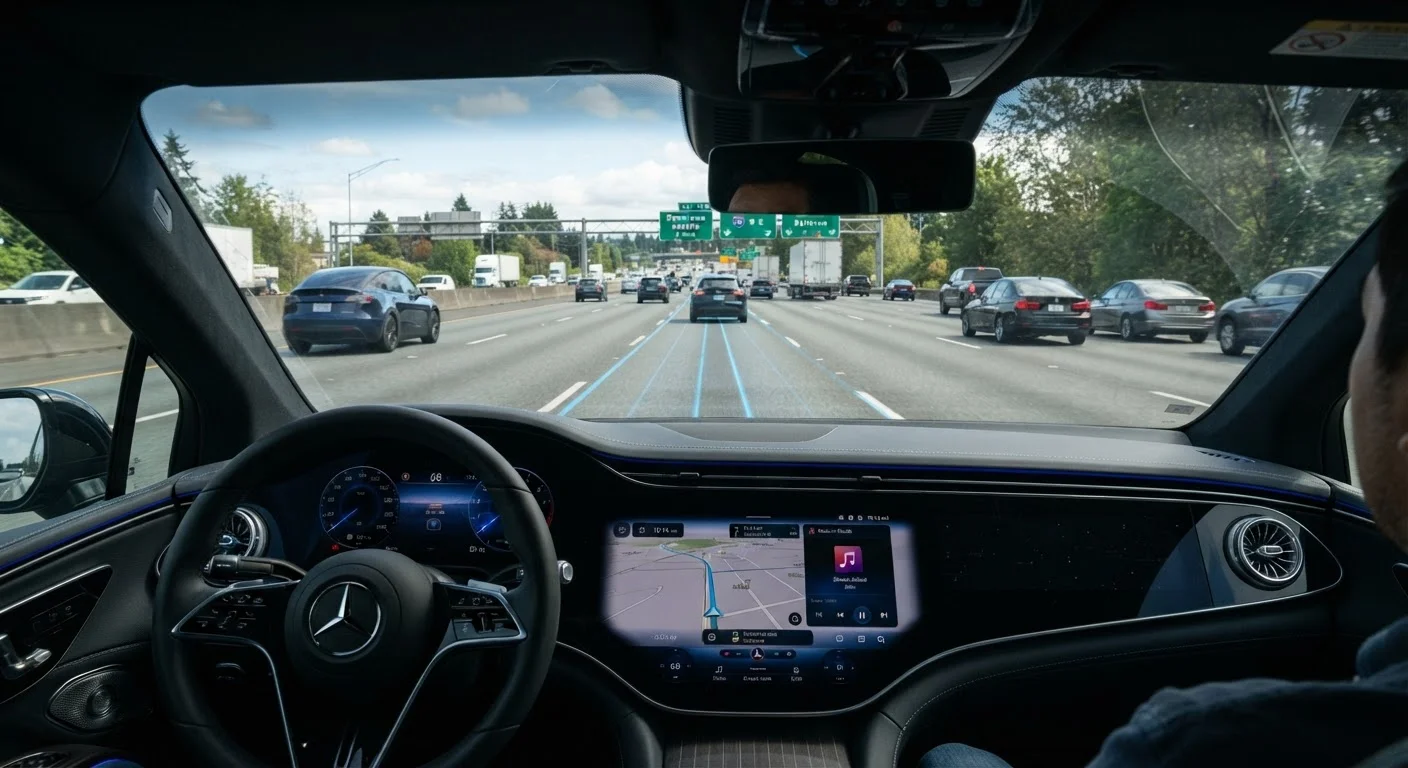
Lane Keeping Assist (LKA) goes one step further. It uses the same camera input but adds an active response: when drift is detected, it applies light torque to the steering wheel — or, in some implementations, brief individual wheel braking — to guide the vehicle back toward the lane centre. The system doesn't take over driving; it nudges, and the driver can easily override it with normal steering input.
Think of LDW as a co-pilot who taps you on the shoulder. LKA is a co-pilot who also reaches over and steadies the wheel. For a broader look at how these and related systems fit together, see Lane Assist Technologies Decoded.
When Each System Triggers — and When It Stays Silent
Both systems share a common trigger condition: the vehicle crossing or approaching a lane marking without an active turn signal. However, the threshold at which each responds can differ. LDW generally alerts slightly earlier — often when the tire reaches the lane marking — whereas some LKA implementations wait until the crossing has begun before applying steering input.
| Criterion | Lane Departure Warning (LDW) | Lane Keeping Assist (LKA) |
|---|---|---|
| Response type | Alert only (visual, audio, haptic) | Alert plus steering or braking input |
| Steering intervention | None — driver steers back | Gentle torque applied to wheel |
| Driver override | N/A — no intervention to override | Normal steering pressure overrides |
| Turn signal suppression | Yes — alerts pause when signalling | Yes — intervention pauses when signalling |
| Speed threshold | Typically above 35–45 mph | Typically above 35–45 mph |
| Lane marking dependency | High — requires visible markings | High — requires visible markings |
| Driver effort required | Must respond to alert manually | System assists; driver still monitors |
Crucially, both systems suspend themselves when you signal a lane change. Activating your turn signal tells the system the movement is intentional, preventing false alerts during normal highway driving. Both systems also have speed thresholds — most activate only above roughly 35–45 mph — and both can struggle with faded, obscured, or snow-covered lane markings. This parallels how forward-facing safety systems work in general; see Forward Collision Warning vs Automatic Emergency Braking for a similar active-versus-passive comparison.
Driver Control, Override, and the Limits of Each System
Neither LDW nor LKA is designed to replace driver attention. Both systems carry clear limitations that every driver should understand before relying on them.
- LDW limitations: An alert is only useful if the driver is awake and able to respond. LDW does nothing to prevent a lane crossing if the driver is incapacitated or ignores the warning.
- LKA limitations: The steering input is intentionally light — strong enough to guide but not strong enough to fight a deliberate turn. If the driver is not holding the wheel, most systems will escalate to a louder alert or disengage rather than steer autonomously. Hands must remain on the wheel.
- Shared limitation: Both depend entirely on readable lane markings. Construction zones, freshly paved roads, and heavy rain can reduce camera reliability significantly.
Overriding LKA is straightforward — simply apply normal steering pressure. The system will yield. You can also typically disable either feature via the vehicle's driver-assistance menu, though manufacturer guidance generally recommends leaving them active unless a specific situation warrants otherwise.
For help interpreting any dashboard alerts these systems produce, Warning Lights on Your Dashboard provides a plain-language reference.
Which System Is Right for Your Driving Style?
The choice between LDW and LKA often comes down to how you feel about automated physical inputs while driving. Some drivers find LKA's steering nudge reassuring on long highway trips; others find any unexpected steering movement startling or intrusive. Neither reaction is wrong — it reflects personal preference and familiarity with the technology.
A practical starting point: if your vehicle has both systems, spend a week with LDW active and LKA disabled. Observe when and how often LDW fires. Then enable LKA and notice how the physical response compares to simply reacting to the alert yourself. This lets you calibrate your comfort level before committing to a setting.
If you regularly change lanes on busy motorways, good lane-change technique matters alongside any technology. Motorway Merging Done Right covers the fundamentals of signalling, mirror use, and timing that keep these systems working as intended rather than fighting them.
This article provides general educational information about driver-assistance technology. System behaviour, sensitivity settings, and feature availability vary by vehicle make, model, and trim level. Always consult your owner's manual for the specifications that apply to your vehicle.