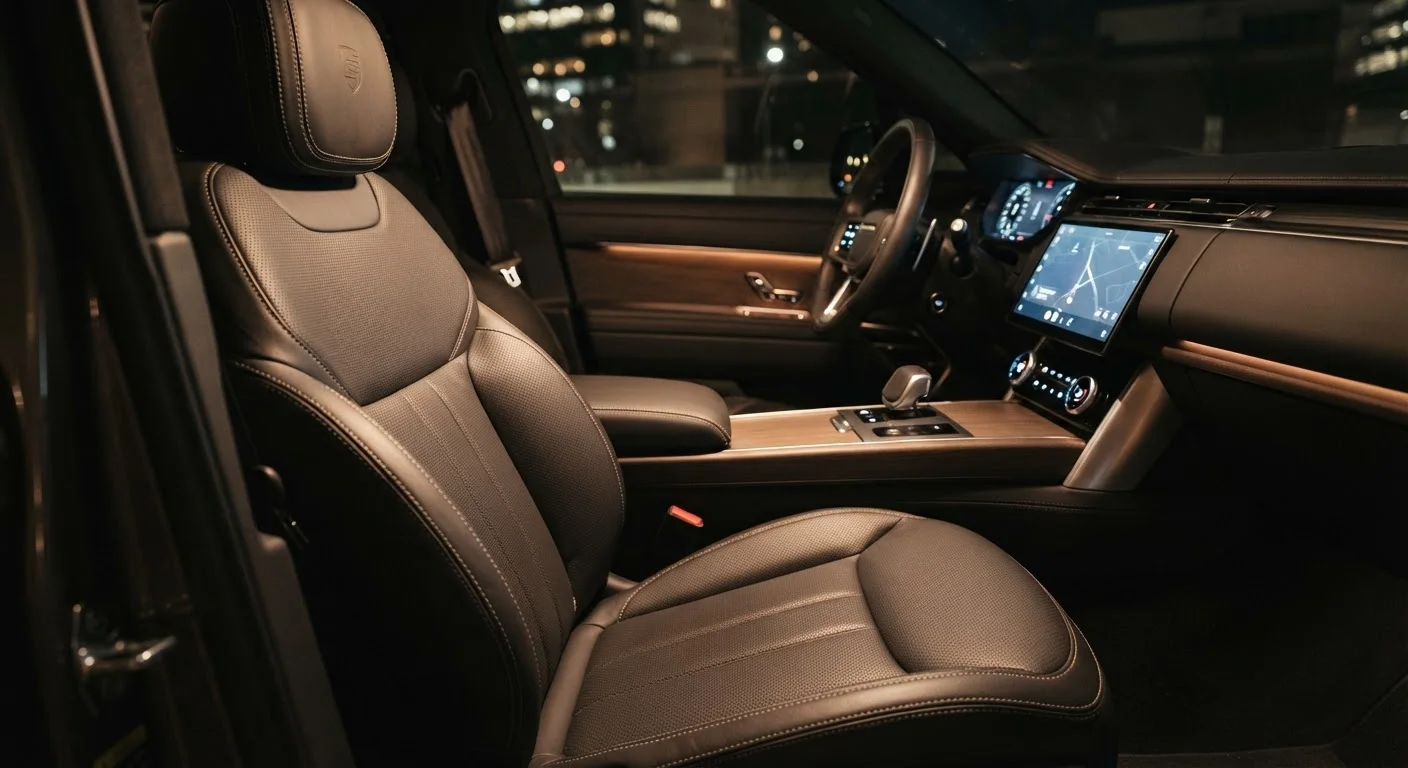
How Heated Seats Actually Work
Heated seats rely on resistive heating elements — thin, flexible wires or carbon-fiber panels woven into the seat cushion and backrest. When current flows through them, they generate heat that conducts through the seat covering to the occupant. Most systems offer two or three intensity settings and reach a comfortable temperature within a few minutes of activation.
Because the heat is generated within the seat itself, this technology works regardless of outside temperature and doesn't depend on the HVAC system warming the cabin first. That makes it particularly practical first thing on a cold morning — you feel warmth almost immediately, well before the engine reaches operating temperature.
Heated seats are standard on a wide range of trims today and are among the most straightforward seat comfort features to operate. The main caveat: prolonged use at high settings can cause discomfort for some occupants, and owners with certain medical conditions (including impaired sensation) should consult a physician before relying on them heavily.
How Ventilated Seats Work — and Why They're Different
Ventilated seats are sometimes called cooled seats, though that label can be misleading. Most systems don't actively refrigerate air. Instead, they use small fans embedded in the seat to pull air through hundreds of tiny perforations in the leather or synthetic upholstery, drawing heat and moisture away from the body. A smaller number of premium implementations push conditioned air from the HVAC system through those perforations, which provides more noticeable cooling.
The practical result in either case is a meaningful reduction in the heat and perspiration buildup that makes sitting on a sun-baked seat uncomfortable. The effect is gradual compared to heated seats — ventilated seats work by evaporating moisture rather than generating an instant sensation — but on a long summer drive, the difference in fatigue and comfort is significant.
Because perforated upholstery is a prerequisite, ventilated seats are almost always paired with leather or leatherette surfaces. If you're evaluating trim levels, check whether the ventilation function is included or whether the trim only offers heated capability. When you're comparing vehicles on a test drive, activating the ventilation feature in a warm setting is the clearest way to judge its effectiveness.
| Heated Seats | Ventilated Seats | Massage Functions | |
|---|---|---|---|
| Primary benefit | Fast warmth in cold conditions | Reduces heat and moisture buildup | Relieves muscle tension on long drives |
| How it works | Resistive heating elements in seat | Fans draw air through perforations | Inflatable air bladders or rollers |
| Best climate/season | Cold weather, winter | Warm weather, summer | Year-round on long trips |
| Speed of effect | Fast (2–5 minutes) | Gradual (10+ minutes) | Gradual (runs in cycles) |
| Trim availability | Widely available, mid trims | Higher trims, often paired with heat | Upper trims, luxury or premium |
| Requires perforated upholstery | No | Yes | No |
| Impact on EV/PHEV range | Moderate | Low to moderate | Low |
Massage Functions: Useful or Just a Novelty?
Massage seat systems are the most mechanically complex of the three. Most implementations use inflatable air bladders positioned throughout the seat back and sometimes the cushion. A compressor inflates and deflates them in programmed sequences, creating kneading or pulsing sensations across the lumbar region, shoulders, and thighs. A smaller number of vehicles use mechanical actuators or rollers, which can deliver a more defined massage motion.
The genuine utility of massage functions comes on drives longer than an hour. Remaining in a fixed seated position builds tension in the lower back and hip flexors; periodic movement through an air-bladder sequence can reduce that fatigue meaningfully. For everyday commuters covering short distances, the feature sees much less practical use.
Massage programs typically run on timers of 10 to 20 minutes and are controlled either through the infotainment screen or dedicated switches. If your vehicle already has a capable infotainment system, massage controls are often integrated there. Intensity settings and program types vary by manufacturer — worth evaluating specifically if long-haul comfort is a priority for you.
Comparing the Three Systems Side by Side
Each system targets a different comfort problem, and they're not mutually exclusive — many vehicles now combine all three, particularly in upper trim levels. Understanding what each one does well (and where it falls short) helps you prioritize when working with a trim or option budget. The table below captures the key practical distinctions.
It's also worth noting that these features draw power from the vehicle's electrical system, and in plug-in hybrids or electric vehicles, heavy use of heated or ventilated seats can have a measurable effect on range. Manufacturers typically recommend using pre-conditioning (heating or cooling the cabin while plugged in) to minimize that impact.
If you're evaluating how comfort features are distributed across trim packages — including which require upgrades — our overview of what to check when comparing trim features offers a useful framework for keeping the process organized.