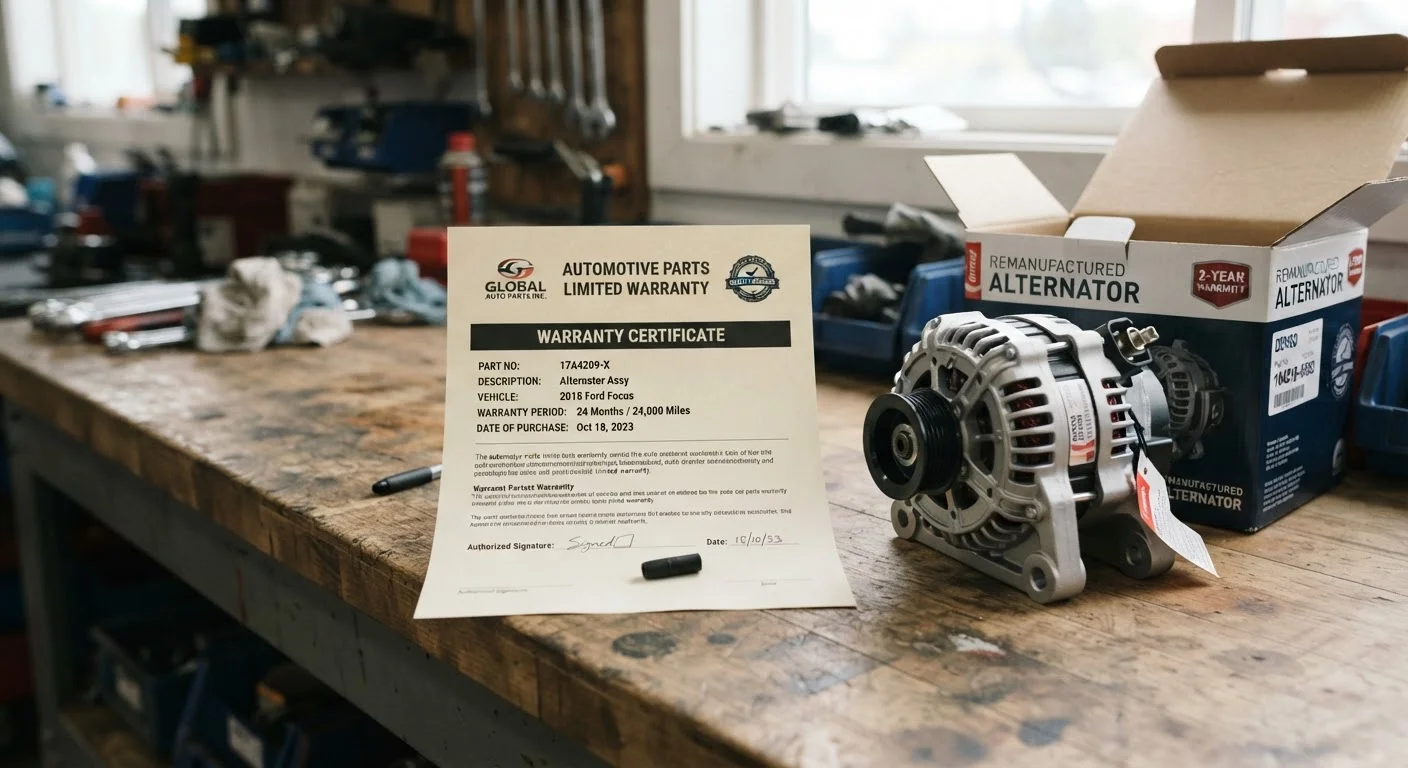
Why 'Warranty' Doesn't Mean What Most People Assume
When a parts supplier advertises a warranty, many buyers picture a simple, unconditional promise: if it breaks, they replace it, no questions asked. In practice, every parts warranty is a contract with specific conditions, and the gaps between what buyers expect and what is actually promised can be significant.
The first thing to understand is that warranty coverage is not uniform across part types. A new OEM (original equipment manufacturer) part bought from a dealership, a remanufactured alternator from an auto parts store, and a used transmission pulled from a salvage yard can all carry completely different terms — or in the case of used parts, no meaningful warranty at all. Understanding the difference between remanufactured, rebuilt, and used parts is a useful first step before evaluating any warranty attached to them.
What Parts Warranties Typically Cover
Most standard parts warranties cover defects in materials and workmanship — meaning a flaw introduced during the manufacturing process. If a brake caliper seizes because of a casting defect in the metal, that's a covered failure. If it seizes because the rubber boot cracked after two winters of road salt exposure, that's generally not.
Common covered scenarios include:
- A component that fails immediately or shortly after installation without any impact or misuse
- Structural failure that cannot be explained by wear, corrosion, or external damage
- Parts that arrive in an already-failed or clearly defective state
Save Your Paperwork from Day One
The moment a part is installed, start a simple file — either physical or digital — with the receipt, the warranty document, and the repair invoice showing the installation date and mileage. If a claim arises months later, this documentation is what makes it processable. Missing paperwork is the most common reason valid warranty claims are denied.
Coverage duration varies considerably. OEM parts purchased from dealerships typically carry a 12-month or 12,000-mile warranty, though this varies by manufacturer. Many aftermarket suppliers offer longer promotional terms — sometimes up to three years — while remanufactured parts often fall somewhere in between.
What's Usually Excluded
The exclusions section of a warranty document is where assumptions get expensive. The following are commonly excluded across most parts warranties:
- Normal wear and tear — brake pads, belts, filters, and other wear items are often excluded by definition
- Improper installation — if a part was installed incorrectly, most warranties are voided regardless of the defect
- Misuse or modification — using a part outside its rated application, or modifying it, typically ends coverage
- Corrosion or environmental damage — rust, chemical exposure, and heat damage from external sources are usually excluded
- Labor costs — a defective part may be replaced for free, but you'll still pay a shop to do it
The phrase "limited lifetime warranty" deserves particular scrutiny. "Lifetime" almost always refers to the life of ownership of that vehicle, not the life of the part itself or a permanent guarantee. "Limited" signals that numerous exclusions apply. Always read past the headline term.
For broader context on how warranty language works across the industry, our article on comparing warranty coverage and fine print explains how to read and evaluate these documents side by side.
12 mo / 12K mi
Typical OEM dealer parts warranty window
Most manufacturer-sourced parts sold through franchised dealerships carry a 12-month or 12,000-mile limited warranty, whichever comes first, though terms vary by manufacturer.
~60–90 days
Common warranty window for used/salvage parts
Salvage yard and used-parts warranties are often limited to a short inspection window, with coverage narrowly defined and labor never included.
15 U.S.C. § 2301
Federal law governing warranty disclosures
The Magnuson-Moss Warranty Act requires that warranty terms be made available to consumers before purchase and restricts certain deceptive warranty practices.
How to Protect a Warranty Claim Before You Need It
A warranty is only as useful as your ability to make a successful claim. Several straightforward habits dramatically improve your odds:
- Keep your receipt. Without proof of purchase and a record of the installation date, most claims cannot be processed.
- Request the warranty document before you buy. A verbal assurance at the counter is not a warranty. Get the terms in writing, either printed or as a digital document.
- Use qualified installation. Many warranties specify that the part must be installed by a certified technician. Even when it's not required, a professional installation record strengthens any dispute.
- Note the mileage at installation. Time-and-mileage warranties require this as a baseline to verify you're still within the covered window.
If you're purchasing a vehicle with existing aftermarket parts already installed, understanding their warranty status — and whether coverage transfers to a new owner — is an important question to ask. This issue also arises with certified pre-owned vehicles; our coverage of what CPO programmes actually cover walks through how manufacturers handle that distinction.
This article is for general informational and educational purposes only. It does not constitute legal advice. For questions about a specific warranty dispute or your rights under consumer protection law, consult a qualified attorney or your state's consumer protection office.