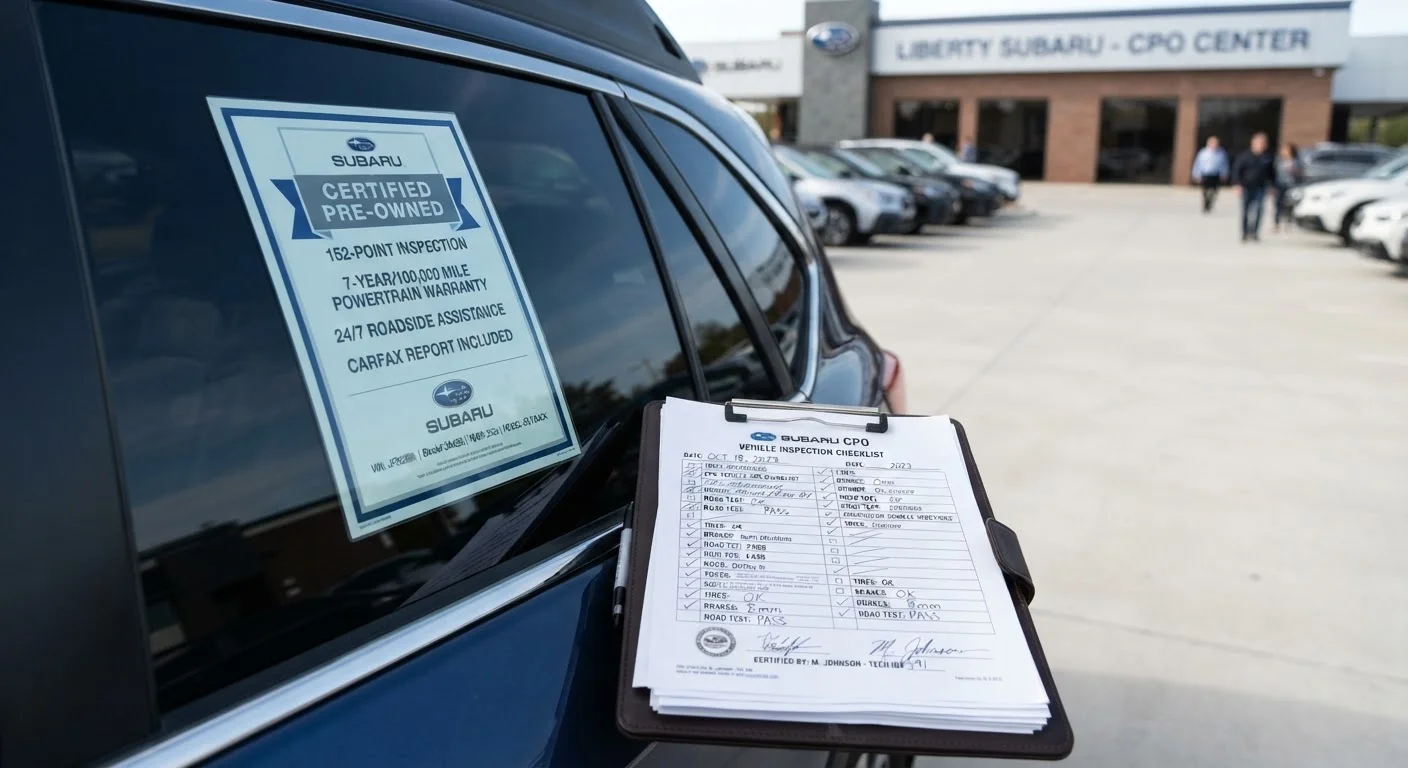
What a CPO Programme Actually Promises
Certified pre-owned programmes are built around two commitments: a structured inspection before sale and a manufacturer-backed warranty after it. Those two elements are what separate a CPO vehicle from a standard used car on paper. But the practical value depends entirely on what each programme defines those commitments to mean.
Manufacturers set their own inspection checklists — ranging from 100-point to 200-point processes — and their own warranty structures. A 100-point inspection at one brand is not equivalent to a 100-point inspection at another. The number signals a process exists; it doesn't define what each point covers or what action is required if something falls short.
For warranty coverage, most CPO programmes offer two tiers: a powertrain warranty, which covers the engine, transmission, and drivetrain, and a broader limited warranty that may include more systems but typically excludes wear items, cosmetic damage, and anything categorized as routine maintenance. Understanding which tier you're getting — and for how long — is the first practical question to ask.
Eligibility Rules and What Gets Excluded
CPO programmes aren't available for every used vehicle on a lot. Manufacturers typically impose eligibility caps based on vehicle age (usually five to six model years) and mileage (often 60,000 to 80,000 miles). Vehicles that exceed either threshold don't qualify for manufacturer CPO status, regardless of condition.
Exclusions in the warranty itself deserve equal attention. Nearly all CPO warranties exclude:
- Wear items: tires, brake pads, filters, belts, and wiper blades
- Cosmetic damage: paint, upholstery, glass chips, and trim
- Damage from accidents, flooding, or misuse
- Modifications made outside of manufacturer authorization
- Routine maintenance services (oil changes, fluid top-offs)
This is where buyer expectations and actual coverage frequently diverge. The CPO label creates an impression of comprehensive protection; the fine print narrows it considerably. Reading warranty coverage carefully before you sign is the only way to close that gap.
Dealer-Certified ≠ Manufacturer-Certified
The terms 'certified,' 'pre-certified,' and 'dealer-certified' are not legally standardized and can be applied to vehicles that don't meet any manufacturer-level criteria. Only programmes explicitly tied to the original manufacturer — typically sold at franchise dealerships for that brand — carry manufacturer-backed warranty terms. If you're unsure, ask to see the warranty document and identify the warrantor by name before proceeding.
Manufacturer CPO vs. Dealer-Certified: A Critical Distinction
Not all certified programmes carry the same standing. Manufacturer CPO programmes are administered at the brand level — the inspection standards, warranty terms, and claims process are controlled and backed by the automaker or its captive finance arm. If a covered component fails, the claim runs through that established system.
Dealer-certified programmes use similar language but are assembled by individual dealerships. The inspection criteria are set by the dealer, the warranty is typically issued by a third-party provider rather than the manufacturer, and the coverage terms can vary significantly. These aren't necessarily bad programmes, but they carry a different risk profile than manufacturer-backed certification.
When evaluating any vehicle presented as certified, ask directly: Is this certified by the manufacturer, or by the dealership? Request the warranty documentation — not a summary sheet — and identify who the warrantor is. For help understanding how warranty language can differ across programmes, see our guide to comparing warranty coverage and fine print.
How to Evaluate a CPO Programme Before You Buy
Treating the CPO designation as a starting point — not a conclusion — puts you in a stronger position. Here's a practical approach:
- Request the completed inspection report for the specific vehicle. It should list every point checked and the result. If a dealer can't produce this, that's a signal worth noting.
- Read the actual warranty document. Ask for the full terms, not the marketing brochure. Identify the coverage period, what systems are included, what's excluded, and what the deductible (if any) looks like per claim.
- Check the remaining factory warranty. If the original warranty still has time left, it transfers with the car. Factor this into how much the CPO warranty actually adds.
- Consider an independent pre-purchase inspection. A qualified mechanic's assessment is complementary to — not redundant with — the CPO inspection. It gives you a second opinion on the vehicle's current condition.
If you're also evaluating financing at the same time, understanding your position before you walk in matters. See our overview of what auto loan pre-approval covers and where its limits are for context on separating the purchase decision from the financing decision.