How Each System Actually Works
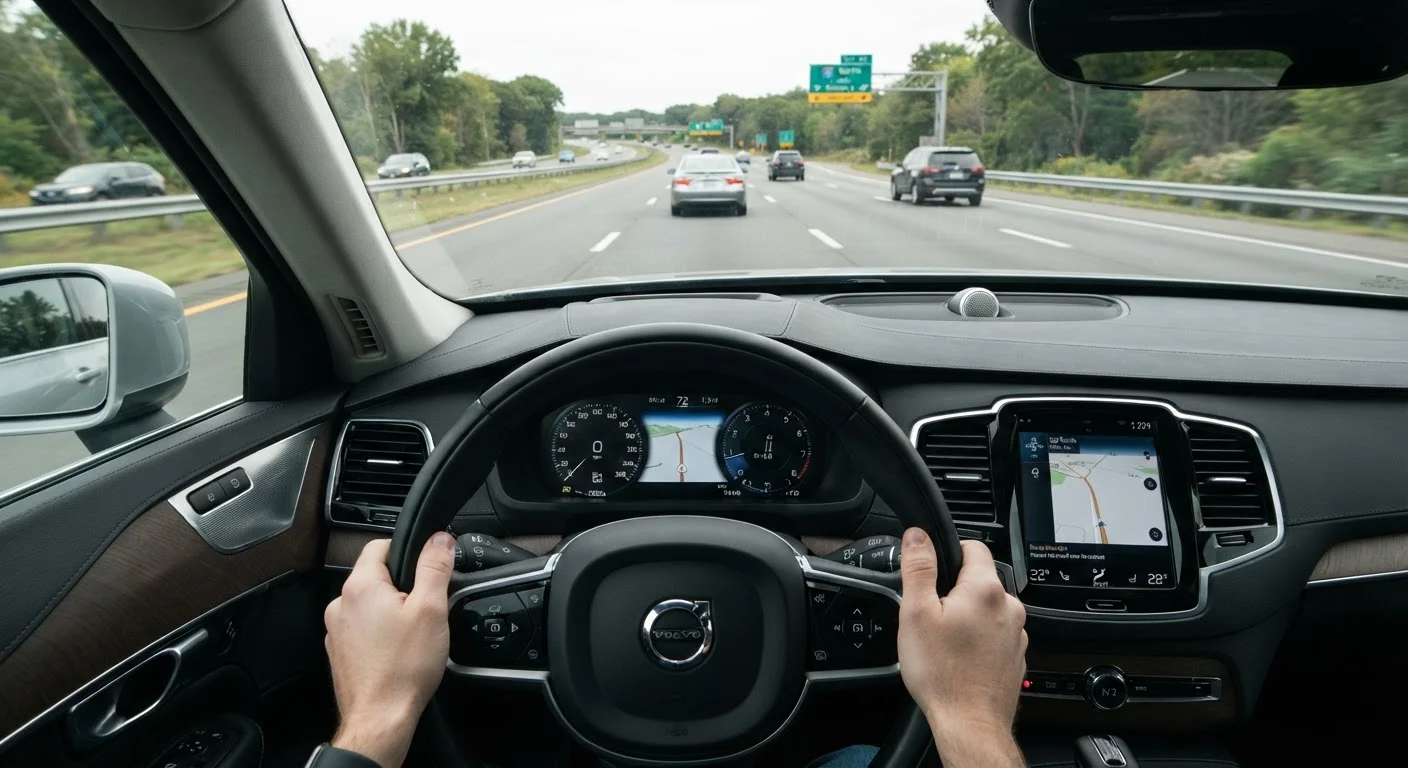
Standard cruise control is a straightforward speed governor. Set it to 65 mph, and the vehicle maintains that speed by regulating throttle input. The system has no awareness of what's happening in front of you — if traffic slows, you must brake and manually cancel or reset the system.
Adaptive cruise control (ACC) adds a sensing layer, typically radar, forward-facing cameras, or a combination of both. These sensors continuously monitor the distance and speed of the vehicle ahead. If that vehicle slows down, ACC reduces your throttle and, depending on the system, applies light braking to maintain a safe following gap. When traffic clears, ACC accelerates back to your set speed.
Some ACC systems can also bring the vehicle to a complete stop in slow-moving traffic and resume automatically — a feature often labeled as stop-and-go or low-speed follow. Others are designed only for higher highway speeds and disengage below a threshold, typically around 20–25 mph. Understanding which version a specific vehicle has matters for evaluating real-world usefulness.
For a closer look at what ACC does in practice, see how adaptive cruise control actually performs on the road.
| Criterion | Standard Cruise Control | Adaptive Cruise Control |
|---|---|---|
| Speed management | Holds fixed set speed | Adjusts speed based on traffic |
| Sensor technology | None | Radar, cameras, or both |
| Response to slower traffic | Driver must intervene | Automatically slows to maintain gap |
| Stop-and-go capability | No | Available on many systems |
| Typical availability | Standard on most base trims | Mid or higher trim, or optional package |
| Driver attention required | Yes | Yes |
| Usefulness in traffic | Limited | High |
What the Difference Means for Daily Driving
On a quiet stretch of interstate with minimal traffic, standard cruise control performs perfectly well. You set your speed, take your foot off the gas, and the car holds steady. It's a simple, proven technology that's been standard equipment for decades.
The difference becomes apparent the moment traffic enters the picture. With standard cruise, a vehicle merging ahead of you or a gradual slowdown requires you to intervene — brake, cancel the system, then re-engage once the road clears. In moderate highway traffic, this can become repetitive and tiring.
ACC handles these moments automatically. The system detects the slower vehicle and adjusts without requiring you to touch a pedal. This doesn't mean you can stop paying attention — both systems require an engaged driver with hands on or near the wheel — but ACC does reduce the physical workload in variable-speed conditions.
ACC also intersects with other active safety systems. Many vehicles that include ACC bundle it with automatic emergency braking, lane centering, or both. Understanding how these systems interact helps set realistic expectations for what you're actually getting in a safety package.
~40%
New vehicles with ACC as standard or optional
Industry analysts have estimated that a significant and growing share of new vehicle models now offer some form of adaptive cruise as either standard or optional equipment across trim levels.
1–2 sec
Following gap ACC typically maintains
Most ACC systems are designed to maintain a time-based following distance, commonly adjustable between one and three seconds, rather than a fixed physical distance.
Cost, Availability, and What to Look For When Comparing Vehicles
Standard cruise control is included on nearly every new vehicle, even base trim levels. ACC is more commonly found on mid-range or higher trims, or bundled into optional safety or driver assistance packages. The cost difference can range from a few hundred to over a thousand dollars depending on how it's packaged.
When comparing vehicles, check whether ACC is standard on the trim you're considering or requires an add-on package. Also confirm whether the system includes stop-and-go capability or is highway-only — this significantly affects its usefulness in stop-and-go commutes.
It's also worth noting that ACC sensors can occasionally be affected by heavy rain, snow, or a dirty sensor lens. These are real-world limitations, not deal-breakers, but worth understanding. Like traction and stability control, ACC is a tool that works within physical limits — it doesn't override the laws of physics or eliminate the need for attentive driving.
The right choice depends on your typical driving environment. Understanding exactly what each system does — and doesn't do — puts you in a far better position to decide whether the upgrade is worth it for your situation.