Why Engine Myths Persist — and Why They Cost Buyers
Engine specifications sit at the center of almost every new-car comparison, yet powertrain knowledge among typical buyers tends to be a patchwork of half-remembered advice, forum folklore, and outdated rules of thumb. The result: shoppers regularly overvalue certain numbers, dismiss capable vehicles on flimsy grounds, and sometimes pay premiums for features that deliver little real-world benefit.
This article works through the most persistent misconceptions, one at a time. For a complementary look at how official fuel consumption numbers are tested and why they rarely reflect the tank you'll fill each week, see our guide on fuel economy figures and what they leave out.
Myth
A bigger engine always burns more fuel, so smaller is smarter for economy.
Fact
Engine size alone does not determine fuel consumption — load, gearing, technology, and driving style are equal or greater factors.
A large-displacement engine cruising comfortably at low throttle often consumes less fuel per mile than a small engine working near its limit to haul the same load. Modern variable displacement systems, cylinder deactivation, and tall gearing allow bigger engines to loaf at highway speeds with minimal fuel draw. Conversely, a small turbocharged engine pushed hard in city traffic can return disappointing figures. Official ratings capture a controlled test cycle, not the full picture — see our article on why spec-sheet fuel figures rarely match real life for detail.
Myth
Turbocharged engines are less reliable and break down more often than naturally aspirated ones.
Fact
Modern turbocharged engines, when maintained correctly, have reliability records comparable to naturally aspirated alternatives across most mainstream vehicle segments.
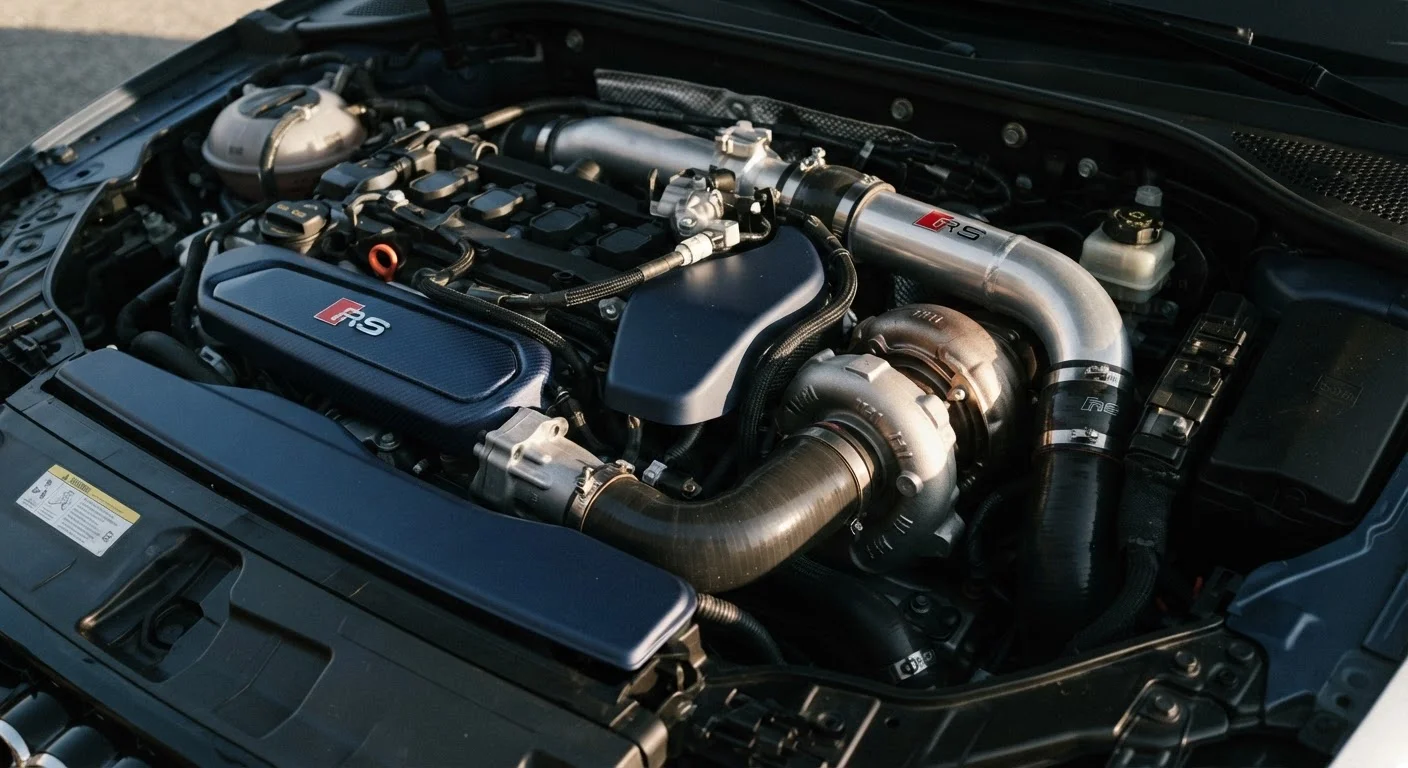
Earlier turbo technology did carry real reliability risks — particularly around oil coking in the turbocharger bearing housing after hot shutdowns. Contemporary designs use water-cooled bearing housings, tighter manufacturing tolerances, and engine management systems that protect the turbo under demanding conditions. The primary reliability variable today is maintenance discipline: synthetic oil of the correct specification, changed on schedule, matters more than whether a turbo is present. Neglecting oil changes degrades any engine, turbocharged or not.
Myth
More horsepower means a faster, more capable car in everyday driving.
Fact
Torque — not peak horsepower — is the figure that drives real-world acceleration feel, especially at everyday road speeds.
Horsepower is a calculated figure derived from torque multiplied by engine speed. A high horsepower number reached only at 7,000 RPM contributes little when merging onto a highway at 2,500 RPM. Torque delivered low in the rev range — the kind that pushes you back in your seat from a standing start or while overtaking — is what most drivers perceive as responsiveness. When comparing vehicles, note not just peak torque but the RPM at which it arrives; a wide, flat torque curve almost always translates to a more relaxed and capable daily driver than a peaky, high-revving alternative.
Myth
Premium (high-octane) fuel improves performance and should be used in any engine.
Fact
Premium fuel benefits only engines engineered to use it; in vehicles requiring regular fuel, it provides no measurable gain.
Octane rating measures a fuel's resistance to premature detonation (knock), not its energy content. High-compression or turbocharged engines designed for premium fuel can advance ignition timing to extract more power when it's present — and the owner's manual will state "required" in that case. For engines designed around regular-grade fuel, the engine management system is not calibrated to take advantage of higher octane, so the extra cost produces no performance or economy benefit. Check the fuel door placard: "required" means use it; "recommended" means the engine will run on regular with modest adjustments; silence on premium means don't bother.
Myth
High engine mileage always signals an unreliable vehicle that's near the end of its useful life.
Fact
Maintenance history and operating conditions are far stronger predictors of remaining engine life than odometer reading alone.
An engine with 120,000 highway miles on a vehicle that received consistent oil changes, coolant flushes, and timing-belt service may be far healthier than one with 60,000 mixed urban miles that was neglected. Modern engine metallurgy, tighter manufacturing tolerances, and full-synthetic lubricants have pushed dependable service life well beyond what earlier generations expected. When evaluating a high-mileage vehicle, prioritize a documented service record and an inspection by a qualified mechanic over the number on the dash. For broader context on used-vehicle assumptions, see common assumptions about used cars that often mislead buyers.
Myth
Letting an engine idle to 'warm up' for several minutes before driving protects it in cold weather.
Fact
Modern fuel-injected engines reach optimal operating temperature faster under light driving load than they do at idle.
Extended cold idling made sense for carbureted engines that needed time to stabilize fuel delivery. Today's electronically managed fuel injection systems compensate for cold starts within seconds. Prolonged idling in a modern engine keeps cylinder temperatures low, which can allow unburned fuel to wash past piston rings and dilute the oil film — a genuine concern, not a myth. The manufacturer-recommended practice for virtually all current vehicles is to start, wait roughly 30 seconds, then drive gently until the temperature gauge rises. For related outdated maintenance beliefs, see car maintenance myths that cost owners money.
What Buyers Should Actually Focus On
Once the myths are set aside, a clearer framework emerges. Rather than fixating on displacement or cylinder count, evaluate powertrain specs through three practical lenses:
- Torque delivery band: Where in the rev range does peak torque occur? A broad, low-RPM torque curve suits daily driving far better than peak figures that only appear near the redline.
- Transmission pairing: An engine's real-world behavior depends heavily on how the gearbox deploys its output. A well-matched continuously variable or multi-speed automatic can make a modest engine feel punchy; a poorly tuned unit can make a powerful one feel sluggish.
- Maintenance requirements: Turbocharged engines and high-compression units may call for synthetic oil, shorter change intervals, or specific fuel grades. Factor those ongoing costs in alongside the sticker price.
For a deeper look at what displacement figures actually communicate, our explainer on engine displacement and what litres actually mean walks through the numbers clearly. And if you're weighing turbocharged against naturally aspirated options specifically, turbo vs. naturally aspirated real-world ownership differences covers reliability profiles, maintenance costs, and driving character in detail.
Don't Skip a Pre-Purchase Inspection
No amount of spec-sheet literacy replaces a physical inspection by a qualified, independent mechanic before buying a used vehicle. Engine condition, oil quality, cooling system health, and turbocharger wear are things a trained eye and diagnostic tools can assess — and a sticker price should never substitute for that step.
Equipped with accurate expectations, you're far less likely to be swayed by spec-sheet theater or dealership floor talk. The engine is only one variable in a system — and understanding how all the parts interact is what leads to purchases buyers are genuinely happy with years later.