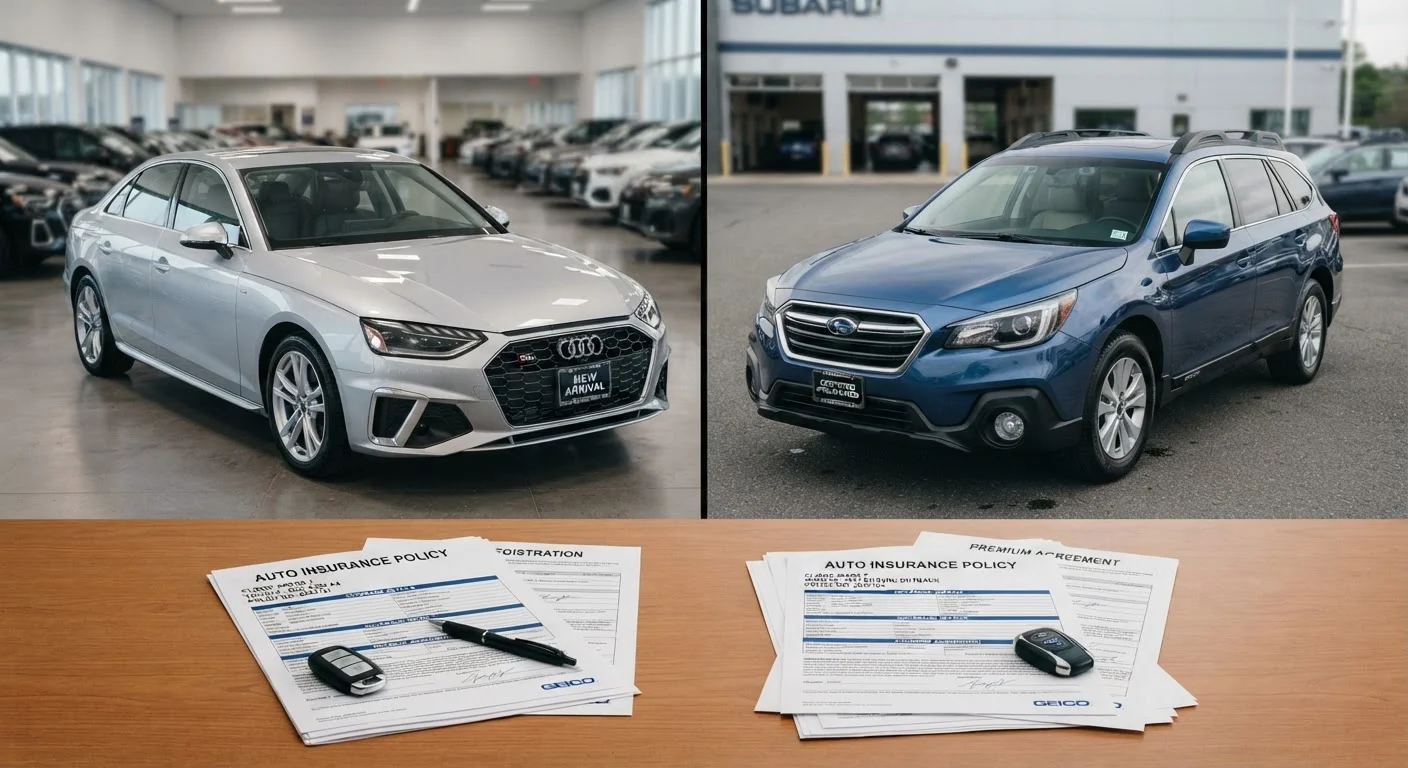
Why Vehicle Age Alone Doesn't Determine Your Premium
Many buyers assume a used car automatically means a cheaper insurance bill. The reality is more nuanced. Insurers price premiums around risk - specifically, how much a claim is likely to cost them. A vehicle's age is one data point, but the make, model, trim level, repair complexity, and even local theft trends all feed into that calculation.
A three-year-old luxury SUV with expensive sensor-laden bumpers may cost more to insure than a brand-new economy sedan. Understanding which variables actually drive your premium helps you budget accurately - not just for the purchase, but for the years of ownership ahead. See how insurance fits into the full cost picture for both new and used purchases.
How New Car Insurance Costs Are Structured
New vehicles carry higher market values, and that directly inflates the cost of comprehensive and collision coverage - the portions of your policy that pay to repair or replace your own car. When a new vehicle is totaled or stolen, the insurer's payout exposure is at its peak.
There are two additional cost layers unique to new car buyers:
- Lender-required full coverage: If you finance, the lender will require comprehensive and collision coverage. This isn't optional and adds substantially to your monthly costs compared to a liability-only policy.
- Gap insurance: New cars depreciate quickly - sometimes losing 15-20% of value in the first year. If your car is totaled early in your loan, your insurer pays current market value, which may be less than your loan balance. Gap insurance covers that shortfall. It's a meaningful extra cost but one that's easy to overlook at signing.
Advanced driver-assist features on newer vehicles are a double-edged sword. They may lower collision frequency, but a minor fender-bender that damages a camera or radar module can generate a repair bill that's far higher than it would have been on an older vehicle. Five-year ownership cost comparisons often reveal this dynamic clearly.
15-20%
Typical new car value lost in year one
Industry estimates consistently show new vehicles lose a significant share of value in the first 12 months, which is why gap insurance matters for financed buyers.
~$2,150
Average annual US auto insurance premium
According to the National Association of Insurance Commissioners (NAIC), average auto insurance expenditure in recent years has exceeded $2,000 annually for full-coverage policies.
3-5 years
Age range where used car insurance savings peak
Vehicles in the 3-5 year range have typically absorbed the steepest depreciation, reducing replacement value while often retaining modern safety features that keep liability premiums manageable.
What Shapes Insurance Costs on Used Cars
Used cars generally have lower market values, which reduces comprehensive and collision premiums. But several factors can keep used car insurance costs higher than buyers expect:
- Theft rates: Some older models rank consistently high on theft-frequency lists. Insurers track this by make, model, and year, and it feeds directly into comprehensive premiums.
- Repair parts availability: Older or discontinued models may require harder-to-source parts, increasing repair costs and, in turn, collision premiums.
- Lack of modern safety features: Vehicles without automatic emergency braking, lane-keep assist, or stability control may be involved in more preventable accidents statistically, which can influence liability rates.
- Lender requirements on financed used cars: If you finance a used car, the lender will typically still require full coverage. The savings versus a new car may be smaller than expected if the used vehicle carries a relatively high market value.
Before committing to a used vehicle, it's worth getting an insurance quote on that specific year, make, model, and trim. The used car market offers real value, but only if you account for all carrying costs upfront.
The Role of Coverage Decisions in Your Total Cost
Beyond the vehicle itself, the coverage choices you make - or are required to make - are a major lever on total insurance cost. State-mandated minimums cover liability to others but leave your own vehicle unprotected. Comprehensive and collision add significant cost but are usually required by lenders.
Key decisions that affect premiums regardless of vehicle age include:
- Deductible level: A higher deductible lowers your premium but increases out-of-pocket cost after a claim. This tradeoff is the same for new and used vehicles.
- Coverage limits: Higher liability limits cost more but provide greater protection. Underinsuring to save money can be a costly decision if you're at fault in a serious accident.
- Uninsured/underinsured motorist coverage: Often overlooked, this protects you when the other driver has inadequate coverage - a meaningful risk in many states.
For buyers comparing new versus used options as part of a broader financial decision, the full decision framework covers insurance alongside depreciation, warranty, and financing to give a complete picture.
This article provides general information about auto insurance cost factors for educational purposes. It is not personalized financial or insurance advice. Speak with a licensed insurance professional to understand the specific premiums and coverage options applicable to your situation.