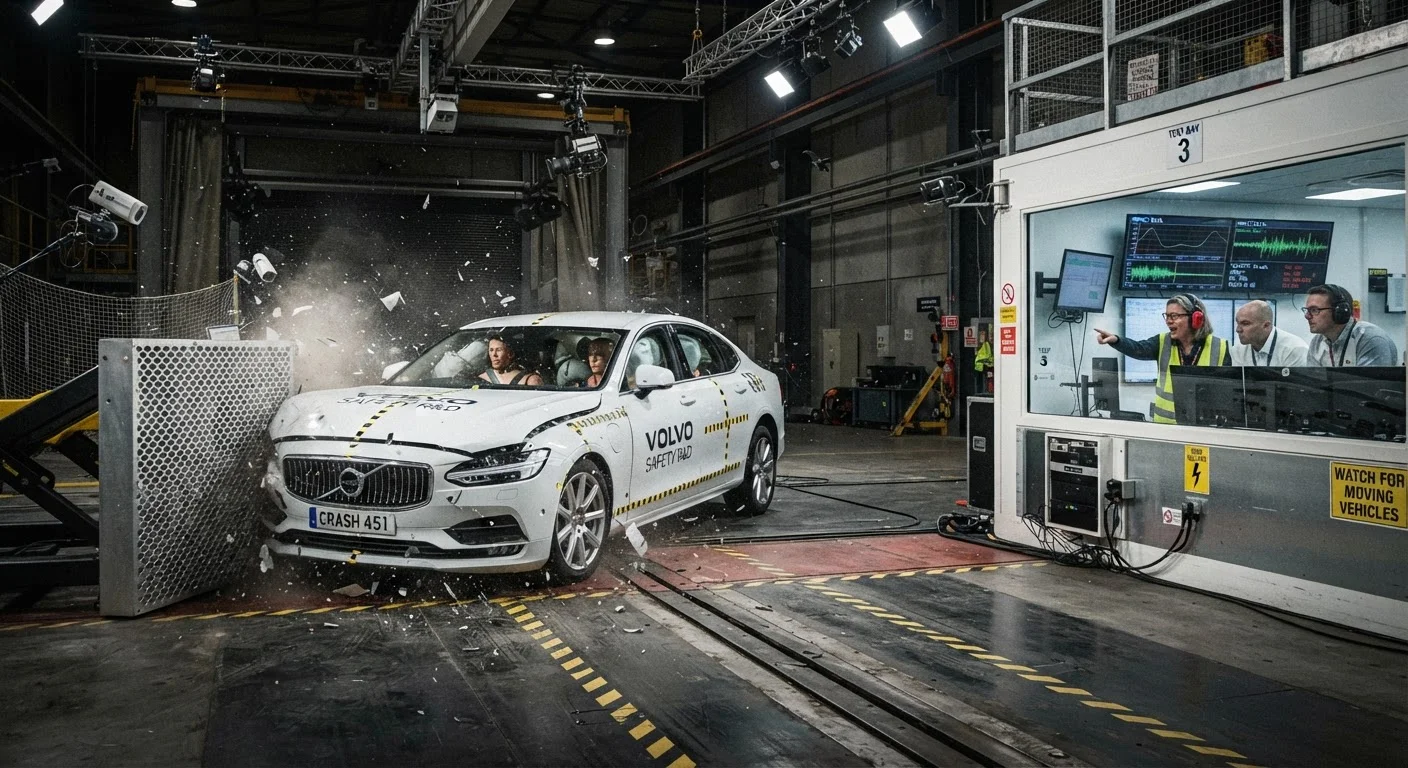
What ANCAP and Euro NCAP Actually Are
ANCAP (Australasian New Car Assessment Programme) and Euro NCAP (European New Car Assessment Programme) are independent, non-governmental vehicle safety assessment bodies. Neither sets legal minimum standards - that role belongs to government regulators. Instead, they run standardised crash tests and publish star ratings so consumers can compare safety performance across models on a common scale.
Euro NCAP, headquartered in Brussels and backed by motoring clubs across Europe, has tested new passenger cars since 1997. ANCAP is its Australasian partner, operating under a memorandum of understanding that allows it to adopt Euro NCAP test results directly for vehicles sold in Australia and New Zealand. In practice, a car tested by Euro NCAP in Germany often carries the same ANCAP rating - but only when both organisations agree the vehicle sold locally is sufficiently identical to the tested variant.
The star scale runs from zero to five. Five stars signals strong performance across all test categories; zero means the vehicle met minimum legal requirements but provides little protection beyond that baseline. A five-star result from 2018, however, is not equivalent to a five-star result from 2022 - a critical distinction explained in the next section.
How Test Protocols Change - and Why It Matters
Both programmes periodically overhaul their test protocols to reflect real-world crash patterns, advances in vehicle technology, and emerging injury data. Each revision typically adds new test scenarios, raises the pass thresholds for existing ones, or introduces requirements around active safety systems such as automatic emergency braking (AEB).
The practical consequence: a vehicle that earned five stars under a 2018 protocol would need to be re-tested under the current protocol to confirm it still deserves that rating. Many do not achieve the same result. Euro NCAP introduced its 2022 protocol update with significantly more demanding small overlap and side pole impact tests, plus mandatory evaluation of driver monitoring systems. ANCAP adopted the same changes for its local assessments.
When comparing ratings across model years, always check the protocol year under which each vehicle was assessed. Both organisations publish this alongside every result on their public databases. A five-star rating is only directly comparable to another five-star rating earned under the same protocol version. For a broader framework on comparing vehicles fairly, see The Car Comparison Framework Every Buyer Should Know.
The Four Test Categories Explained
Ratings are built from four weighted assessment areas, each targeting a different dimension of safety:
- Adult Occupant Protection: Frontal full-width, frontal offset, far-side impact, and side pole tests. Sensors in the crash dummies measure forces on the head, chest, and legs.
- Child Occupant Protection: Tests with child-sized dummies in age-appropriate restraints, plus evaluation of child seat installation compatibility.
- Vulnerable Road User (VRU) Protection: Pedestrian and cyclist scenarios, including bonnet (hood) impact tests and AEB performance with a cyclist crossing target.
- Safety Assist: Evaluates active systems - AEB in city and highway scenarios, lane support, speed assistance, and, under current protocols, driver monitoring.
Each category contributes a percentage score, and those percentages are weighted before conversion to the final star rating. A vehicle can score well in adult protection but poorly in VRU protection and still achieve four stars overall - which is why reading the sub-scores alongside the headline rating gives a fuller picture. The Safety Ratings and Safety Features Are Not the Same Thing article explains how active assist scores differ from passive crash protection.
Using Ratings Confidently When Buying a Car
Several practical steps help you apply ANCAP and Euro NCAP data more reliably during vehicle research:
- Verify the exact variant tested. A five-door hatchback and the equivalent station wagon may carry different ratings if their structures differ. Confirm the body style and market specification match what you are considering.
- Check the protocol year. On the ANCAP and Euro NCAP websites, each result lists the assessment year and protocol version. Compare only ratings from the same protocol cycle.
- Read the sub-scores. The full result page breaks down adult, child, VRU, and safety assist percentages. A car with 90% adult protection and 60% VRU protection tells you something a headline star cannot.
- Cross-reference with equipment fit. Star ratings are awarded to specific equipment configurations. A base-grade trim that omits AEB may not carry the same rating as a mid-grade that includes it - check the tested specification carefully.
For used-car buyers, this matters even more: a car sold new in 2019 was assessed under a protocol that has since been revised. You can still use the rating as a useful reference point, but should not treat it as equivalent to a current-year assessment. See New vs Used Cars for more on evaluating older vehicles. For context on how ANCAP compares with North American programmes such as NHTSA and IIHS, Understanding SUV and Truck Safety Ratings: NHTSA, IIHS, and What They Test provides a useful comparison.
This article is for general informational purposes only and does not constitute safety, legal, or purchasing advice. Always consult official ANCAP and Euro NCAP result databases for current, variant-specific ratings before making any vehicle purchase decision.