Why Suspension Noises Deserve Attention
Your vehicle's suspension system connects the wheels to the frame, absorbs road impacts, and keeps the tires in consistent contact with the pavement. When something goes wrong, it rarely stays silent. Clunks, squeaks, rattles, and knocks each carry distinct characteristics that, combined with when and where you hear them, can help narrow down what's failing.
This guide is organized around the type of noise you're hearing — not the component — because most drivers notice the sound first. Once you've matched the noise to a likely cause, you'll be better prepared to describe it accurately to a mechanic. For context on how suspension condition shows up during a test drive, see our guide to evaluating SUV ride quality.
| Most common suspension noise | Clunk over bumps (worn sway bar links or bushings) |
| Typical sway bar end link lifespan | 50,000–100,000 miles (varies by vehicle and road conditions) |
| Ball joint failure risk | Can cause loss of vehicle control if joint separates |
| Shock absorber service interval | Inspect around 50,000 miles; replace when damping is lost |
| DIY vs. professional repair | Bushing replacement and strut work generally require a mechanic |
| Noise pattern matters | When and where a noise occurs (turning, braking, bumps) is the key diagnostic detail |
Clunking Noises: What They Usually Signal
A clunk is typically a low-pitched, hollow knock. It's one of the most common suspension complaints and can come from several sources depending on when it happens.
- Clunk over bumps only: Worn sway bar end links or sway bar bushings. When the rubber degrades, the metal-to-metal contact produces a sharp knock each time the bar moves.
- Clunk when turning: Often a worn ball joint or tie rod end. These joints allow the wheels to steer and pivot; looseness creates audible play.
- Clunk when braking or accelerating: Could indicate a worn control arm bushing or a loose strut mount. The clunk occurs as weight transfers shift the suspension under load.
- Clunk from the rear over rough roads: Commonly worn trailing arm bushings or a loose shock absorber mounting bolt.
Clunks with any steering or braking involvement should be evaluated by a qualified mechanic promptly — they can affect vehicle control. See the Warning Signs hub for additional guidance on recognizing critical symptoms.
Squeaks and Creaks: The Softer Warning Signs
Squeaks and creaks are higher-pitched and often intermittent, making them harder to pin down. Temperature and moisture can cause them to come and go.
- Squeaking over small bumps or at low speed: Dry or worn bushings are the most frequent cause. Control arm bushings, strut rod bushings, and jounce bumpers (the rubber stops inside strut housings) all produce this sound when they crack or lose lubrication.
- Squeaking when turning at low speed: The strut bearing plate — which allows the strut to rotate as you steer — can squeak when dry or worn. Ball joints without adequate grease also produce this sound.
- Creaking from the front when going over speed bumps: Coil spring isolators (rubber pads that sit between the spring and its seat) are often the culprit; they harden over time and begin to creak as the spring compresses.
While squeaks rarely signal immediate danger, they indicate components that are wearing and will eventually fail. Addressing them early is less expensive than waiting. If your car also pulls or vibrates, check our article on reading physical symptoms like pulling and vibrations alongside this one.
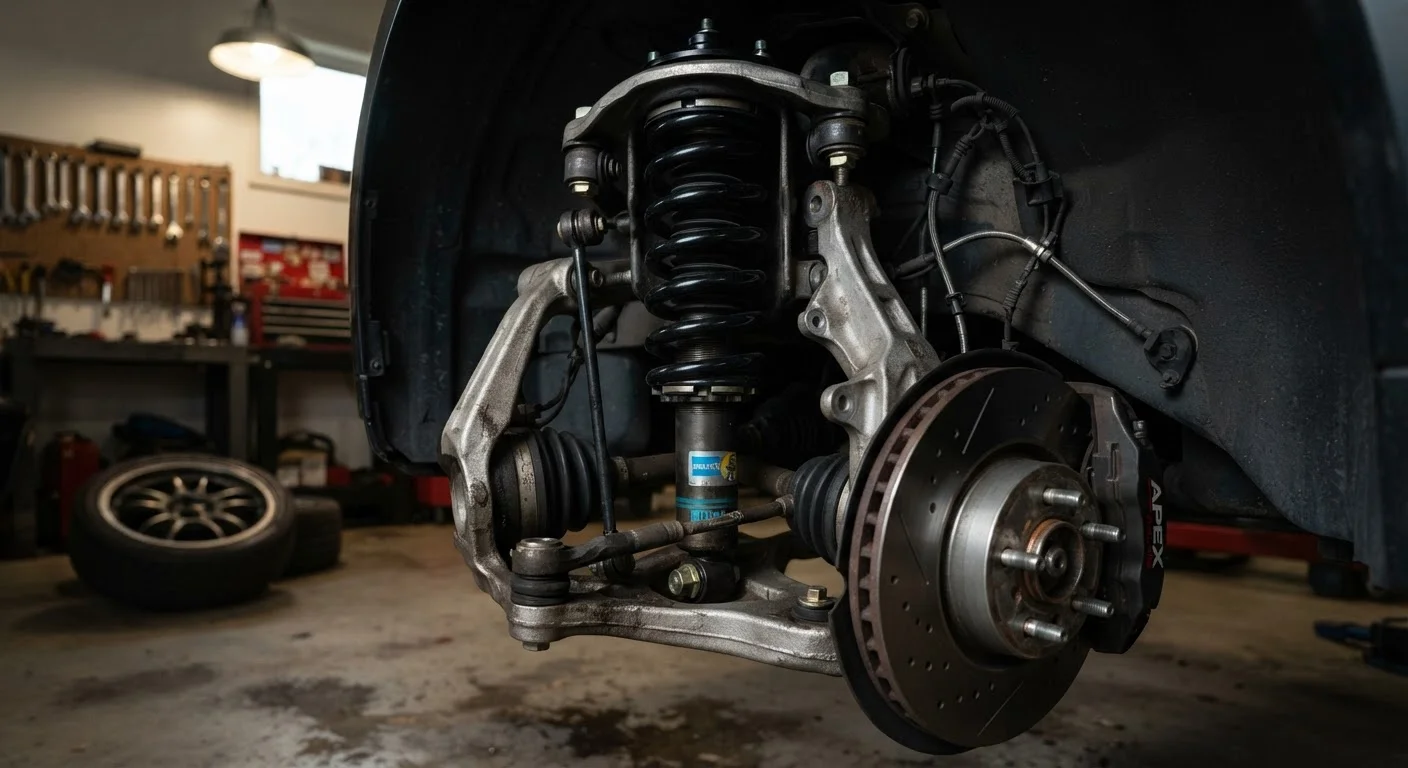
Sway bar end link
A short connecting rod that attaches the stabilizer (sway bar) to the suspension control arm or strut. It reduces body roll during cornering. Worn end links rattle or clunk over bumps.
Ball joint
A pivoting connection between the wheel hub and the suspension control arm. Ball joints allow steering and suspension movement simultaneously. A loose or worn ball joint can cause clunking and, if it fails completely, a dangerous loss of control.
Control arm bushing
A rubber or polyurethane sleeve that cushions the connection between the control arm and the vehicle frame. Bushings absorb vibration and reduce noise; when they crack or compress, they allow unwanted metal movement.
Strut mount
The upper mounting point where a strut assembly attaches to the vehicle body. It contains a bearing plate that allows the strut to rotate with steering input. A worn strut mount can produce clunks, creaks, or steering looseness.
CV joint
Constant Velocity joint — a flexible coupling that transfers engine power to the drive wheels through a range of suspension and steering angles. A worn CV joint typically produces a rhythmic clicking or knocking sound during turns.
Jounce bumper
A rubber or polyurethane stop inside the strut housing that limits maximum suspension compression. A deteriorated jounce bumper can squeak or produce a thud when the suspension reaches full travel.
Rattles, Knocks, and When to Act
A rattle is a loose, repetitive sound — like something shaking in a box. A knock is sharper and more rhythmic. Both can originate in the suspension or in nearby components that interact with it.
- Rattle at highway speed: A loose heat shield over the exhaust can mimic a suspension rattle. Before assuming the worst, have the exhaust checked. True suspension rattles at speed often point to a worn shock absorber that has lost its internal damping fluid.
- Knock that follows wheel rotation speed: A worn CV joint (especially on front-wheel-drive and all-wheel-drive vehicles) often produces a rhythmic knock or click, particularly during turns. This is drive-axle territory but closely related to suspension geometry.
- General rattling over rough roads: Loose strut mounting hardware or a completely collapsed bump stop can create this. Inspect strut tower bolts if accessible.
For a broader look at unusual driving noises beyond suspension, our article on strange noises while driving covers brakes, engines, and tires as well. If you're evaluating a used vehicle, these same sounds are red flags — see our guide to test drive red flags for what to listen for before you buy.
This article provides general educational information about vehicle maintenance. Always consult a qualified mechanic for diagnosis and repair of suspension components, as improper repairs can affect vehicle safety.