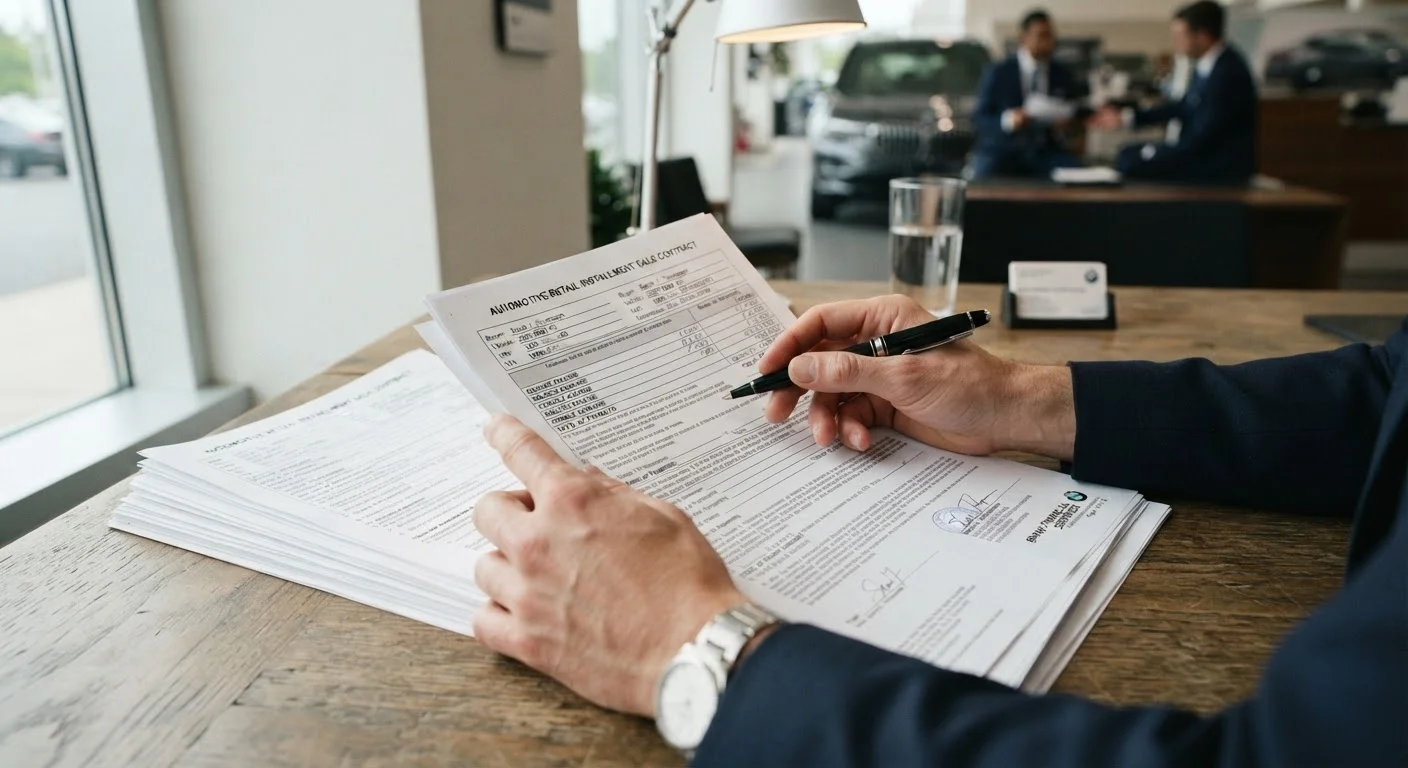
Why the Buyer's Order Demands Your Full Attention
The buyer's order - sometimes called a purchase agreement or sales contract - is the document that legally transfers a vehicle from the dealer to you. Every figure you agreed to during negotiation should be reflected here exactly. A transposed number, a missing rebate, or an unauthorized add-on product is not a minor clerical issue: it changes the price you pay and the loan you carry for years.
If you took time to get your deal in writing before arriving at the dealership, bring that documentation into the F&I office as your reference. If you did not, reconstruct the agreed figures from memory and any text or email records before you begin reviewing the printed document.
The checklist below is organized in the order figures typically appear on a buyer's order. Work through each group systematically rather than scanning for the bottom-line payment. That methodical approach is the single most effective protection you have at this stage.
A Buyer's Order Is a Legal Contract
Once signed, a buyer's order is generally considered a binding agreement under state contract law. Errors are difficult and sometimes impossible to unwind after the fact. Never treat signing as a formality - treat it as the final checkpoint in your entire purchase process. If you feel pressured to sign before you've finished reviewing, it is reasonable and appropriate to pause.
What to Bring and How to Prepare
Reviewing a buyer's order is not something to do cold. Gather the following before entering the finance office:
Written Deal Quote or Email Confirmation
Use any written quote you received prior to your dealership visit as a baseline to verify figures on the buyer's order.
State DMV Fee Schedule
Cross-check title, registration, and license fees against your state's published rates to confirm accuracy.
Loan Pre-Approval Letter
Compare the APR and loan term your lender pre-approved against the financing terms offered by the dealership.
Calculator (Phone or Physical)
Manually verify that the monthly payment is consistent with the loan amount, APR, and term shown on the document.
Having a loan pre-approval from an outside lender is especially useful. It gives you a concrete benchmark for the interest rate, so you're not relying solely on the dealership's financing offer. For a detailed walkthrough of what to verify in the finance agreement itself, see our finance agreement review checklist.
If you're buying a used vehicle, confirm that your pre-purchase inspection is complete and that the vehicle you're signing for matches the one you inspected. Our pre-purchase inspection checklist covers what to verify before paperwork begins.
The Complete Buyer's Order Review Checklist
Work through each group in sequence. Check off items as you confirm them. If a figure does not match or a line item appears that you did not agree to, mark it and raise it with the finance manager before proceeding.
Vehicle Identification
Agreed Pricing
Fees and Add-Ons
Taxes, Title, and Registration
Finance and Payment Terms
Final Review Before Signing
For broader guidance on the kinds of questions worth raising during any document review, see questions worth asking before signing any dealership document. And if you're reviewing a lease rather than a purchase, a separate checklist applies - see what to verify before signing a lease.
Common Discrepancies and How to Handle Them
The most frequently encountered issues on buyer's orders include: a sale price higher than negotiated (often attributed to 'market adjustments' added back in), trade-in values lower than the written offer, and aftermarket products added without explicit consent. Each of these is correctable before you sign.
Monthly Payment Focus Can Hide True Costs
Dealership financing conversations often center on the monthly payment figure, which can obscure a higher sale price, longer loan term, or inflated interest rate. Always calculate the total amount you'll pay over the life of the loan - not just the monthly figure - before deciding whether the deal reflects what you negotiated.
Unsigned Add-Ons Can Appear on the Document
Extended warranties, GAP coverage, and protection packages are common products that sometimes appear on buyer's orders even when the buyer did not explicitly agree to them during the sales conversation. Review each line methodically and remove any product you did not request before signing.
If you identify a discrepancy, state it plainly and ask for a corrected document. You are not obligated to sign a buyer's order that does not match your agreement. A reputable dealership will correct legitimate errors. If a dealer is unwilling to address a clear discrepancy, that itself is information worth weighing before proceeding.
For broader context on financing decisions and how they fit into your overall payment strategy, reviewing the full picture of your loan terms and total cost of ownership is always worthwhile before committing.
This article provides general educational information about automotive purchase documents and is not legal or financial advice. For questions specific to your situation, consult a qualified professional.