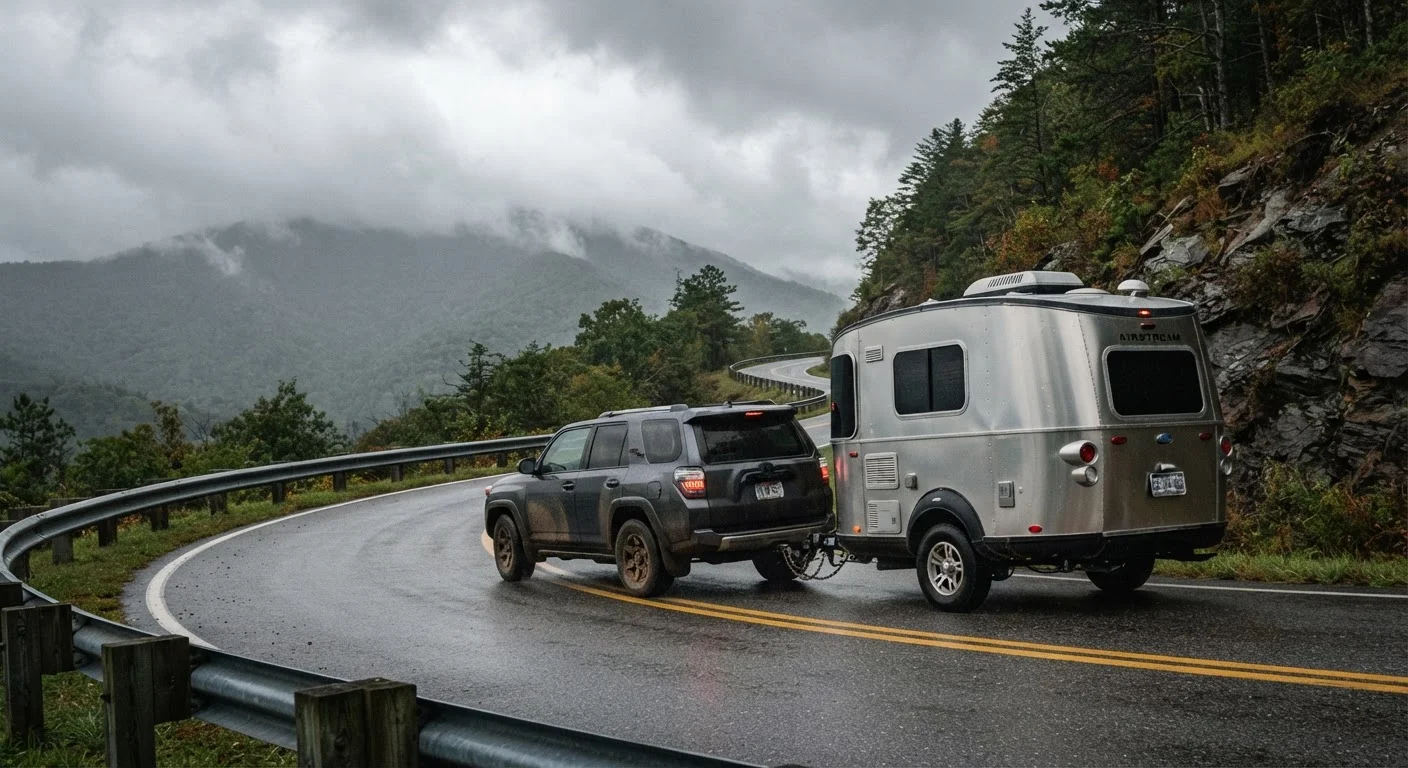
Why the Spec Sheet Is Just the Starting Point
Every SUV buyer shopping for towing capability eventually finds the maximum tow rating - a single number printed in the brochure and repeated in dealer presentations. That number is real, but it describes a ceiling achieved under specific, often optimized conditions: correct axle ratio, factory tow package, no passengers or cargo beyond the tongue weight of the trailer itself. Real-world towing rarely looks like that test scenario.
Understanding what the spec sheet omits is what separates a safe, confident towing experience from one that damages your vehicle or creates road hazards. The most consequential gaps involve tongue weight, hitch compatibility, thermal limits, and brake requirements - none of which appear in the single-line tow rating. It's also worth noting that payload and towing are distinct measurements; our explainer on payload vs. towing capacity covers how buyers routinely conflate the two and why it matters.
Treating the advertised tow rating as an everyday operating limit rather than an engineering maximum.
Why it happens: Manufacturers publish peak towing figures prominently, and buyers naturally interpret the highest number as a routine target. The fine print - specific cab configs, axle ratios, trailer brake requirements - rarely makes it into showroom conversations.
Ignoring tongue weight limits when loading a trailer.
Why it happens: Tongue weight - the downward force the trailer hitch places on the vehicle - is a separate rating from total tow capacity, and most buyers don't know it exists until they experience handling problems or damage.
Assuming any hitch will work for any trailer within the tow rating.
Why it happens: Hitches are sold in classes (I through V) with different receiver sizes and weight ratings. Buyers often install a hitch based on price or availability without verifying that its capacity matches the vehicle's rating or the trailer's demand.
Neglecting thermal management - transmission, engine, and brake cooling during towing.
Why it happens: Towing dramatically increases heat buildup in the transmission and engine. Buyers who tow infrequently or who never read towing-specific guidance are often unaware that sustained grades or stop-and-go conditions can push temperatures into damaging ranges.
Overlooking trailer brake requirements for heavier loads.
Why it happens: Many buyers assume the SUV's braking system alone is sufficient for any load within its tow rating. State laws and manufacturer requirements for trailer brakes often apply above a certain trailer weight - commonly 1,500 to 3,000 lbs depending on jurisdiction - but this threshold is rarely discussed at point of sale.
Confusing a crossover's tow rating with a body-on-frame SUV's sustained towing capability.
Why it happens: Both vehicle types may share similar tow ratings on paper, but their construction and cooling systems differ substantially. Buyers choose a popular unibody crossover for its comfort and fuel economy, then discover it struggles on repeated mountain grades or extended towing sessions.
Practical Steps Before You Hook Up
Before attaching a trailer, confirm three things independent of the tow rating: your tongue weight measurement, your hitch class, and whether your SUV is equipped with a factory tow package rather than an aftermarket add-on. Factory packages are calibrated by the manufacturer to include the cooling and electrical components that support the published rating. An aftermarket hitch alone does not replicate that system.
Exceeding Tongue Weight Is a Handling Risk
Too much tongue weight compresses the rear suspension, lifts the front wheels, and reduces steering precision - even if total trailer weight is within the tow rating. This is one of the most common causes of loss of control when towing. Always weigh tongue weight with the trailer fully loaded, not estimated from the trailer's empty spec sheet.
If you frequently tow near your SUV's capacity - or plan to tow in mountainous terrain - also evaluate the vehicle's transmission cooler and brake cooling. Sustained grades are where marginal setups fail. For buyers still comparing which SUV size suits their needs, our compact vs. mid-size SUV comparison discusses how platform differences translate into real-world capability gaps, including towing suitability.
This article provides general educational information about vehicle towing. Always consult your vehicle's owner's manual, a qualified mechanic, and applicable state regulations before towing. Towing improperly can create serious safety hazards and may affect your vehicle's warranty.