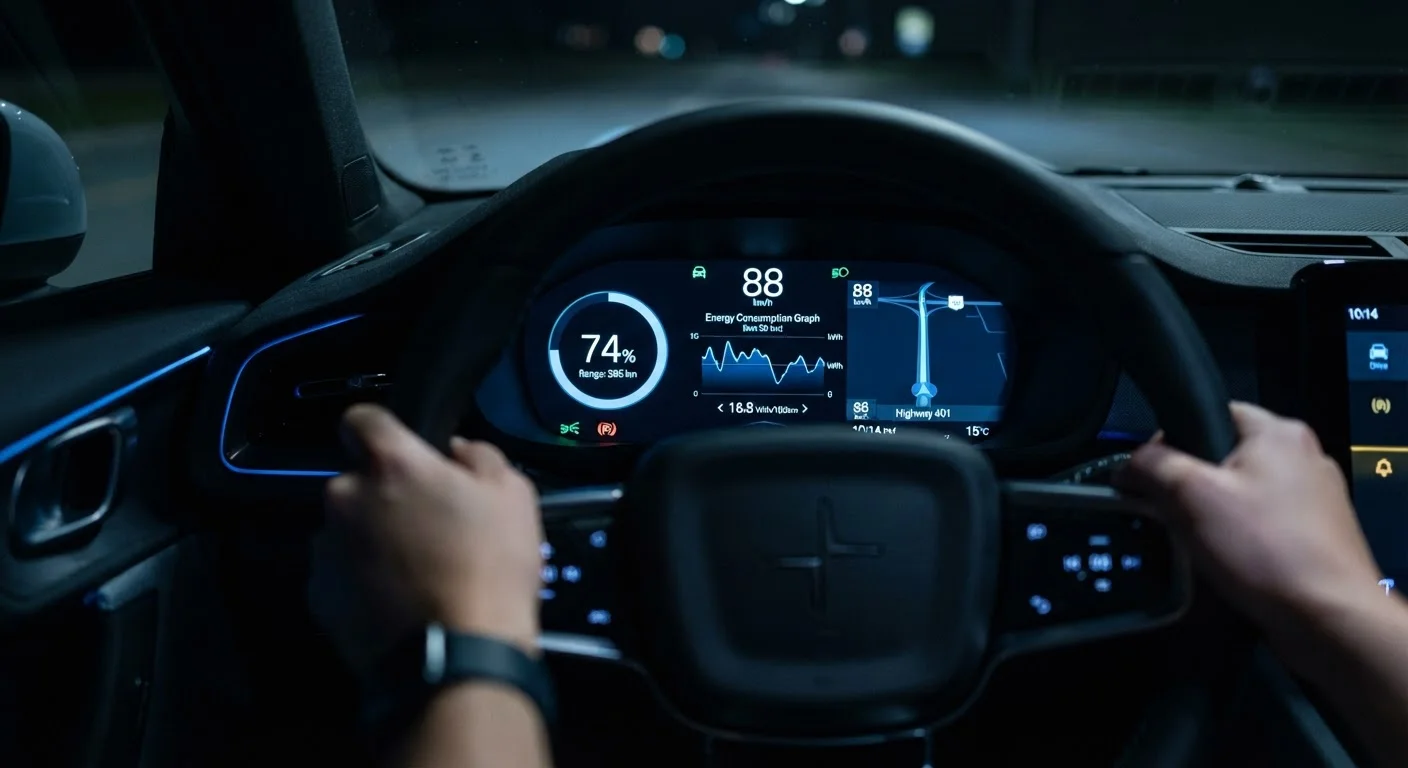
How the Official Range Number Is Generated
When you see a range figure on an EV's window sticker - say, 300 miles - that number comes from a standardized EPA laboratory procedure, not from driving on actual roads. The test uses a dynamometer (essentially a treadmill for cars) and simulates a blend of city and highway driving cycles under controlled temperature and load conditions.
The goal of standardization is fair comparison: every automaker must follow the same protocol, so a 300-mile rating on one vehicle theoretically reflects the same effort as a 300-mile rating on a competitor. What the test cannot fully replicate is the full spectrum of conditions real drivers encounter - from a January morning in Minneapolis to a summer interstate haul in Arizona.
For a parallel look at how the same gap between official ratings and real-world results plays out with gasoline vehicles, see our explainer on fuel economy figures and what they leave out.
The Biggest Factors That Shrink Real-World Range
Understanding which variables eat into your range most aggressively helps set realistic expectations before and after purchase.
Temperature
Cold weather is the single largest source of real-world range loss for most EV owners. Lithium-ion batteries operate less efficiently at low temperatures, and - critically - EVs use battery power to heat the cabin. Unlike a gasoline engine that produces waste heat as a byproduct, an EV must generate all cabin warmth electrically. Owner and fleet data consistently shows 20-40% range reductions in sub-freezing conditions.
Speed and Aerodynamics
EVs are unusually efficient in city traffic because regenerative braking recovers energy that would otherwise be lost as heat in conventional brake pads. On the highway, the equation flips: aerodynamic drag increases exponentially with speed, and cruising at 75-80 mph draws substantially more power per mile than the EPA test cycle assumes. Drivers who frequently travel at higher highway speeds should expect range noticeably below the sticker figure.
Climate Control and Accessories
Running air conditioning or heat places a direct load on the battery. Seat heaters, rear defrosters, and high-powered audio systems each contribute smaller but cumulative draws. In extreme conditions, combined accessory use can account for a meaningful portion of total energy consumption.
Load and Terrain
Carrying additional passengers or cargo, towing, and climbing grades all increase the energy required to move the vehicle. Mountain routes or hilly urban terrain will produce lower range than flat highways - a factor worth considering when evaluating an EV for a specific geography.
~20-40%
Range reduction in freezing temperatures
Studies by organizations including AAA and Recurrent have documented consistent range losses in sub-freezing conditions across multiple EV models.
~15-25%
Range loss at sustained highway speeds
Real-world testing by independent automotive outlets frequently shows this gap between EPA ratings and highway-specific range at 70-80 mph.
80%
Recommended daily charge ceiling
Most EV manufacturers and battery engineers advise limiting routine charging to 80% of capacity to slow long-term battery degradation.
Practical Ways to Interpret and Plan Around Rated Range
A useful rule of thumb: plan your driving around roughly 80% of the official EPA figure in moderate conditions, and closer to 60-65% in cold weather or sustained highway travel. This buffer accounts for the most common real-world deductions without requiring detailed calculation on every trip.
When evaluating a model's range claim, look for third-party real-world test data from automotive publications - not just manufacturer figures. Reviews that specify test conditions (ambient temperature, average speed, climate control state) are far more informative than those that simply repeat the EPA number. Our guide on how to read an EV review without getting misled explains which metrics to prioritize.
It's also worth noting that range is not static over the life of the vehicle. Battery capacity gradually declines with charge cycles and age - a reality explored in depth in our piece on EV battery degradation over time.
Finally, consider whether rated range actually matches your specific use case. A 250-mile-rated EV may be entirely sufficient for a driver who charges nightly and rarely travels more than 60 miles daily - but could cause friction for someone who regularly takes long interstate trips without convenient fast-charging access. Our article on where EV buyers go wrong about lifestyle fit examines this mismatch in detail.